Le deuxieme souffle may be the most ambitious heist film ever, not because it’s “heist porn” –- offering up the most intricate, audacious robbery ever –- but because the heist is the nexus of so many other narratives. There’d be no Heat without this film. I’d rank this right below Army of Shadows, neck and neck with Le samourai and a hair above Le cercle rouge.
Melville infers two of his main themes, loyalty and honor (and their opposites), by what he cautions against in his disclaimers: “It is not the filmmaker’s intention to defend Gustave Minda’s ethical code” and “no judgment is called for regarding police methods….”
In this film and Le doulos, Melville’s cloaks his desire to explore the French resistance, informants and betrayal in the tan gabardine of the gangster genre, perhaps not yet aware that he will later tackle these subjects head-on in Army of Shadows. Obviously, in Le doulos, he makes the subject of the informant the heart of the film. Though in Souffle the underworld is in many ways the stand-in for the resistance and the police the Germans and Vichy government, morally of course they are closer to their inverses, which creates a wealth of moral ambiguities. Orloff, a master thief, is the person whom the film seems to admire most, because he is resolutely loyal, never compromises his principles and refuses to commit murder for personal gain. Though the film obviously respects Gu’s code and professionalism, by making the murder of two cops an integral part of the heist plan, the film deliberately weights the moral scales against him, making him less sympathetic, but more complex.
Gu and Bolt are temperamental opposites, but professionally they’re mirror images, given their positions on the opposite sides of the law. Gu is laconic; like most of in his world, he doesn't trust speech –- it’s the talk of witnesses, informants and gossips that often lead to arrests and convictions –- and perhaps he himself was part of the resistance during the war. Bolt is Gu’s verbal opposite, voluble, eloquent. Not only does his job rely on others’ cooperation, but for an investigator, skill in the art of interviewing and interrogation, using talk to get others to talk, is essential. Also, his conversational ability is the main means by which he cultivates his beneficial relationships with criminals. Though Bolt and other cops’ shoulder-rubbing with criminals incites Gu’s angriest outburst –- “Now you hold hands and go out on dates… Makes me want to vomit!” –- they are both consummate professionals. Both are driven and ruthless in the pursuit of their goals. Gu is willing to kill to get money to leave the country, willing to execute Inspector Fardiano, the head of the Marseilles police(?), to salvage his reputation. Bolt of course, resorts to an elaborate subterfuge (one that would be legal in the U.S. if not for the gunpoint abduction) to trick Gu into revealing his chief accomplice, and then splashes the information all over the papers to turn Gu’s accomplices and the public against him. He is also willing to cozy up to some of the sleazier criminals to achieve his ends –- Jo Ricci, the crook in the film whom he has the most productive relationship with, is to the filmmakers the most despicable character: both treacherous and incompetent. Even during Gu’s tirade against Bolt’s tactics, he acknowledges their effectiveness: “Makes the job easier, right?” He condemns Bolt for being the best cop he can be, though he’s willing to do worse to be the best criminal; his willingness to murder an innocent cop is far more immoral than Bolt’s deception and associations with criminals. When Bolt delivers Gu’s notebook to a reporter, he shows that his bending of the rules was more about doing his job well than self-aggrandizement. He may not have quite the same rigorous personal code as Gu and his friends, he may love showing he’s the smartest man in the room, but in the final analysis he’s on the right side and a relentless protector of the public.
What the title card after the disclaimer says, “A man is given but one right at birth: to choose his own death. But if he chooses because he’s weary of his own life, then his entire existence has been without meaning,” supports Mr. Sausage’s reading that one of the main themes is death. I don’t know if the title card is meant to be strictly applied to the narrative, but while Gu choosing to die in service of restoring his reputation is the culmination of the entire film, he also appears weary of life throughout. This is a man with a powerful survival instinct –- undertaking a strenuous prison escape in middle-age, killing a cop during an ambitious heist while in hiding as Public Enemy No.1 so he can live comfortably in exile. But as others have pointed out, he’s also dispirited. Manouche, when she learns of his escape, describes his state of mind after his conviction many years earlier: “He told me to let him die in peace. I was even afraid he’d kill himself.” As others have pointed out, he reuses a gun tied to two murders like a rank amateur. Bolt: “This isn’t your usual killer. He’s doomed and he knows it.” Gu chooses to die defending his name, but what if Bolt had never sullied it with his subterfuge? If Gu was killed as a direct result of his using the gun twice or another act of self-sabotaging heedlessness (conscious or not), would that have made his life a “meaningless existence”? Or is the title card not meant to be taken so literally?
447-448 Le doulos and Le deuxieme souffle
-
Noiradelic
- Joined: Sun Jul 19, 2009 4:45 am
Re: Le deuxième souffle (Jean-Pierre Melville, 1966)
Last edited by Noiradelic on Fri Aug 30, 2013 10:52 pm, edited 2 times in total.
-
zedz

- Joined: Sun Nov 07, 2004 11:24 pm
Re: Le deuxième souffle (Jean-Pierre Melville, 1966)
I think it's easy enough to rationalize this from a psychological perspective. The longer he's out, the safer he feels; he dons a disguise; he's away from Paris, where he's best known; and you have to assume that being confined to the cell-like austerity of his bolthole is extremely galling to a guy who's successfully escaped from life imprisonment. He's free, goddammit! Why can't he enjoy a decent game of petanque!?Mr Sausage wrote:Gu walks openly down the street because the movie needs him to get caught.jindianajonz wrote:I think the fact that Gu went from being extremely cautious while in Paris to openly walking around the streets of Marseilles implies that some of this is Gu's fault. Especially when compared to the way Gu rushed into his first safehouse while Alban distracted somebody in the doorway, it is clear that Gu is very much letting his guard down.
-
colinr0380

- Joined: Mon Nov 08, 2004 8:30 pm
- Location: Chapel-en-le-Frith, Derbyshire, UK
Re: Le deuxième souffle (Jean-Pierre Melville, 1966)
But this is also a man who seems to have spent three days travelling on buses from one safehouse to another in order to lie low. And his wanderings around outside only occur after the heist has taken place, never before. As Geoff Andrew says in the commentary, Gu seems at his happiest at this point (happier even than when he is celebrating Christmas with Manouche), enjoying a snack, reading the paper and going for strolls, and it seems that he knows that his days are numbered or, if they aren't, he is going to make sure that he can create the circumstances that might help that process along.
-
Mr Sausage

- Has Risen from the Grave
- Joined: Thu Nov 04, 2004 1:02 am
- Location: Canada
Re: Le deuxième souffle (Jean-Pierre Melville, 1966)
Which makes the absence of any psychologizing all the more apparent. The whole thing is explained so quickly and haphazardly that it's hard not to see its purpose as purely functional. If the movie were solely about how choice dooms people, without the involvement of impersonal circumstance, you'd expect a little more to be made of this. But as it stands, it's so arbitrary.zedz wrote:I think it's easy enough to rationalize this from a psychological perspective. The longer he's out, the safer he feels; he dons a disguise; he's away from Paris, where he's best known; and you have to assume that being confined to the cell-like austerity of his bolthole is extremely galling to a guy who's successfully escaped from life imprisonment. He's free, goddammit! Why can't he enjoy a decent game of petanque!?
I think if Melville were concerned with creating a hermetic world run solely by the independent choices of its inhabitants he wouldn't be so careless with that moment. His carelessness makes perfect sense, however, if his interest lies in putting certain hard-line character types in impossible circumstances and see what they'll do.
-
Noiradelic
- Joined: Sun Jul 19, 2009 4:45 am
Re: Le deuxième souffle (Jean-Pierre Melville, 1966)
There are several justifications, though of course it also furthers the plot. Him buying the paper every day has a practical purpose, to keep tabs on the investigation. I think it's both that he does feel a little freer in Marseilles -- he doesn't know Bolt is hot on his trail (based on wildly intuitive leaps) -- and his subconscious self-destructiveness, perhaps heightened by his having just murdered an innocent.jindianajonz wrote:I think the fact that Gu went from being extremely cautious while in Paris to openly walking around the streets of Marseilles implies that some of this is Gu's fault.
Last edited by Noiradelic on Fri Aug 30, 2013 10:26 pm, edited 1 time in total.
-
jindianajonz

- Jindiana Jonz Abrams
- Joined: Thu Oct 13, 2011 12:11 am
Re: Le deuxième souffle (Jean-Pierre Melville, 1966)
As Colin says, I think there is enough evidence around this point of the film (post heist but before capture) to suggest a completely different mindset in Gu.
Going back to Sloper's narcissus reading, maybe this is Gu giving up because he has already accomplished what he wanted to accomplish? Prior to the prison escape, the only thing we really know about his past is that he failed a heist attempt. Maybe he really just wants to leave a legacy as something other than "that guy who was jailed for a failed heist, then escaped prison and disappeared." A daring heist like this would indeed fulfill that, and after accomplishing this, he is indeed satisfied and aimless, not really caring what happens to him as long as his legacy is intact. Blot's deception ruined this plan, which is why there was such a renewed urgency in Gu when he is labelled a traitor.
This obviously has implications on both the first and last parts of the film- the comment about giving into weariness resulting in a wasted life takes on a new meaning when all Gu is concerned with is leaving a legacy, and Blot providing the reporter with the confession is an attempt to preserve this legacy; perhaps Blot is fulfilling this real "last wish" in lieu of passing on Gu's final words to Manouche?
Going back to Sloper's narcissus reading, maybe this is Gu giving up because he has already accomplished what he wanted to accomplish? Prior to the prison escape, the only thing we really know about his past is that he failed a heist attempt. Maybe he really just wants to leave a legacy as something other than "that guy who was jailed for a failed heist, then escaped prison and disappeared." A daring heist like this would indeed fulfill that, and after accomplishing this, he is indeed satisfied and aimless, not really caring what happens to him as long as his legacy is intact. Blot's deception ruined this plan, which is why there was such a renewed urgency in Gu when he is labelled a traitor.
This obviously has implications on both the first and last parts of the film- the comment about giving into weariness resulting in a wasted life takes on a new meaning when all Gu is concerned with is leaving a legacy, and Blot providing the reporter with the confession is an attempt to preserve this legacy; perhaps Blot is fulfilling this real "last wish" in lieu of passing on Gu's final words to Manouche?
-
Sloper
- Joined: Wed May 30, 2007 2:06 am
Re: Le deuxième souffle (Jean-Pierre Melville, 1966)
Black Hat wrote:Usually isn't according to whom? Certainly not according to Gu. Therefore on what, or whose standards are we making this claim? It certainly can't be our own as he's not one of us.Sloper wrote:Gu does indeed adhere to a code that is more absolute than adherence to the law or morality. As I said above, it's a code that justifies any given action - robbery, murder, cruelty - on the basis that the action is 'necessary', even though it usually isn't.
I'm glad that at least one person on the thread is taking the film on its own terms, because to be honest it's a bit surprising how we've all laid into Gu in such a stern and moralistic way - most of these readings are really going against the grain of what we see in the film.Black Hat wrote:I think the way he was able to express awareness of his actions along with remorse makes him a more sympathetic figure and flies in the face of a lot of what a lot of you have been writing.Sloper wrote:He tells Fardiano, 'I'm not proud of killing the motorcycle cop'. But what is he, then? Ashamed? In the context of that scene, he is only making this claim in order to signal Fardiano's impending death, so it's really a sadistic taunt rather than a confession. In any case, it's typical of his general attitude towards the killings. He kills innocent people but he says he's not proud of it, and anyway he had to do it. So he's really an honourable man, see?
But you are justifying Gu's actions purely on the basis of his own statements about them: if he says something is necessary, then it is; if he expresses remorse about his actions, then he is more sympathetic.
I'm suggesting that we have the option to pause and question his account of himself. Just because he says these actions are necessary doesn't mean they are, and just because he claims to feel remorse doesn't mean he really does. All his claims tell us is that he wants to be regarded as having been 'left with no choice', and that he wants to sound remorseful. People tell all kinds of stories about themselves that aren't true.
And why can't we judge Gu according to our standards because he is 'not one of us'? I know what you're getting at, and as I said before I do think that on at least one level the film is asking us to buy into Gu's mindset, and to root for and admire him. One of the great things about Melville, though, is that he (quite deliberately, I think - I'm pretty sure he made a statement to this effect) always works in a deeper layer that casts the surface story, and the macho posturing of the gangsters, in a different light. I wouldn't want to argue that this is a moralistic film, or a cautionary tale or anything like that; rather, I think it's exploring the agonising solitude at the heart of the human condition - a kind of fundamental, universal narcissism - and getting to grips with Gu's moral equivocations is, for me, a way of accessing these deeper themes.
matrix answered this one really - but it's worth emphasising that Vincendeau distinguishes Gu from the Delon-style narcissist because he doesn't seem to take much care over his appearance. Your question also highlights this distinction because Gu's solitude goes hand in hand with his dishevelled appearance. Check out those deteriorating pyjamas. I just think that the narcissism of Jef Costello and Corey goes deeper than dress sense, and that Gu (and Blot, and Orloff for that matter) are different manifestations of this same narcissism. Having re-watched The Asphalt Jungle the other day, which was one of Melville's favourite films, I think there's a lot to be gained from comparing and contrasting Gu Minda with Dix Handley (the Sterling Hayden character). Look at the way Dix stares down the timid, balding little man during the line-up at the start of Huston's film, and his relationship with Doll (Jean Hagen). It's a similar kind of ultra-masculine, self-contained posturing, but of course the tone is very different. What an achingly sad film The Asphalt Jungle is - miles away, really, from the cold, alienating world in which Melville's stories play out.jindianajonz wrote:I wish I had taken better notes on the commentary, but you are are familiar with Ginnette Vincendeau, so hopefully you are more aware of her argument than I am: How does her interpretation of Gu being most comfortable with solitude jive with your interpretation of him being a narcissist? I would think that a narcissus would thrive on being around others in order to show off to them. Or to put it another way, how can he be most concerned with how he is perceived by others when he prefers to not show himself to others?
Also, on reflection, I'm not sure I agree (with Andrew and Vincendeau) that Gu seems happiest while reading the paper or eating his New Year's Eve meal. He has a couple of other pleasures in life, such as pétanque for instance...
Mr Sausage wrote:Melville uses all of his art to prepare us for it and get us to accept it (including a little speech by Blot about how catching Gu will depend on random luck), but it still doesn't disguise the fact that none of either Gu's or Blot's choices following the robbery actually lead them to that meeting. It's still arbitrary... The whole thing is explained so quickly and haphazardly that it's hard not to see its purpose as purely functional. If the movie were solely about how choice dooms people, without the involvement of impersonal circumstance, you'd expect a little more to be made of this. But as it stands, it's so arbitrary.
Just quoting these two, but I'm sort of responding to a lot of what's been said on this interesting subject.colinr0380 wrote:Here I think is the key way that Le Deuxieme Souffle is a gangster film rather than a film noir - film noir is often about the external world closing in and trapping our protagonists into impossible decisions; gangster films are more often about the protagonists destroying themselves in their quests for more, which could be as specific as money or fame, or by some compulsive yearning that can be more abstract and indefineable, even to themselves.
I don't agree that this plot turn is arbitrary; I do lean more towards Colin's idea that Gu is destroyed from within by a compulsive, indefinable yearning. The sequence following the robbery, when Gu is at leisure, illustrates this point very well, because Gu is making choices here that reveal something about his character.
Pascal drops Gu off at the train station, and after buying his ticket Gu also gets a packet of sweets from a dispenser. Later, when he looks in on the pétanque court, he is eating the sweets as well. Neither of these actions is necessary to the plot - yes, Gu has to be spotted by someone so that the police can track him down, but the fact that he is scuppered specifically by his interest in a game is significant. Gu, like the eponymous hero of Bob le Flambeur, is a man who enjoys playing games, who gets a kick out of gambling and risk-taking. He may not have a slot machine in his living room, as Bob did, but he says to Manouche, 'J'ai joué et j'ai perdu' - 'I played and lost' (hope I'm quoting accurately), and his interest in the game later on hints again at this affinity with other Melvillean game-players. (Jef Costello is another good example: 'I never lose. Not really.') For these characters, life is centrally about playing games. This relates to what I said in the earlier post about the heist sequences representing impressive activity for its own sake - it's as though we're watching great athletes performing. As long as they keep playing, they hold onto their taste - goût - for life; but because these activities are essentially futile, and ultimately self-destructive, a distaste - dégoût, the word in the film's epigraph - gradually takes over. This isn't just about their crimes catching up with them, the inevitability of the final capture and/or death. It's also about the game being 'played out'.
What we have in Gu Minda is a person experiencing a 'deuxième souffle', but this is not so much a second wind, more a last gasp. He is torn between a persistent taste for life and an encroaching distaste. 'Il est un homme perdu, et il le sait', says Blot - literally, 'He is a lost man and he knows it'. Gu is doomed from two directions. On the one hand, there are the external forces closing in on him, in the form of Blot, Jo Ricci, and so on; on the other hand, there is Gu's own fatigue and lethargy, and (I would argue) his profound, terminal solitude. When he emerges from his run-down house in Marseille, the huge shadow of a barren tree is cast starkly against the building; we then see Gu walking down a street lined with more trees, their branches bare. The imagery is suggestive of the hand(s) of fate reaching out to destroy Gu, but also of a life that has entered its 'winter' stage - withered, dried up, impotent, but still grasping at the remaining scraps.
After the successful robbery, Gu treats himself...to a small packet of sweets from a dispenser...and to a furtive, pathetically brief glance at a game of bowls. You can see him looking over the faces of the other spectators to check whether he knows any of them, and even then he doesn't feel safe staying there for more than a couple of seconds. Yes, this is partly because he knows he might be recognised; but I think there is also a vague sense that he doesn't care that much for the game itself anymore. He's intrigued for a moment, then he backs off with a sigh, listlessly dropping another sweet into his mouth.
It's significant that this action leads to Blot's deception and the subsequent scenes at the police station. The whole sequence brings to a head not only Gu's downfall on a practical level - he is arrested and his reputation is destroyed - but also his total distaste for life and everything in it. What Blot and Fardiano do here is itself a kind of game, but a deeply corrupt one, and one that makes Gu sick. Chained to the radiator, he comments on how times have changed, and his nostalgia here is for a time when cops and robbers played by the rules, a time when playing by the rules was more important than actually winning the game.
So in the wider context of the story, Gu's purchase of the sweets and his interest in the game are key indicators of his conflicted state of mind. They display a taste for life, but they also show how faint that taste has become. It's not unlike Harry Caul's saxophone-playing in The Conversation.
Some interesting discussion of the guns earlier in the thread. This business plays into the themes I've been discussing as well - I just wanted to point out a couple of nice touches here. Alban gives Gu a gun that has never left his side, as a sign of affection, an affirmation of the bond that exists between them. If I remember rightly, this is the moment when the stone-faced Alban pauses by the door to give Gu a half-smile. (This moment is actually a bit too cute for my taste.) But in the next shot, we see Gu very deliberately packing Alban's gun away, and keeping his own tucked into his trousers, within easy reach. He's grateful for Alban's gun, and he keeps it, but deep down he has no real faith in the bond Alban tried to affirm with that gift. Whatever faith and confidence he still has is all invested in himself, in his own identity, in his own gun.
(Quick observation about the subsequent bus-ride montage: we only see Gu getting onto the buses in this sequence, never getting off. There's even a shot where we see someone's back as they descend from the bus, and we assume for a second that it must be Gu, but then it turns out to be a woman - Gu is waiting for her to pass so he can get on board. There's another scene or two between this montage and the shot where Gu actually disembarks in Marseille. I'm not sure what the effect of all this is, but it's a marvellous sequence.)
At the climax of the film, Gu has Alban's gun in his right hand as he enters the apartment. Then, having got through the front door, he switches the gun into his left hand and pulls his own gun out with his right. In the final shoot-out, he guns down Jo with his right hand (i.e. his own gun) - then Antoine ducks under the table and shoots him - then Gu impulsively stretches out his left hand and shoots poor old Pascal (perhaps because, given Antoine's position, this is where the bullet seemed to come from) who was just sitting there minding his own business. Then Gu uses his own gun to kill Antoine. So, to sum up, he only fires one shot with Alban's gun, from his left hand, and it hits the wrong man... (Well, he fires several more shots at Blot and his colleague, but they all miss - perhaps deliberately?)
jindianajonz wrote:Look at Gu and Orlaff- they both share the same professional code, but have different moral codes, as evidenced by Orlaff's unwillingness to kill police officers.
This was how I saw it at first, but are we quite sure that Orloff turns down the job as a matter of principle? When he finds out that the heist will involve killing the motorcycle cops, he does say that he wouldn't do it for all the gold in the world. But if this is because he regards such an act as beyond the pale, morally speaking, what do we make of his subsequent recommendation of Gu for the same job? It would suggest that he doesn't exactly have a high opinion of Gu, and moreover if he finds the plan so objectionable he shouldn't really be helping these guys out at all. Orloff places great emphasis, in this scene, on the risk involved in this heist, and on Gu's desperation. I'm not saying that there is no moral issue here at all, just that the key point is Orloff's unwillingness to put himself in that much danger. Killing a cop is, to quote Doc Riedenschneider in The Asphalt Jungle, 'a bad rap, hard to beat'. Orloff gives the job away to someone who really needs it, and who has nothing to lose.Noiradelic wrote:Orloff, a master thief, is the person whom the film seems to admire most, because he is resolutely loyal, never compromises his principles and refuses to commit murder for personal gain.
-
colinr0380
- Joined: Mon Nov 08, 2004 8:30 pm
- Location: Chapel-en-le-Frith, Derbyshire, UK
Re: Le deuxième souffle (Jean-Pierre Melville, 1966)
I guess you could also throw in the couple shown embracing on the pavement just before Gu gets bundled into the car as an example of romance (and by extension his romance with Manouche) having that same quality.Sloper wrote:After the successful robbery, Gu treats himself...to a small packet of sweets from a dispenser...and to a furtive, pathetically brief glance at a game of bowls. You can see him looking over the faces of the other spectators to check whether he knows any of them, and even then he doesn't feel safe staying there for more than a couple of seconds. Yes, this is partly because he knows he might be recognised; but I think there is also a vague sense that he doesn't care that much for the game itself anymore. He's intrigued for a moment, then he backs off with a sigh, listlessly dropping another sweet into his mouth.
It's significant that this action leads to Blot's deception and the subsequent scenes at the police station. The whole sequence brings to a head not only Gu's downfall on a practical level - he is arrested and his reputation is destroyed - but also his total distaste for life and everything in it. What Blot and Fardiano do here is itself a kind of game, but a deeply corrupt one, and one that makes Gu sick. Chained to the radiator, he comments on how times have changed, and his nostalgia here is for a time when cops and robbers played by the rules, a time when playing by the rules was more important than actually winning the game.
So in the wider context of the story, Gu's purchase of the sweets and his interest in the game are key indicators of his conflicted state of mind. They display a taste for life, but they also show how faint that taste has become. It's not unlike Harry Caul's saxophone-playing in The Conversation.
Which itself might add a slightly creepy quality to the apparent ending of the novel of Orloff and Manouche ending up in a relationship. Is Orloff a 'more principled' counterpart to Gu (which seems unlikely from your comments above); a kind of equivalent to Gu just at a less jaded and running on fumes earlier point in time (that would suggest a kind of resetting of any relationship with Manouche at the end as he is substituted for her lover) and still able to exist within a certain set of principles; or someone trying to place themselves in a more 'managerial' position in the hierarchy, unwilling to get his hands dirty but able to put people in touch with someone who can?Sloper wrote:jindianajonz wrote:Look at Gu and Orlaff- they both share the same professional code, but have different moral codes, as evidenced by Orlaff's unwillingness to kill police officers.This was how I saw it at first, but are we quite sure that Orloff turns down the job as a matter of principle? When he finds out that the heist will involve killing the motorcycle cops, he does say that he wouldn't do it for all the gold in the world. But if this is because he regards such an act as beyond the pale, morally speaking, what do we make of his subsequent recommendation of Gu for the same job? It would suggest that he doesn't exactly have a high opinion of Gu, and moreover if he finds the plan so objectionable he shouldn't really be helping these guys out at all. Orloff places great emphasis, in this scene, on the risk involved in this heist, and on Gu's desperation. I'm not saying that there is no moral issue here at all, just that the key point is Orloff's unwillingness to put himself in that much danger. Killing a cop is, to quote Doc Riedenschneider in The Asphalt Jungle, 'a bad rap, hard to beat'. Orloff gives the job away to someone who really needs it, and who has nothing to lose.Noiradelic wrote:Orloff, a master thief, is the person whom the film seems to admire most, because he is resolutely loyal, never compromises his principles and refuses to commit murder for personal gain.
-
zedz
- Joined: Sun Nov 07, 2004 11:24 pm
Re: Le deuxième souffle (Jean-Pierre Melville, 1966)
It is a great sequence. I have no big thematic explanation for it, but I think the way Melville chose to shoot it works brilliantly in terms of momentum: if we only see Gu boarding buses, the sequence is continually pressing forward, without 'resolving' each transition. It's a very subtle way of ratcheting up the tension even during narrative 'downtime'. For a long film, it's expertly paced.Sloper wrote:(Quick observation about the subsequent bus-ride montage: we only see Gu getting onto the buses in this sequence, never getting off. There's even a shot where we see someone's back as they descend from the bus, and we assume for a second that it must be Gu, but then it turns out to be a woman - Gu is waiting for her to pass so he can get on board. There's another scene or two between this montage and the shot where Gu actually disembarks in Marseille. I'm not sure what the effect of all this is, but it's a marvellous sequence.)
The ratchet is a useful metaphor for the action of the film, since each decision Gu makes tends to close off the alternative options he forsook to make that decision, and this is something Gu himself seems aware of - hence his cavalier attitude to covering up his killings and retaining the murder weapon (though that attitude really just ensures that he has no way back from those actions).
-
jindianajonz
- Jindiana Jonz Abrams
- Joined: Thu Oct 13, 2011 12:11 am
Re: Le deuxième souffle (Jean-Pierre Melville, 1966)
Re: the bus sequence- I don't have any sort of deeper meaning, but felt that it paralleled the scene where Alban is driving Gu to the aborted hit on Jo.
-
zedz
- Joined: Sun Nov 07, 2004 11:24 pm
Re: Le deuxième souffle (Jean-Pierre Melville, 1966)
I think Orloff is simply smarter than Gu. We don't know whether he's opposed to killing cops because of any principles or personal 'code', or if he just recognizes that it's reckless. His response to Ricci suggests that it's the latter. I think he says something along the lines of the reward (from the heist) not being worth it.colinr0380 wrote:Is Orloff a 'more principled' counterpart to Gu (which seems unlikely from your comments above); a kind of equivalent to Gu just at a less jaded and running on fumes earlier point in time (that would suggest a kind of resetting of any relationship with Manouche at the end as he is substituted for her lover) and still able to exist within a certain set of principles; or someone trying to place themselves in a more 'managerial' position in the hierarchy, unwilling to get his hands dirty but able to put people in touch with someone who can?
-
Sloper
- Joined: Wed May 30, 2007 2:06 am
Re: Le deuxième souffle (Jean-Pierre Melville, 1966)
Yes, good example - and of course, Gu doesn't just walk past them obliviously, he glances at them. So as with the game of bowls, the furtive glance is telling. In this case, I suppose it's equivalent to the furtive, vaguely wistful, but ultimately listless glances he gives Manouche as well. Although having said that...colinr0380 wrote:I guess you could also throw in the couple shown embracing on the pavement just before Gu gets bundled into the car as an example of romance (and by extension his romance with Manouche) having that same quality.
I'd go for the middle option, and disagree with zedz that Orloff is smarter than Gu.colinr0380 wrote:Is Orloff a 'more principled' counterpart to Gu (which seems unlikely from your comments above); a kind of equivalent to Gu just at a less jaded and running on fumes earlier point in time (that would suggest a kind of resetting of any relationship with Manouche at the end as he is substituted for her lover) and still able to exist within a certain set of principles; or someone trying to place themselves in a more 'managerial' position in the hierarchy, unwilling to get his hands dirty but able to put people in touch with someone who can?
Going back to the opening sequence, I like to see the three escapees as representing three phases of one character, or three co-existing aspects. There's the young and headstrong one, who jumps too far and dies; there's Gu, who almost doesn't make it but just about scrambles up; and there's the one in the middle who is, if you like, at the 'Orloff' stage.
Gu sees his 'young' self fall to his death, and this signifies not only that his youth is gone, but also that he is, deep down, a nervous kid trying to prove something and thereby driving himself to destruction. (Paolo in Bob le Flambeur is a very clear example of this 'type', in that he deliberately imitates the older gangster; and Bob's rather cold reaction there is not unlike Gu's when he sees his dead young comrade at the start of Souffle. It's as if he's just seen a part of himself die, and now he simply needs to carry on re-defining himself and his existence.)
Gu then has trouble getting onto the train, and needs his remaining comrade's help. Then, when the latter jumps off the train, Gu stares after him as though watching another part of himself disappear - this time, the strong, confident, competent self who can jump on and off trains with ease, and who (as it later turns out) can die with dignity rather than being ignominiously conned by the police.
Before this guy jumps off the train, he hands Gu a cigarette, which turns out to be bent out of shape. The phallic implications are almost too obvious to spell out, but the really interesting thing here is that the image is recalled at the very end of the film, when Blot also finds himself with a bent and useless cigarette. Clearly this suggests some affinity between him and the man he's just shot dead, but what kind of affinity?
For me, the answer lies in Blot's response to Manouche's query about Gu's last words. Gu died saying 'Ma-nouche', so why does Blot tell her that he said absolutely nothing? There's definitely a touch of Angels With Dirty Faces here. We know that Blot cares about Manouche on some level, and the lie he tells here seems to be an act of kindness - if she knew that Gu spoke her name, it would be harder for her to move on with her life, to take up with Orloff for example. Blot probably knows that he's doing what Gu would have wanted in this instance, and we certainly do. Yes, Gu's standoffishness with Manouche can be read as a kind of narcissism, but it's also (and not unrelatedly) a sort of noble, self-sacrificing gesture: 'Stay away from me, I'm no good for you', as in Joe Gillis' rebuff of Betty at the end of Sunset Boulevard. We know Gu loves Manouche because we've heard his dying breath, but he pushes her away for her own good - and this is not just because he is being pursued by the law, it's also (as I suggested in my last post) because Gu knows that he is dried up and impotent, that he has nothing to offer to a woman.
Blot understands this point because it is true for him as well. With his theatrical showing-off and know-it-all behaviour, Blot is another of the film's raging narcissists, but he's also a prototype for Mattei in Le cercle rouge and Coleman in Un flic. That's to say, he's as brilliant a cop as Gu is a criminal, but like Gu he is (or at least is on the verge of becoming) out of touch and in decline. So the message of the bent cigarette - comparable to the 'fallen hat' motif that keeps turning up in Melville's films, and that was picked up by Miller's Crossing - applies to Blot as well. He's not only helping to sever the bond between Manouche and Gu, he's also renouncing her for himself, giving her up to Orloff or to his equivalent. And again, it's worth remembering the similar affinity between Perier's inspector in Le samourai and Jef Costello: at the very end, Perier knows instinctively that Costello's gun will be empty.
So if we're talking about classic Hollywood gangster archetypes, perhaps the ending of The Roaring Twenties provides a more apt comparison. The brilliant and successful gangster hits the skids and is left with nothing to do but sacrifice himself - 'he used to be a big shot', but now his bullet-ridden corpse is splayed limply across some steps (as in Souffle), an obvious symbol of a 'fall', a failed aspiration, and a stark contrast with the spectacular leap from the cliff accomplished by Gu's fellow escapee. Notice the slightly envious way Gu looks up at that cliff, while he slops about on the muddy beach unwittingly destroying his reputation. Anyway, the main thing I wanted to remark on is how often sexual failure makes up a part of this classic narrative.
******
So... How do people rate this film compared to Melville's other work? For me at least, his only full-blown masterpieces were the four films he made after this one (I was surprised by how good Un flic is, given its reputation). Everything pre-1967 feels quite formative and uneven, rather given to overlong dialogue scenes, and lacking the sustained visual richness of the late films. I wish I could find a better phrase than 'sustained visual richness', but I guess you know what I mean.
Apparently Melville's fellow filmmakers, and the Cahiers critics, felt precisely the opposite way, and saw him as betraying his real talents as his work became slicker and more polished, roughly from Leon Morin onwards. But part of what I dislike about the early work is that it doesn't seem nearly as reflective or self-aware in its treatment of masculinity as those last four films are - that is, the early films seem more sincerely invested in the impressiveness of these macho pricks, and as such they can come across as a bit adolescent.
Don't get me wrong, there is still a lot more to them than that, and you never have to dig very deep to find elements that critique the male narcissism on display. They're all great, multi-layered films. It just seems to me that, from Le samourai onwards, Melville had a really strong grasp on precisely what story he wanted to tell and precisely how he wanted to tell it - until then he was groping towards this maturity. Le deuxième souffle is a key transitional work, because it is (I think) much more overtly complex and ambiguous than, for instance, Le doulos, but not quite as mature thematically, or as well-paced, as the later films. That feels like a rather vague assessment, but I'd be interested to hear what others think.
-
zedz
- Joined: Sun Nov 07, 2004 11:24 pm
Re: Le deuxième souffle (Jean-Pierre Melville, 1966)
I can see how this appeals as a romantic, tidy symmetry, but what evidence do we have that Gu is a brilliant criminal? His last big heist was a flop, and this one is somebody else's gig that he was foolhardy getting involved in. From the evidence in the film we can conclude that he's a solid professional and an efficient operator, and has his admirers, but that's a loooong way from being a criminal genius. His competitive advantage is that he's utterly ruthless, and whenever he prevails against somebody or something (escaping prison, defeating the thugs that come for Manouche, hiding out, pulling off the heist, escaping custody again, extracting the confession, giving Orloff the slip) it's because he's abetted by others (and Melville goes out of his way to establish that Gu could never have made the jailbreak alone) or because he kills people or beats them up. Do we ever see Gu out-thinking anybody?Sloper wrote:That's to say, he's as brilliant a cop as Gu is a criminal
-
Mr Sausage
- Has Risen from the Grave
- Joined: Thu Nov 04, 2004 1:02 am
- Location: Canada
Re: Le deuxième souffle (Jean-Pierre Melville, 1966)
Is Blot even all that brilliant as a cop, considering his ambivalent relationship to due process and basic ethics? I suppose he's an excellent plotter with a solid grasp of the whole (no one else is ever working with all the pieces), but it's up for debate whether he's a good emissary of what his position symbolizes. Tho' I suppose his gesture at the end (dropping the forced confessions in front of the reporters) is meant to redeem him somewhat from his more unethical manipulations.
I agree that he and Gu aren't paired off as equal since, as I said, Blot is always able to map out the whole and use that to make solid predictions where Gu, by contrast, is narrow-sighted, rarely in possession of all the information, impulsive, and unwilling to map out the possible results of his choices. Gu exists very much in the moment, rather like someone who doesn't expect to have a future.
I agree that he and Gu aren't paired off as equal since, as I said, Blot is always able to map out the whole and use that to make solid predictions where Gu, by contrast, is narrow-sighted, rarely in possession of all the information, impulsive, and unwilling to map out the possible results of his choices. Gu exists very much in the moment, rather like someone who doesn't expect to have a future.
-
jindianajonz
- Jindiana Jonz Abrams
- Joined: Thu Oct 13, 2011 12:11 am
Re: Le deuxième souffle (Jean-Pierre Melville, 1966)
How is he abetted by others in the bolded situations? Sure, Manouche helped a little with the thugs, but it seemed more like a convenience than a real necessity- Gu was still able to get both under gunpoint without her help. For the other three, they were basically one-on-one "fights",unless you call Manouche's non-intervention when Gu clocks Orloff "abetting".zedz wrote: and whenever he prevails against somebody or something (escaping prison, defeating the thugs that come for Manouche, hiding out, pulling off the heist, escaping custody again, extracting the confession, giving Orloff the slip) it's because he's abetted by others
-
zedz
- Joined: Sun Nov 07, 2004 11:24 pm
Re: Le deuxième souffle (Jean-Pierre Melville, 1966)
It's either / or, not both / and - you left off the end of the sentence: "or because he kills people or beats them up." (Though Alban helps out with disposing of the thugs.)
-
jindianajonz
- Jindiana Jonz Abrams
- Joined: Thu Oct 13, 2011 12:11 am
Re: Le deuxième souffle (Jean-Pierre Melville, 1966)
Whoops, sorry, I missed that part.zedz wrote:It's either / or, not both / and - you left off the end of the sentence: "or because he kills people or beats them up." (Though Alban helps out with disposing of the thugs.)
I'd still say that Gu overcame the two thugs with instincts and careful (and quick!) planning more than just brute force. Likewise, his instincts helped him avoid getting pinched by Blot when he went to kill Jo Ricci.
I would agree that Gu is not at all a "brilliant" criminal, but I wouldn't say he's a common thug either. In fact, other than Blot tricking Gu into a confession, I don't think anybody showed any particular sign of smarts throughout this entire movie. I was actually pretty underwhelmed by how simplistic the heist was: "Alright guys, i got this great plan. There's a money truck with guards coming through; we'll wait until there's nobody around, shoot the guards, and take the money." Compare this to the heist in Le Circle Rouge, where planning and timing was critical to overcome the various obstacles in the heist.
Actually, I take that back: Orlaff showed that he was pretty clever with his gun trick. As a result, Orlaff was also the only criminal involved with the heist and its ramifications that was able to get away unscathed.
-
knives

- Joined: Sat Sep 06, 2008 10:49 pm
Re: Le deuxième souffle (Jean-Pierre Melville, 1966)
How are instincts separate from brute force though? My instincts could say to lay into you through the face rather than the chest, but that wouldn't make it any more an ugly act of brutality. If anything that only proves that he's just a big ferocious animal striking at the man with the gun because he doesn't like being caged.
-
Yojimbo
- Joined: Fri Jul 04, 2008 2:06 pm
- Location: Ireland
Re: 447-448 Le doulos and Le deuxieme souffle
Seeing as how I'm largely with you on the Melvilles and the Glorious 'Grisbi', zedz, I think I'll pass on my plans to purchase the new dual format Sautet. I'm sure I'd seen another somewhat-underwhelmed review of the Sautet, when I was considering buying the Criterion version, but now I think I'll put it on the back-burner.zedz wrote:I watched Le Deuxieme Souffle a couple of days ago and really loved it. I remember now that when I first fell in love with Le Samourai many many years ago, reading up on Melville suggested that this was the next best bet. L'Armee des ombres, which I'd also seen and loved, was sort of critical terra incognita at the time, though it would probably be the darling nowadays. So t was great to finally catch up with the film and not be disappointed.
Where Le Samourai is stripped back and exquisitely minimal, Le Deuxieme Souffle is dense and detailed, like L'Armee, though still lean and reticent. I was impressed by how the magnificent heist sequence was staged like the big climax it would have been in most other films, even though its function here is more like another staging post in a larger plot - there's still an hour or so to go after it's concluded, even though it feels like it was the moment the film has been building up to, and it pays off dramatically in those terms.
The two obvious comparisons are with Criterion's other policiers of 2008, Le Doulos and Classe tous risques. The Melville was very impressively engineered, but it felt rather too mechanical in its plotting for my comfort, with ironies falling into place all too fatalistically. The Sautet film, which has a lot of similarities with Le Deuxieme Souffle, including Ventura, was enjoyable enough, but seemed very thin alongside the later film, lacking the dramatic muscle that Melville's set pieces bring to the table. And in my opinion Melville also tops Sautet in terms of the less heightened, 'ordinary' scenes, such as the lovely sequence in which Ventura travels to his new hideout on local buses.
At least for now.
-
movielocke

- Joined: Fri Jan 18, 2008 4:44 am
Re: 447-448 Le doulos and Le deuxieme souffle
My fourth Melville film (I've seen the three bluray releases) Le Doulos is probably my favorite. The film is crackling and kinetic, bleaker than a John Huston crime film or Kubrick's The Killing. Although it precedes the Leone No Name trilogy, it feels like there is a philosophical kinship with the darker westerns of the decades to follow. Or it reminded me of Yojimbo. But the point of mentioning all these touchstones is to illustrate how much the film is its own beast--it shares characteristics with many genres and styles and is none of them. It's not a blend or pastiche, it's a scotch on the rocks, neat--it goes down smooth with a piquant, smokey character.
After beginning with an ominous killing of a fence, the film taps out the plot beats of the next job of the docket for us, we sense it's going wrong, the title and the dialogue suggests there is an informant ratting out people to cops. The job begins and the film veers into the unexpected with a shocking, brutal scene as the informant is seemingly revealed when Salini sadistically beats a woman for information about the location of the job. From this point on, Melville keeps you guessing, puzzled at behavior and motivations until all is revealed moments before the film's final, tragic shootout.
The beating is central and disturbing, and when he used his belt to work around her neck and attach her to the radiator I was struck that there was a sort of sado-masochism sexual component to the actions--which only adds to the discomfort the scene provokes. Considering the austere disinterest Salini has in the film's other woman--a disinterest that mirrors his methodical, workaday approach to his complex criminal machinations--this scene seems to bring out more exterior reactions from him than any other in the film. Or perhaps I'm misremembering the scene and projecting my own reaction onto it, and my brain is insisting that surely he couldn't be as muted in that scene as he was in every other scene (including the post coital scene, where he stunningly manages to be about as detached as a eunuch).
For all that he becomes the central figure, Melville starts out by undermining him with the audience, even though in 30 minutes we will probably be rooting for him without knowing why, Melville has made sure that we can't really feel comfortable with rooting for the criminal because Salini has transgressed some significant social and cultural standards that seem to be rarely challenged so directly. By the time the ending explanation came around, I somewhat accepted it, but the labyrinth of double crosses make me wonder if the audience is duped just as much as the other marks that Salini cooly dispatches.
A tremendously entertaining film that manages to plumb the depths of the genre to really make you question the genre as well. Marvelous.
After beginning with an ominous killing of a fence, the film taps out the plot beats of the next job of the docket for us, we sense it's going wrong, the title and the dialogue suggests there is an informant ratting out people to cops. The job begins and the film veers into the unexpected with a shocking, brutal scene as the informant is seemingly revealed when Salini sadistically beats a woman for information about the location of the job. From this point on, Melville keeps you guessing, puzzled at behavior and motivations until all is revealed moments before the film's final, tragic shootout.
The beating is central and disturbing, and when he used his belt to work around her neck and attach her to the radiator I was struck that there was a sort of sado-masochism sexual component to the actions--which only adds to the discomfort the scene provokes. Considering the austere disinterest Salini has in the film's other woman--a disinterest that mirrors his methodical, workaday approach to his complex criminal machinations--this scene seems to bring out more exterior reactions from him than any other in the film. Or perhaps I'm misremembering the scene and projecting my own reaction onto it, and my brain is insisting that surely he couldn't be as muted in that scene as he was in every other scene (including the post coital scene, where he stunningly manages to be about as detached as a eunuch).
For all that he becomes the central figure, Melville starts out by undermining him with the audience, even though in 30 minutes we will probably be rooting for him without knowing why, Melville has made sure that we can't really feel comfortable with rooting for the criminal because Salini has transgressed some significant social and cultural standards that seem to be rarely challenged so directly. By the time the ending explanation came around, I somewhat accepted it, but the labyrinth of double crosses make me wonder if the audience is duped just as much as the other marks that Salini cooly dispatches.
A tremendously entertaining film that manages to plumb the depths of the genre to really make you question the genre as well. Marvelous.
-
doh286

- Joined: Fri Jan 24, 2014 11:43 pm
- Location: Chicagoland
Re: 447-448 Le doulos and Le deuxieme souffle
Criterion is adding an HD version of Le deuxième souffle to iTunes on July 14th. Hopefully this means we get a Blu-ray upgrade soon!
-
danieltiger

- Joined: Wed Apr 16, 2014 12:48 am
- Location: San Francisco, CA
- Contact:
Re: 447-448 Le doulos and Le deuxieme souffle
Given they're also putting up Le Samouraï in HD, maybe it will be a Melville upgrade month!doh286 wrote:Criterion is adding an HD version of Le deuxième souffle to iTunes on July 14th. Hopefully this means we get a Blu-ray upgrade soon!
-
Rayon Vert

- Green is the Rayest Color
- Joined: Thu Jan 09, 2014 2:52 am
- Location: Canada
- Contact:
Re: 447-448 Le doulos and Le deuxieme souffle
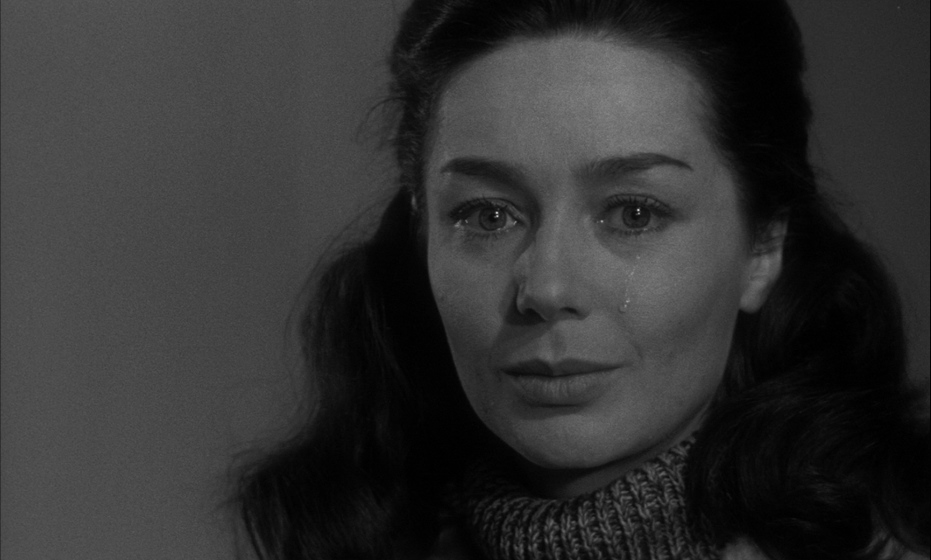
Watched Le Deuxième Souffle again tonight. That dramatic shot of Manouche towards the end, with tears and the way she's framed, immediately brought to mind a similar significant shot of Barny in Léon Morin.

-
nicolas
- Joined: Sat Apr 29, 2023 3:34 pm
Re: 447-448 Le doulos and Le deuxieme souffle
Criterion 4K upgrade coming in the near future. Restoration is by Le chat qui fume (French label) and they confirmed the news to a BR member here.
-
hearthesilence

- Joined: Fri Mar 04, 2005 8:22 am
- Location: NYC
Re: 447-448 Le doulos and Le deuxieme souffle
DCP of the new restoration is playing at Film Forum in NYC right now.