I just watched The Song Lantern tonight (My first Naruse film). I must say I was totally blown away. Coming into the film I had no idea what to expect and knew nothing of the plot/stars, even the year it was made, usually the way I like it - I always feel you tell what you're watching by the first frame. And the case was true here also. Not only does the film say that it is a Noh story but also the first chords of that familiar Noh music and the dress and dancing also gives it away. I haven't had too much experience with Noh influenced Japanese cinema with only Onibaba and Story of the Late Chrysanthemums (to an extent) springing to mind.
It's always difficult to clear your mind of preconceptions when watching a film by a new director. I must say my mind did go straight to Mizoguchi as the credits rolled, I think similar credit roll style is used in Story of the Late Chrysanthemums, but as the film progressed a few minutes my thoughts of Mizoguchi disappeared, Naruse is a very distinctive filmmakers I can tell very easily. The story seemed fairly obvious, I guess that with it's Noh influences similar themes and narrative style have been used many times. What first struck me was that I actually recognised an actor I knew, something I thought I wouldn't. That actor was, of course from the forementioned, Story of the Late Chrysanthemums Shotaro Hanyagi (playing a similar character) and later Isuzo Yamada from Throne of Blood, one of my favourite Kurosawa's. As the narrative progressed I was surprised to find that Naruse dealt with it in a beautiful way evoking humour and drama through the characters so well. Instead of the story seeming predictable and trite it felt fresh and such a pleasure to watch.
I then started to think that Naruse's camera work was a bit bland but then I started to notice that the film is very beautifully shot and sparing use of crane shots were used to create some really beatiful movements. Particularly so was when Hanayagi teaches Osode the dance in the forest and the camera cranes up showing Hanayagi dancing in the forest surrounded by patches of sunshine through the gaps in the foliage above. After this when Hanayagi returns to, I think it was Ise, I noticed how Naruse frames his shots in the city so well. I don't know whether Naruse became more adventurous with his camera throughout the film or not a second viewing would be needed. Perhaps the stifled camera work in beginning is used to demonstrate Hanyagi's state of being and the eventual freedom evoking the evolution of his character from one who is maybe a little arrogant to someone who is very modest?
For those who have not experienced Naruse (and I know a lot of people have alreay) on the strength of this film I would say to people don't hesitate get that MoC boxset, A Woman Ascends The Stairs etc.
Now I am going to get stuck in to my Naruse boxset as soon as it arrives (providing HMV don't stiff me).
Mikio Naruse
-
Awesome Welles
- Joined: Fri Apr 27, 2007 10:02 am
- Location: London
Last edited by Awesome Welles on Wed Jul 04, 2007 2:48 pm, edited 1 time in total.
-
Tim
- Joined: Thu Nov 04, 2004 12:27 pm
My wife and I were at the same screening and loved it too. What is more, as we left the theatre we could hear people all around murmuring about how much they had enjoyed the film. We are going to a double bill this evening of Apart from You and Nightly Dreams and will report back. It's funny to realize that another lister was in the theatre and may well be so again.
-
Awesome Welles
- Joined: Fri Apr 27, 2007 10:02 am
- Location: London
-
Michael Kerpan

- Spelling Bee Champeen
- Joined: Wed Nov 03, 2004 5:20 pm
- Location: New England
- Contact:
This is one of the totally unknown Naruse films that I saw here in Boston -- and I was also totally "blown away" by it. Along with the utterly delightful "Traveling Actors" and the ultimately dumbfounding "Hideko the Bus Conductress", one of Naruse's finest war era films. All the talk about Naruse's supposed long "slump" evaporates when one actually sees some of the wonderful films Naruse made during this period.
This is a unique Naruse film -- the closest to a "fairy tale" that he ever made.The breath-taking cinematography (especially in the forest dance lessons) is by none other than Asakazu Nakai. Some of the striking aspects of his later work for Kurosawa are definitely foreshadowed in his work with Naruse here.
This is a unique Naruse film -- the closest to a "fairy tale" that he ever made.The breath-taking cinematography (especially in the forest dance lessons) is by none other than Asakazu Nakai. Some of the striking aspects of his later work for Kurosawa are definitely foreshadowed in his work with Naruse here.
-
Michael Kerpan
- Spelling Bee Champeen
- Joined: Wed Nov 03, 2004 5:20 pm
- Location: New England
- Contact:
Lightning is a delightful film. For those who can't go, some pictures:Tim wrote:We are also going to Lightning on Tuesday but not to When a Woman. I made the decision to restrict my ticket purchases to what I wouldn't be able to get on DVD.
1 - 2 - 3 - 4 - 5 - 6 - 7 - 8 - 9 - 10 - 11 - 12 - 13 - 14 - 15 - 16 - 17 - 18 - 19 - 20 - 21 - 22 - 23 - 24 - 25


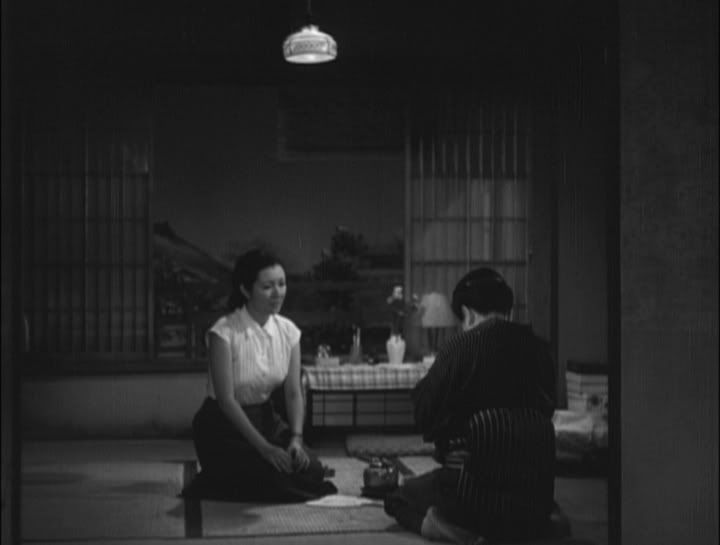
"Woman Ascending" is even more impressive when screened than when it is watched on DVD, but I (sadly) also found it impossible to see everything when the retrospective was here in Boston.
-
Awesome Welles
- Joined: Fri Apr 27, 2007 10:02 am
- Location: London
I was thinking about that but I really want to see it on the big screen anyway, given that it's restored and stars the wonderful Tatsutya Nakadai, that way I can wait a while before getting the DVD (so prices come down for my poor pocket).Tim wrote:We are also going to Lightning on Tuesday but not to When a Woman. I made the decision to restrict my ticket purchases to what I wouldn't be able to get on DVD.
-
Michael Kerpan
- Spelling Bee Champeen
- Joined: Wed Nov 03, 2004 5:20 pm
- Location: New England
- Contact:
For once at least, Nakadai is totally outshined by pudgy Daisuke Kato. A whole gallery of wonderful performances here -- including one by the now grown-up Keiko Awaji (the sullen girl in Stray Dog)FSimeoni wrote:I was thinking about that but I really want to see it on the big screen anyway, given that it's restored and stars the wonderful Tatsutya Nakadai, that way I can wait a while before getting the DVD (so prices come down for my poor pocket).
-
malcolm1980

- Joined: Fri Jun 08, 2007 8:37 am
- Location: Manila, Philippines
- Contact:
-
Michael Kerpan
- Spelling Bee Champeen
- Joined: Wed Nov 03, 2004 5:20 pm
- Location: New England
- Contact:
Recommendations for purchase? or for retrospective attendance?
As for the former -- everything currently available on DVD with English subtitles is excellent -- both the Masters of Cinema box set and the lone Criterion release.
If the latter, which retrospective venue? (with a link to what films are being shown, if possible).
As for the former -- everything currently available on DVD with English subtitles is excellent -- both the Masters of Cinema box set and the lone Criterion release.
If the latter, which retrospective venue? (with a link to what films are being shown, if possible).
-
malcolm1980
- Joined: Fri Jun 08, 2007 8:37 am
- Location: Manila, Philippines
- Contact:
-
Michael Kerpan
- Spelling Bee Champeen
- Joined: Wed Nov 03, 2004 5:20 pm
- Location: New England
- Contact:
If you dislike Ozu, your odds of liking Naruse are probably not too high. Conversely, if you love Ozu, you are more likely than not to appreciate Naruse (though there are plenty of differences -- so it is not impossible to like one and not the other). Otherwise, it is almost impossible to guess what someone might respond well to.
There are only four films easily available at this point (less -- if you don't have a multi-region DVD player). The only way you're going to find out what you think of Naruse is by watching one or more of the four that are available on DVD (unless you are lucky enough to live in a town that has booked the traveling retrospective).
There are only four films easily available at this point (less -- if you don't have a multi-region DVD player). The only way you're going to find out what you think of Naruse is by watching one or more of the four that are available on DVD (unless you are lucky enough to live in a town that has booked the traveling retrospective).
-
Steven H

- Joined: Tue Nov 02, 2004 7:30 pm
- Location: NC
Gosh, Michael, how could you forget the modestly priced english subbed VHS of Late Chrysanthemums? $80? Craziness.
edit: it's also available on ebay right now for $150, plus shipping.
edit: it's also available on ebay right now for $150, plus shipping.
-
Jack Phillips
- Joined: Mon Jun 25, 2007 6:33 am
-
Michael Kerpan
- Spelling Bee Champeen
- Joined: Wed Nov 03, 2004 5:20 pm
- Location: New England
- Contact:
-
Awesome Welles
- Joined: Fri Apr 27, 2007 10:02 am
- Location: London
-
Tim
- Joined: Thu Nov 04, 2004 12:27 pm
Saw a double bill of Apart From You and Every Night Dreams yesterday evening. We really liked the former but had some reservations about the latter, perhaps because it came second and we were flagging a little. There was good live piano but the poor pianist was something of a distraction, because his piano (an upright) was between him and the screen (the foot of which reached the floor that the piano was standing on) so that he had to keep jumping up to a standing position to read the subtitles.
The theatre manager warned us that the prints were very brittle and said he hoped they would hold up, which they did. In fact they were on the whole in pretty good shape. But it made me realize that there won't be many more chances to see these early films, because there may well not be adequate resources to restore and preserve them. Grab the chance to catch them if and while you can, because there are few better or richer opportunities to enlarge your world.
The theatre manager warned us that the prints were very brittle and said he hoped they would hold up, which they did. In fact they were on the whole in pretty good shape. But it made me realize that there won't be many more chances to see these early films, because there may well not be adequate resources to restore and preserve them. Grab the chance to catch them if and while you can, because there are few better or richer opportunities to enlarge your world.
-
thirtyframesasecond

- Joined: Mon Apr 02, 2007 5:48 pm
There is a Naruse season on at the National Film Theatre, London this month. I'm guessing that's where Tim saw the films he did.
I'm hoping to see When A Woman Ascends The Stairs, Repast, Late Chrysanthemums, maybe Yearning too. Flowing and Sound of the Mountain are in the R2 DVD box set, so perhaps that's how I'll watch those. It's hard trying to fit everything in.
I'm hoping to see When A Woman Ascends The Stairs, Repast, Late Chrysanthemums, maybe Yearning too. Flowing and Sound of the Mountain are in the R2 DVD box set, so perhaps that's how I'll watch those. It's hard trying to fit everything in.
-
Awesome Welles
- Joined: Fri Apr 27, 2007 10:02 am
- Location: London
Expensive too, but on Tuesdays films are only a fiver! That's when I'm doing all my double bills.
Michael, can you make any recommendations on Noh influenced Japanese cinema? I was of course making some guesses on the films above. Discerning between the various national theatres (I think there are three main ones?) is not always so easy for a novice, now that someone pointed out that Story of the Late Chrysanthemums was a Kabuki story it all comes back and I realise that I was, of course, completely wrong!
I think it's interesting to learn about the influences on cinema from the national theatres that preceded it and the various other literary traditions etc. which I have studied at some length in Bollywood cinema (don't dismiss it, it's great!). I'd love to do the same for Japanese, and maybe at some point Chinese cinema.
Michael, can you make any recommendations on Noh influenced Japanese cinema? I was of course making some guesses on the films above. Discerning between the various national theatres (I think there are three main ones?) is not always so easy for a novice, now that someone pointed out that Story of the Late Chrysanthemums was a Kabuki story it all comes back and I realise that I was, of course, completely wrong!
I think it's interesting to learn about the influences on cinema from the national theatres that preceded it and the various other literary traditions etc. which I have studied at some length in Bollywood cinema (don't dismiss it, it's great!). I'd love to do the same for Japanese, and maybe at some point Chinese cinema.
Last edited by Awesome Welles on Mon Jul 16, 2007 12:35 pm, edited 1 time in total.
-
Michael Kerpan
- Spelling Bee Champeen
- Joined: Wed Nov 03, 2004 5:20 pm
- Location: New England
- Contact:
Although I wrote an article on Apart From You and utterly love it, I think Every Night Dreams is even (just a bit) better. Despite their short lengths these are very demanding films -- so I can imagine that watching one would wear one out for the second.Tim wrote:Saw a double bill of Apart From You and Every Night Dreams yesterday evening. We really liked the former but had some reservations about the latter, perhaps because it came second and we were flagging a little.
I appreciated the efforts of the live accompanists for the various Ozu and Naruse films I've seen -- but found them all pretty beside the point. None of them had the slightest familiarity with the kind of music that would actually have been used -- so their accompaniments were routinely inappropriate -- and often so distracting as to impede ones ability to follow the visuals fully (rather like the dreadful accompaniment on Criterion's Story of Floating WeedsTim wrote:There was good live piano but the poor pianist was something of a distraction, because his piano (an upright) was between him and the screen (the foot of which reached the floor that the piano was standing on) so that he had to keep jumping up to a standing position to read the subtitles.
II suspect that there hasn't been a new English-subbed print made of these Shochiku Naruse films since the previous Naruse retrospective in the 80s.Tim wrote:The theatre manager warned us that the prints were very brittle and said he hoped they would hold up, which they did. In fact they were on the whole in pretty good shape. But it made me realize that there won't be many more chances to see these early films, because there may well not be adequate resources to restore and preserve them. Grab the chance to catch them if and while you can, because there are few better or richer opportunities to enlarge your world.
If anyone desperately needs to see this, I probably can lend them my copy. Postage (even express mail) should be less than this. ;~}Steven H wrote:Gosh, Michael, how could you forget the modestly priced english subbed VHS of Late Chrysanthemums? $80? Craziness.
edit: it's also available on ebay right now for $150, plus shipping.
Here are my mini-comments on the films being shown:thirtyframesasecond wrote:There is a Naruse season on at the National Film Theatre, London this month. I'm guessing that's where Tim saw the films he did.
I'm hoping to see When A Woman Ascends The Stairs, Repast, Late Chrysanthemums, maybe Yearning too. Flowing and Sound of the Mountain are in the R2 DVD box set, so perhaps that's how I'll watch those. It's hard trying to fit everything in.
Apart from You (33) - silent masterpiece -- see my Senses of Cinema article ;~}
Nightly Dreams (33) - silent masterpiece -- at least as good as the above
Wife! Be Like a Rose! (35) -- first Japanese talkie to be shown in the US -- Sadly, US critics brushed it off -- wonderful film
Three Sisters with Maiden Hearts (35) -- very good
The Whole Family Works (39) -- very good
The Song Lantern (43) -- Naruse's closest approach to a "fairy tale" film -- has some of his most visually stunning scenes -- even if it is not a masterpiece, I love it as much as if it were one
Repast (51) -- masterpiece -- in my personal top 2 Setsuko Hara and Ken Uehara are superb (maybe his best performance)
Ginza Cosmetics (51) -- transitional film (made right before Repast) , Naruse hasn't quite got his newer style all together yet -- but very good performances
Mother (52) -- when I first saw this, the opening narration put me off a bit, it was overly sentimental - and colored my view of the whole film. Only later did I really notice just how much humor was blended with the sadness. Wonderful work for Tanaka and Kagawa and Daisuke Kato, especially.
Lightning (52) -- one of my favorite Naruse films -- Hideko Takamine and Kumeko Urabe (playing her mother) are great -- a little more hope here than normal at the end
Husband and Wife (53) -- very good -- a combination of bleakness and humor, following the difficulties of a young couple ---also a glimpse of Japan at Christmas and New Years.
Wife (53) -- darker than average, a rare chance to see the great Mieko Takamine (as jealous wife)
Late Chrysanthemums (54) -- on first viewing I focused on the seeming main character Haruko Sugimura (in one of her most impressive -- if least lovable -- performances). On revisiting, I paid as much attention to her former cronies, who are delights. Part bleak -- but still full of life.
Sound of the Mountain (54) -- masterpiece -- Setsuko Hara is great -- and so is So Yamamura (as her father-in-law). Probably Yamamura's best performance ever.
Floating Clouds (55) -- masterpiece -- some of the best work of Takamine and Masayuki Mori
Flowing (56) -- masterpiece
Summer Clouds (58) -- a bit diffuse, but still quite impressive -- Chikage Awashima is very fine as a city girl who married a farmer -- and although widowed can't escape her ties to the land she (here young son) has inherited.
The Approach of Autumn (60) - a remarkable film focused around two children. If the kids spoke a bit less, it might have been better yet -- but still quite impressive. Probably a partial inspiration for Oguri's "Muddy River".
When a Woman Ascends the Stairs (60) -- masterpiece
Her Lonely Lane (62) -- based on autobiography of great writer Fumiko Hayashi, whose stories formed the basis for five other Naruse films. One of Takamine's most extraordinary performances (possibly the fact that Tanaka is her mother here provided some inspiration).
Yearning (64) -- almost like two films, the first half is quite interesting but more mundane -- a family store (largely run by a widowed daughter-in-law, Takamine) is facing dangerous competition from a moder "supermarket". Then this shifts gears into romantic tragedy -- as Takamine's younger brother-in-law escorts her home when returning to her own family (on the other side of Japan). The ending of the film is as visually stunning as Naruse ever got (and that's a pretty high level)
Lots of archived discussions, etc. here.
(note: because of a weirdness of that site, discussions of several of the films are split between multiple threads)
Actually kabuki, noh (including its shorter, comic version, kyogen) and bunraku (puppet) theater often used the same stories. And there is some overlap in techniques used. ;~}FSimeoni wrote:Michael, can you make any recommendations on Noh influenced Japanese cinema? I was of course making some guesses on the films above. Discerning between the various national cinemas (I think there are three main ones?) is not always so easy for a novice, now that someone pointed out that Story of the Late Chrysanthemums was a Kabuki story it all comes back and I realise that I was, of course, completely wrong!
So far, Awaara is the only Bollywood film that I've loved.FSimeoni wrote:I think it's interesting to learn about the influences on cinema from the national theatres that preceded it and the various other literary traditions etc. which I have studied at some length in Bollywood cinema (don't dismiss it, it's great!). I'd love to do the same for Japanese, and maybe at some point Chinese cinema.
-
ptmd
- Joined: Wed Nov 03, 2004 5:12 pm
I'm not Michael, but the most profoundly Noh-influenced films I can think of are Kurosawa's Throne of Blood and Mizoguchi's Genroku Chushingura. Ran also features pronounced Noh elements (most notably in the portrayal of Hidetora's fall during the burning of the castle and in the use of Noh mask-like makeup), but Throne of Blood is informed by Noh on every level. Genroku Chushingura is not adapted from a Noh play, but it incorporates several lengthy performances of thematically relevant Noh plays, and the overall rhythm of the film and the camera movements is strongly reminiscent of Noh. Story of the Late Chrysanthemums sets up a dialectical relationship between the rapidly-edited kabuki performances and the long-takes, but I'm not convinced that it's really about kabuki in any deeper sense. Other than Mizoguchi, the Japanese filmmaker who was most influenced by classical Japanese theater was almost certainly Masahiro Shinoda who studied theater at university before becoming a filmmaker. "Double Suicide" is probably the best bunraku film ever made, and "Buraikan" is an interesting reading of kabuki.Michael, can you make any recommendations on Noh influenced Japanese cinema?
As far as I know, neither Naruse nor Ozu had a particularly pronounced interest in the forms, as opposed to the communities, of classical theater, although Ozu did make an interesting kabuki documentary called Kagamijishi in 1936 (Ozu also includes a Noh performance in Late Spring, but leaves it entirely off-screen).
-
Awesome Welles
- Joined: Fri Apr 27, 2007 10:02 am
- Location: London
Thanks ptmd, not just Michael but anyone is welcome to give advice! I have seen a few of the films you mention. Throne of Blood is the most overtly Noh influenced film I have seen, I guess I hadn't really thought of Ran as Noh influenced, perhaps because the last time I saw it was about three years ago. Genroku Chushingura - I've not seen this as I am waiting for a decent version to come out, if there is one I'd be glad to hear it.
I know what you mean, I didn't really feel that it was really about the art it was portraying, which is why I think I confused it for Noh, it seemed to me to be a backdrop for the story at hand, it could just as much been Noh as Kabuki, in my opinion, I could be wrong as I am very inexperienced when it comes to this.Story of the Late Chrysanthemums sets up a dialectical relationship between the rapidly-edited kabuki performances and the long-takes, but I'm not convinced that it's really about kabuki in any deeper sense.
Shinoda is a director I have been waiting ages to see the films of. Every time I think about his films I never manage to buy one, I always seem to buy something else over his, I don't know why, but I can't wait.Other than Mizoguchi, the Japanese filmmaker who was most influenced by classical Japanese theater was almost certainly Masahiro Shinoda who studied theater at university before becoming a filmmaker. "Double Suicide" is probably the best bunraku film ever made, and "Buraikan" is an interesting reading of kabuki.
I remember this from seeing the film about a year ago, what struck me about this great film was that Ozu left out many of what other directors might have considered important events such as the wedding, and instead focused much more on the characters before and after such events, I think this is what made the film so powerful and so great in my eyes.(Ozu also includes a Noh performance in Late Spring, but leaves it entirely off-screen).
-
Michael Kerpan
- Spelling Bee Champeen
- Joined: Wed Nov 03, 2004 5:20 pm
- Location: New England
- Contact:
I don't really disagree with ptmd -- except to note that the noh performance in Late Spring is definitely shown. There is at least one or two kabuki performances in other shows that we hear but do not see (including one in Equinox Flower).
I will add one more modern bunraku-inspired film -- Kitano's Dolls.
In addition to Song Lantern, which dealt with both noh and popular ballad singing, Naruse made several other films that dealt with kabuki. During WW2, he made the delightful Tabi yakusha / Traveling Actors (which seems like an inspired extended riff on the faux kabuki horse seen in Ozu's Story of Floating Weeds and the somewhat more sober Shibaido / The Way of Drama. His post-war Ore mo omae mo / Between You and Me also invokes kabuki, albeit presenting it as a bit embarrassing, at least when enacted by amateurs for their boss's benefit. He also made films about popular traditional singers both before the war -- Tochuken Kumoemon and Tsuruhachi and Tsurujiro . On a more western note, the post-war Maihime / Dancing Girl involved classical ballet. It would seem that Naruse had some interest in performance arts -- even when he was not compelled to make such films, by government policy.
I will add one more modern bunraku-inspired film -- Kitano's Dolls.
In addition to Song Lantern, which dealt with both noh and popular ballad singing, Naruse made several other films that dealt with kabuki. During WW2, he made the delightful Tabi yakusha / Traveling Actors (which seems like an inspired extended riff on the faux kabuki horse seen in Ozu's Story of Floating Weeds and the somewhat more sober Shibaido / The Way of Drama. His post-war Ore mo omae mo / Between You and Me also invokes kabuki, albeit presenting it as a bit embarrassing, at least when enacted by amateurs for their boss's benefit. He also made films about popular traditional singers both before the war -- Tochuken Kumoemon and Tsuruhachi and Tsurujiro . On a more western note, the post-war Maihime / Dancing Girl involved classical ballet. It would seem that Naruse had some interest in performance arts -- even when he was not compelled to make such films, by government policy.
-
Steven H
- Joined: Tue Nov 02, 2004 7:30 pm
- Location: NC
Luckily, almost every film of his in the world on DVD has english subtitles. I've only been somewhat unimpressed with one film, Petrified Forest, but even that has its merits. Shinoda's Buraikan (the same story which Yamanaka made Kochiyama Soshun) and Double Suicide are probably the most interesting Kabuki related films I can think of.FSimeoni wrote:Shinoda is a director I have been waiting ages to see the films of. Every time I think about his films I never manage to buy one, I always seem to buy something else over his, I don't know why, but I can't wait.
Also, regarding the current conversation, I believe Noh was an influence on kabuki, but they are not necessarilly the same thing. Noh has more to do with mythic storytelling (i.e. Gods, demons, warriors) while kabuki, while often also focusing on those things, has more to do with humanity itself (i.e. Chikamatsu's The Crucified Lovers). Kyoka Izumi wrote Song Lantern around the turn of the century, so while it may be in the tradition of kabuki (or Noh), it is of a different time. For what its worth, Kinugasa Teinosuke also directed a version of this novel in 1960 for DaiEi, which was probably one of those boring period dramas (would be interesting to see the Naruse side by side with it.) Mizoguchi, Terayama, Suzuki, Ichikawa, Misumi, and even Shinoda also directed adaptations of Izumi's work.
One of the most striking Noh inspired films I've seen is Jissouji Akio's Mujo (or This Transient Life.) If one has the means of seeing this, make an effort.
-
Michael Kerpan
- Spelling Bee Champeen
- Joined: Wed Nov 03, 2004 5:20 pm
- Location: New England
- Contact:
I believe that this the underlying Chikamatsu work was a bunraku play.Steven H wrote:while kabuki, while often also focusing on those things, has more to do with humanity itself (i.e. Chikamatsu's The Crucified Lovers).
Well the son is a Noh performer -- and he teaches Isuzu Yamada a Noh song (thus, breaking the vow he had made to his father), Most of his singing in Song Lantern is limited to popular "ballads" not classical repertoire -- due to his fathers ban.Steven H wrote:Kyoka Izumi wrote Song Lantern around the turn of the century, so while it may be in the tradition of kabuki (or Noh), it is of a different time. For what its worth, Kinugasa Teinosuke also directed a version of this novel in 1960 for DaiEi, which was probably one of those boring period dramas (would be interesting to see the Naruse side by side with it.) Mizoguchi, Terayama, Suzuki, Ichikawa, Misumi, and even Shinoda also directed adaptations of Izumi's work.
Kinugasa's version has a decent cast and lovely colors -- but is otherwise is quite dull (he and his staff were rotten editors too). Not even close ot Naruse's magical version. Kinugasa's earlier Actor's Revenge isn't very good either. ;~{