Page 2 of 2
Posted: Sun Feb 04, 2007 4:43 am
by Michael Kerpan
Posted: Sun Feb 04, 2007 4:53 am
by Grimfarrow
Michael Kerpan wrote:Given the low price for this release, I don't see how one can go wrong. If a markedly better one comes out eventually, it shouldn't be that hard to justify double dipping. As it is, this is the best looking Jia DVD I've seen so far (except maybe for The World).
It was shot in HD, so it's not surprising (THE WORLD was 35mm). When it was shown in Venice, it was also shown in HD (they barely just finished the film). But the Hong Kong release is 35mm.
Posted: Sun Feb 04, 2007 8:52 am
by yoshimori
Grimfarrow wrote:THE WORLD was 35mm.
Really?
The World looks distinctly HD to me.
And here's a
link to an interview with the DP at the Hong Kong Film Fest that suggests the project was shot in HD.
But perhaps the interview was a hoax! :)
Posted: Sun Feb 04, 2007 10:25 am
by Grimfarrow
yoshimori wrote:Grimfarrow wrote:THE WORLD was 35mm.
Really?
The World looks distinctly HD to me.
And here's a
link to an interview with the DP at the Hong Kong Film Fest that suggests the project was shot in HD.
But perhaps the interview was a hoax!

Oh whoops...hahaha, I was the one who wrote that and interviewed them too! Busted by my own article LOL. Thanks for catching that.
Posted: Mon Feb 05, 2007 2:13 am
by kieslowski_67
Grimfarrow wrote:Interesting - the biggest topic in China right now is the feud between Jia Zhangke/Zhang Weiping, Zhang Yimou's producer. Weiping/Yimou accused Jia of winning Venice only because Marco Muller is the producer (TOTALLY not true), and Jia is very upset over it. So in the latest volley of public words, after another round in which Yimou's camp has been slagging Jia off publicly, Jia had a long interview article with the Beijing Youth Daily in which he "reviewed" all of Zhang Yimou's entire filmography. Would love to read that! Hahaha.
Well, it was Jia who first accused Yimou of making a series of visually stunning piece of crap that began the feud.
However, Jia's sentiment was shared by overwhelming majority of the Chinese film critics and film industry insiders so there is not really anything new.
"Still life" is great, possibly one of the top 3 films of last year. Still his "platform" is better. That's a true modern masterpiece of the last decade.
Posted: Fri Jan 11, 2008 8:37 pm
by foggy eyes
The BFI have put together a very welcome Jia retrospective for next month, including an extended run of
Still Life, two screenings of the fascinating
Useless,
Dong, and a couple of obscurities (
Xiao Shan Going Home &
In Public). Details
here. The piece below is a brief accompanying commentary by Roger Clarke (available to members):
A lot of water has flowed under the bridge since Jia Zhangke made his first film in 1995. Or, rather, a great deal of water has been banking up behind the Three Gorges dam in Sichuan, for that is the subject of Jia's 2006 film Still Life and its companion piece Dong. There's a synergy here: his career almost exactly mirrors the span of the construction project.
When Still Life and Dong were first shown at the Venice Film festival in 2006, most critics found them works of considerable maturity from one of China's least known but most significant directors. The former's gentle refinement won out against The Queen and Black Book for the Golden Lion that year.
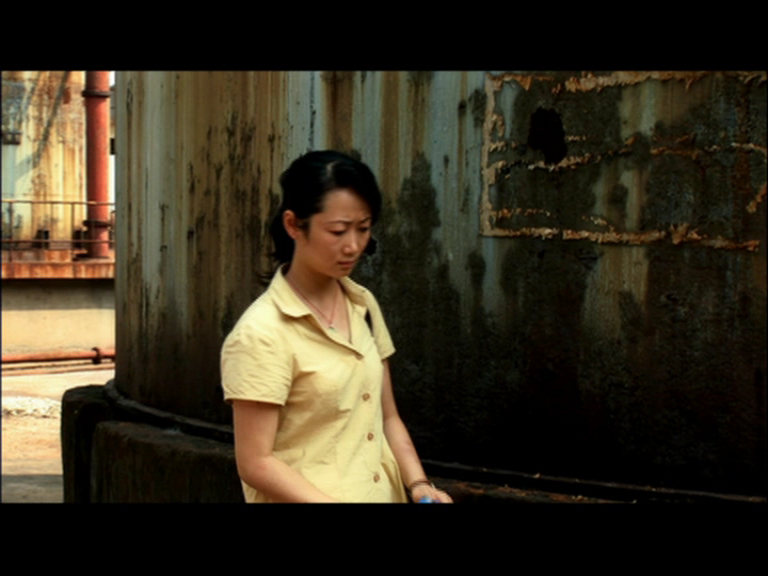
As with many auteurs, Jia uses a small and trusted band of actors including Zhao Tao, Han Samning and Wang Hongwei. As with all auteur-actor relationships, their ageing process onscreen becomes an integral part of the whole pattern of Jia's vision. In Still Life Zhao Tao plays a woman from Shanxi which is Jia's home province and the location of his earlier films. Shen Hong is visiting the vast demolition and construction site of the Three Gorges dam in search of her husband who abandoned her two years earlier. He is now something of a shifty entrepreneur, profiting from the get-rich-quick ethos of modern China (how far away that last throb of Maoist China recorded in Platform now seems). Zhao only appears 40 minutes into the film, slightly ghostly, as translucent as the water she constantly drinks from a bottle.
Another central character is yet another stray from Shanxi, a working-class former miner who has come to town looking for his runaway wife, despite her perfectly reasonable desire to leave him, since she had been bought and sold as a chattel. This individual, a clenched muscle of inexpressible male misery, is played by Han Samning, who played the same character in Platform and The World (2004).
As well as his escaped wife, Han is also looking for his 16- year-old daughter - keep an eye out for the teenager in a green t-shirt whom Sheng Hong meets on the road. Jia's characters are usually never 'alienated' in the western sense. They are translocated. They are being erased like the landscape so tellingly depicted on the Chinese currency Han holds up in one particular scene; this is all about money, Jia seems to be saying.
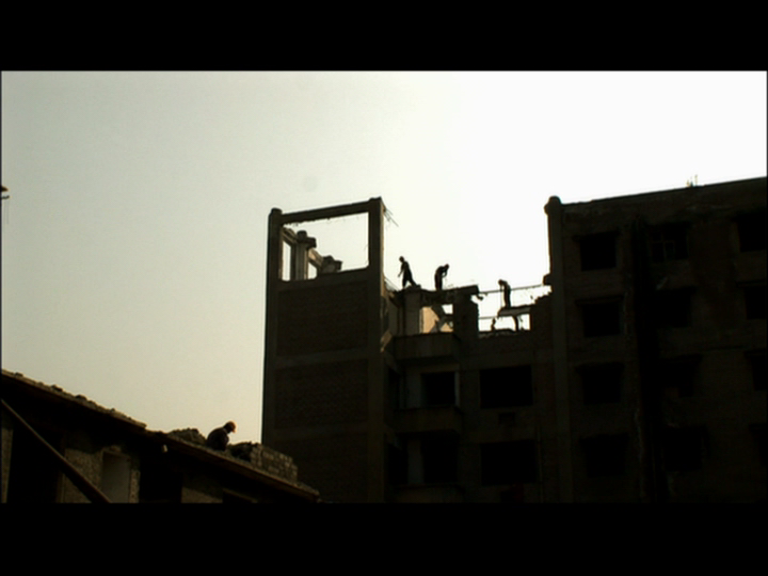
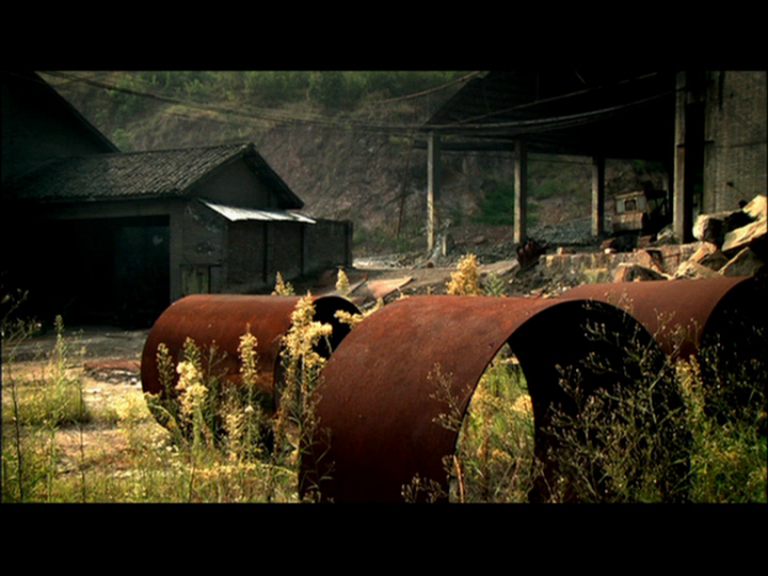
Jia announces some of his actual 'still lives', his dedicated images, with the words Tea, Liquor and Toffee, and indeed his eye is very much drawn to objects and the lee they leave in people's lives - the patterns of rust in a decayed industrial site, for example, are all palimpsest and elision.
Jia has made no bones about his interest in design, art and visual constructions; see his recent Wuyong (Useless) (2007) about fashion design, and the companion piece to Still Life, Dong, the 66-minute documentary which records the painter Liu Xiaodong as he prepares two large-scale works around the demolition workers at the Three Gorges project. That said, the original Chinese title of Still Life translates as the rather more down-to-earth 'The Good People of the Three Gorges', so it may be wise not to read too much into the English-language title.
What next for Jia? Still Life is only the second film he has made to be officially sanctioned by the Chinese Film Bureau - remarkable considering its less than flattering portrait of much of the bureaucracy and greed. Why did they do this? At the time of writing, in late November 2007, the Chinese government has been forced to face the possibility that much of the Three Gorges project is in fact geologically unsound after a landslide in Hubei province resulted in loss of life. It is perhaps no coincidence that in September last year, mere weeks after Jia won the Golden Lion for Still Life, the Chinese Government reversed twelve years of consistently upbeat pro-dam propaganda to warn of a potential environmental 'catastrophe'.
Almost overnight, an intensely personal vision of people's eroded lives is entwined with the fate of Mao's hydroelectric dream and a generic matter of Chinese national pride. It's a curious, rather fascinating postscript to such an understated and beautiful film.
Posted: Sat Jan 12, 2008 2:26 am
by Cosmic Bus
SalParadise wrote:Sadly, Dong (which means 'East') doesn't have any subtitles whatsoever, so that's a big bummer!
There are individual HK releases of Dong and Still Life that apparently have English subtitles on both features, and are only $10 each. I'm looking around for confirmation of this before ordering these over the 2-disc mainland version (which is still a very appealing $11 US).
Posted: Thu Jan 17, 2008 7:33 pm
by foggy eyes
Hoberman's
review of
Still Life.
Posted: Sat Feb 09, 2008 12:07 am
by thirtyframesasecond
Sorry for resurrecting a thread a year and a half old but Still Life has just been released in the UK; as the centrepiece of the Jia Zhang Ke retrospective at the BFI Southbank.
I'd seen Xiao Wu and Unknown Pleasures, but not Platform or The World yet, but Still Life appeats to encompass the themes that interest Jia Zhang Ke: rampant capitalism and rapid modernisation in China, and Still Life considers the human cost of this - towns, families and communities destroyed in the name of progress.
As much as I love the early Chen Kaige and Zhang Yimou films, and even though they can be read as allegories about contemporary China, none of those films exposed the reality of the modern China as much as the films of Jia Zhang Ke do. Such an impressive director.
Posted: Sat Feb 09, 2008 4:14 pm
by pauling
There's actually a free screening of this film tonight as a preview for the upcoming Twin Cities film festival. It sort of looks like it might be dramatic version of Manufactured Landscapes which was, in my opinion, one of the best movies that I saw last year. Very excited to see this.
Posted: Tue Jul 08, 2008 6:03 pm
by Skritek
Does anybody own
this release of Dong? It seems to have English subtitles.
Posted: Tue Jul 08, 2008 10:54 pm
by foggy eyes
Skritek wrote:Does anybody own
this release of Dong? It seems to have English subtitles.
At this point, you might as well wait for the forthcoming BFI disc of
Still Life, as a subbed version of
Dong will definitely be included. It appears to have now been delayed until 18/08, but should be worth the wait.
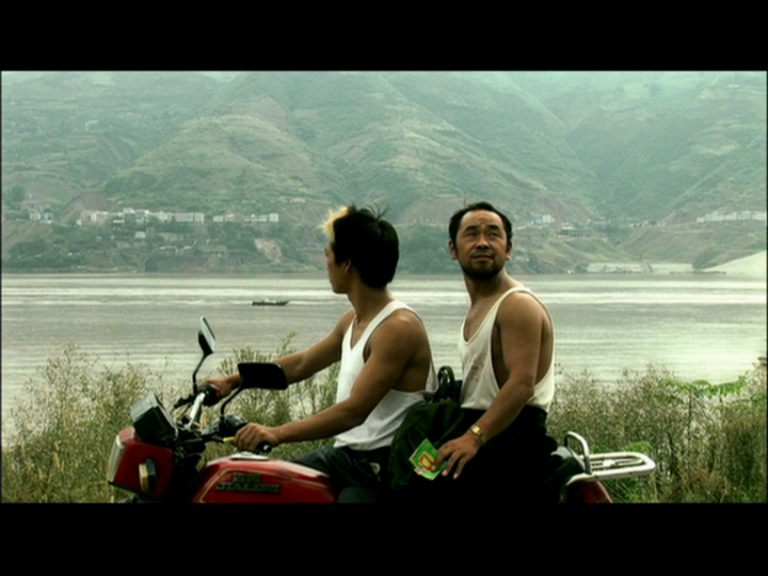
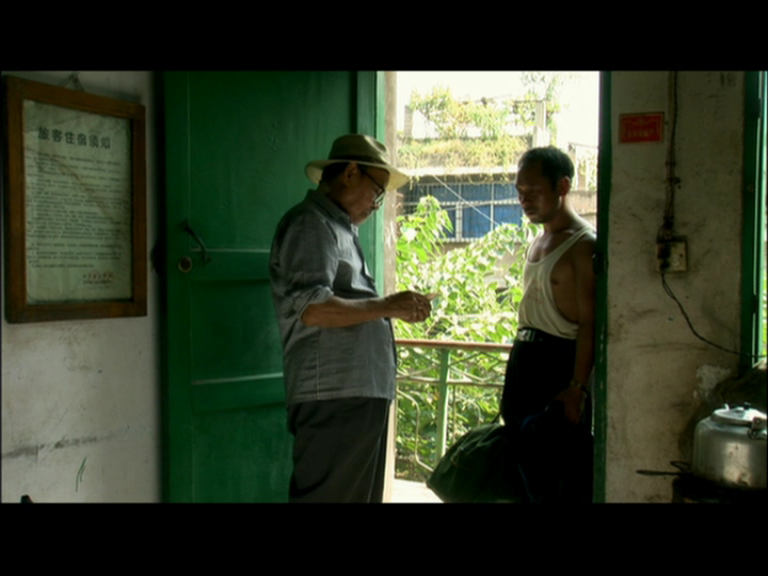
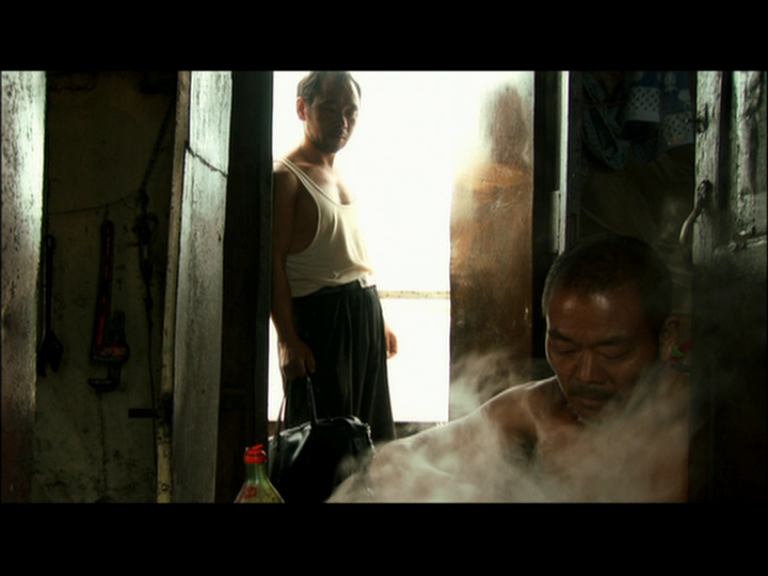
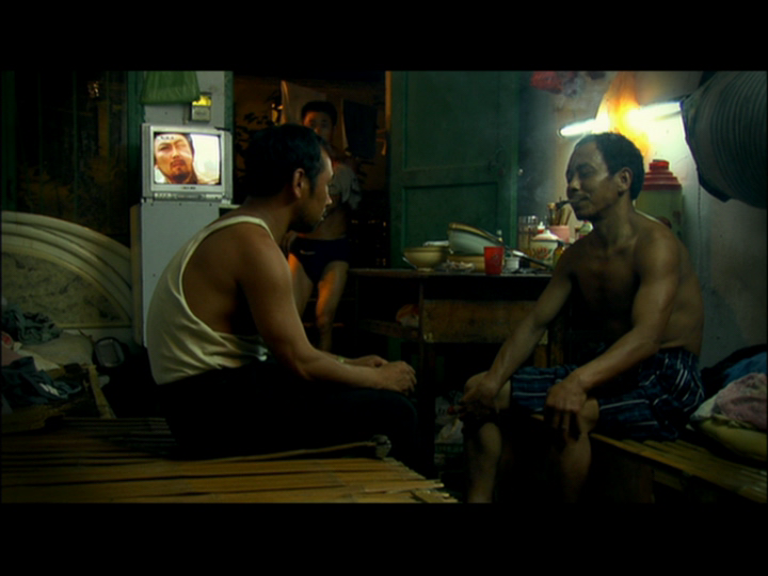
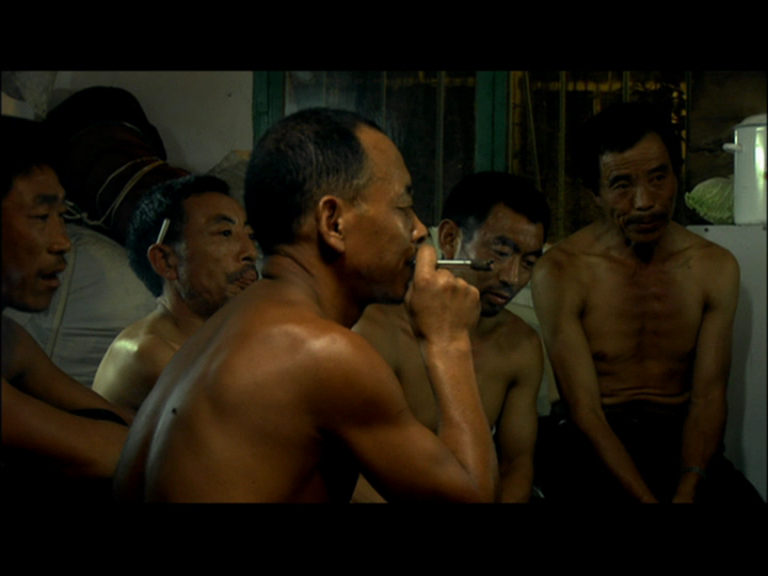
I have the unsubbed Chinese disc of
Dong at the moment (in the 2-disc set with
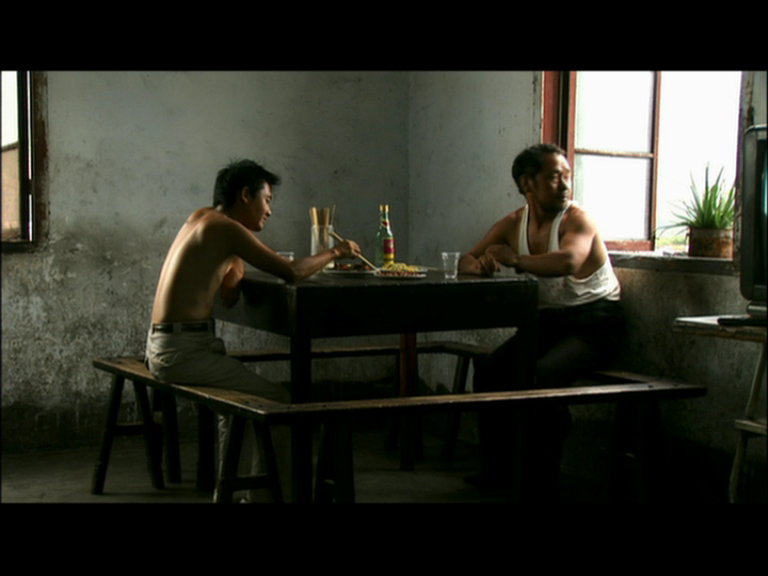
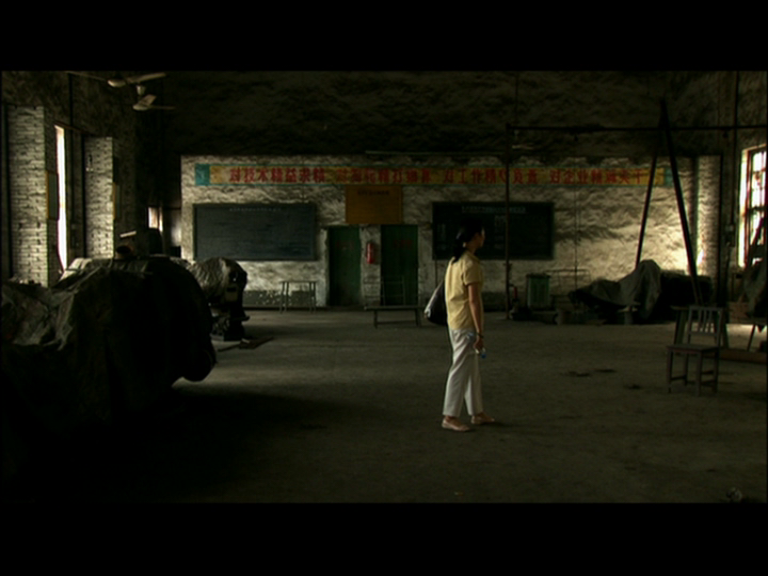
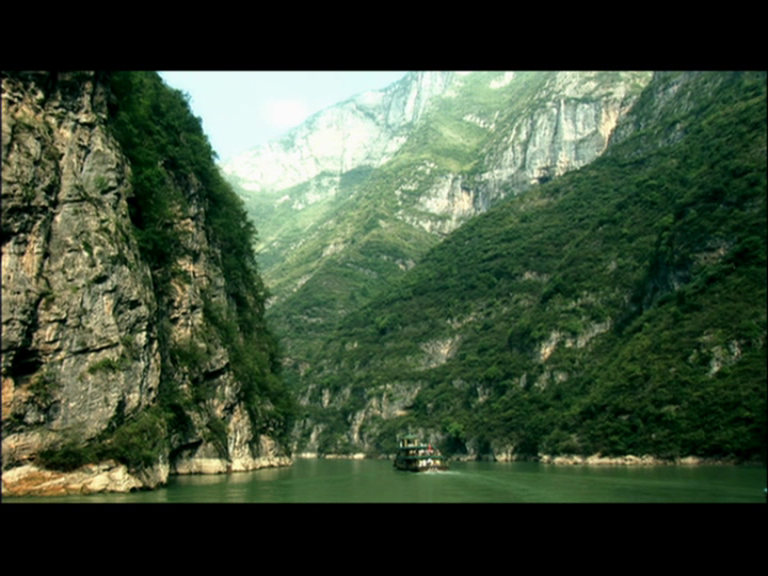
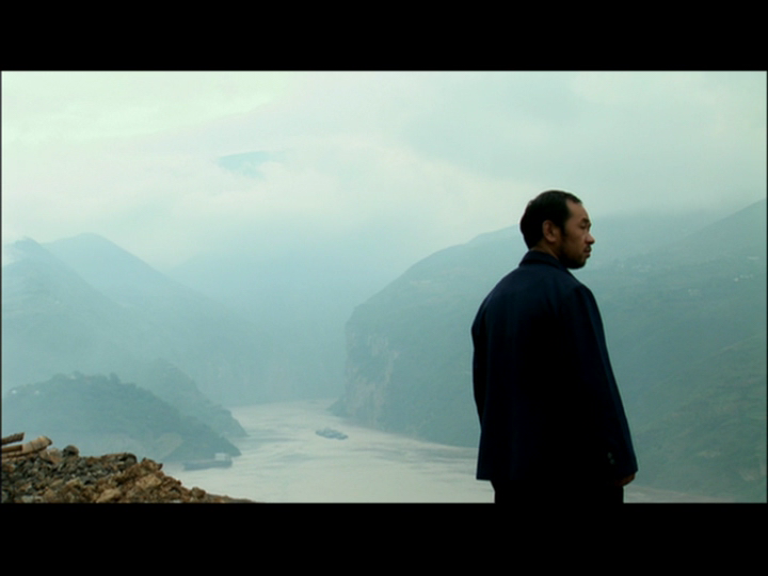
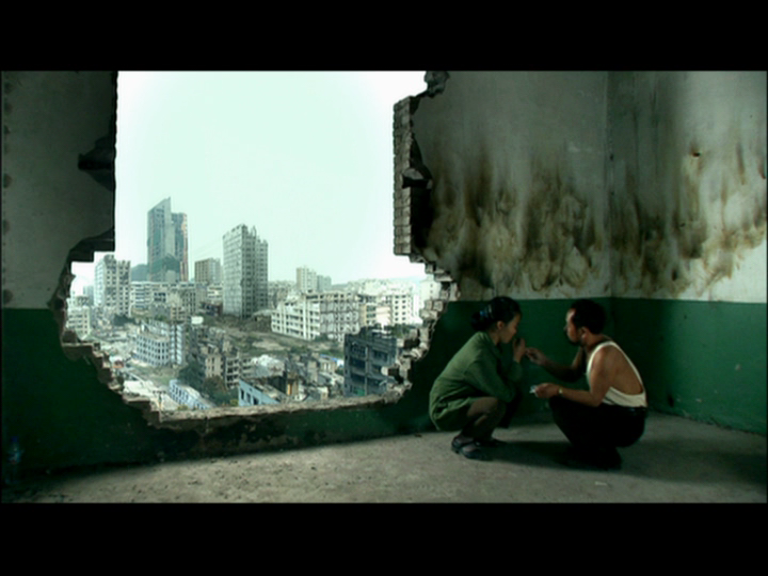
Still Life), and the transfer is great. A couple of caps:


Posted: Wed Jul 09, 2008 6:42 am
by Skritek
Thanks, I didn't realize Dong was going to be included. Wanted to buy it anyways.
Posted: Wed Jul 09, 2008 8:29 am
by MichaelB
Skritek wrote:Thanks, I didn't realize Dong was going to be included.
Dong is definitely included - I have a checkdisc of the BFI edition, so you can take that as gospel.
Re: Still Life & Dong (Jia Zhangke, 2006)
Posted: Tue Dec 07, 2010 5:06 pm
by The Fanciful Norwegian
Wikileaks answers the question everyone has been asking for the past four years:
Where did China's next president come down in the Jia/Zhang competition?
22. (C) The Ambassador also asked Secretary Xi [Jinping] about his recent movie viewing, recalling that Xi had told him in their meeting one year ago that he had recently seen and tremendously enjoyed "Saving Private Ryan." Had Secretary Xi seen other recent American movies that he had enjoyed? Xi replied that he already owns the "Flags of Our Fathers" DVD, but hopes to view it during the Lunar New Year holidays had gone unfulfilled. He had seen and enjoyed "The Departed." Xi said he particularly likes Hollywood movies about World War II and hopes Hollywood will continue to make them. Hollywood makes those movies well, and such Hollywood movies are grand and truthful. Americans have a clear outlook on values and clearly demarcate between good and evil. In American movies, good usually prevails. In contrast, "Curse of the Golden Flower," a recently popular Chinese movie directed by Zhang Yimou and starring Gong Li (she of "Miami Vice" movie stardom) had been confusing to Xi. Some Chinese moviemakers neglect values they should promote.
23. (C) America is a powerful nation in terms of culture because Americans say what they should say, Xi elaborated. Too many Chinese moviemakers cater to foreigners' interests or preconceptions, sometimes vulgarly so. He criticized Zhang Yimou by name as well as the kungfu action movie genre. "Crouching Tiger, Hidden Dragon" and "Wu Ji" [The Promise] and imperial palace intrigues -- all are the same, talking about bad things in imperial palaces. Most are not nominated for Oscars or other awards, so to some extent it can be said that such movies are not worth very much. The Ambassador noted that a Chinese film about HIV/AIDS orphans had just garnered the Oscar for best short documentary. Xi expressed awareness of the movie, noting that the director is a female overseas Chinese (but Xi never said whether he had seen that documentary). Xi recalled that a low cost, very good Chinese movie by the director Jia Zhangke had recently won a Golden Lion award at the Venice Film Festival.
There's too many incongruities in this to address, so I'll just leave it here.