Stanley Kubrick Collection
-
patrick
- Joined: Sun Mar 11, 2007 4:15 pm
- Location: Philadelphia
I finally took a look at our store copy, looks like we got one of the boxes with the incorrect Shining cover. I'm interested in seeing how this clusterfuck plays out, I guess I'll have to wait and see what they have to say about the Shining cover mixup. I know crap like this is inevitable with a giant company like Warner Brothers, but this fiasco makes me very apprehensive about buying the Blade Runner set later this year.
-
Donald Brown

- Joined: Tue Nov 02, 2004 7:21 pm
- Location: a long the riverrun
-
patrick
- Joined: Sun Mar 11, 2007 4:15 pm
- Location: Philadelphia
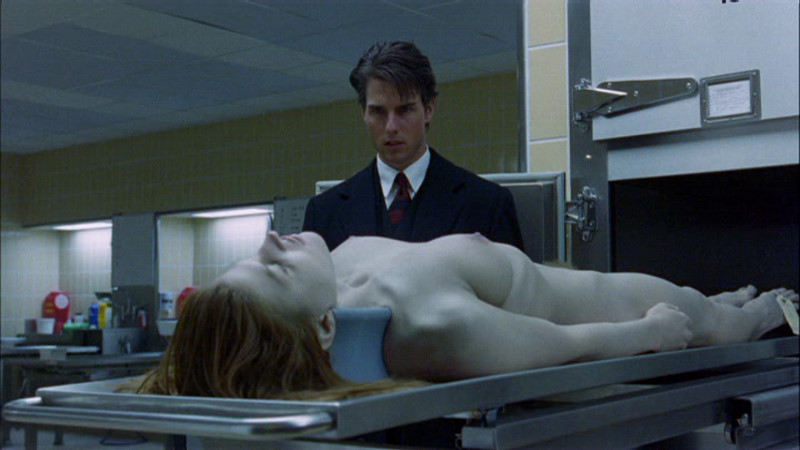
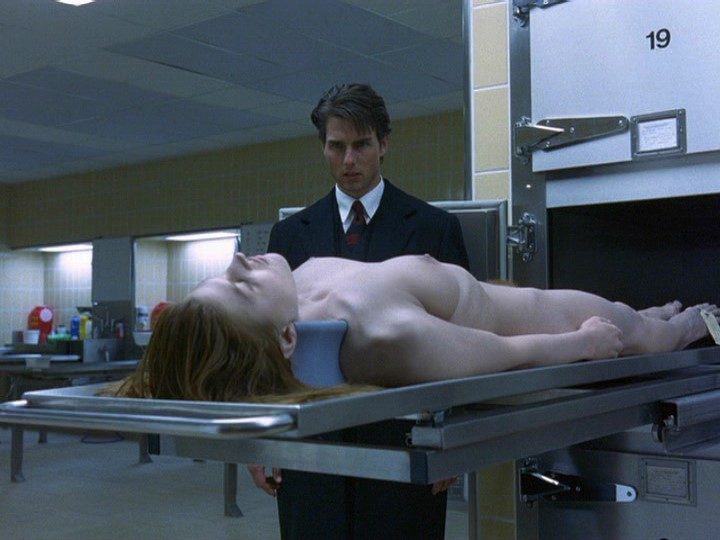
Not just the box art, but the Eyes Wide Shut rating mess and the fact that people can't even get their hands on the boxes at the moment (not to mention the voices saying that the quality is somewhat substandard, which I haven't personally verified yet). All of these things are minor annoyances, but when they're all happening at the same time in regards to what should be one of WB's crown jewels this year it makes one wonder what the fuck is going on in Burbank.
-
flyonthewall2983

- Joined: Mon Jun 27, 2005 7:31 pm
- Location: Indiana
- Contact:
-
Donald Brown
- Joined: Tue Nov 02, 2004 7:21 pm
- Location: a long the riverrun
-
patrick
- Joined: Sun Mar 11, 2007 4:15 pm
- Location: Philadelphia
Yeah I'm disappointed that these sets don't have the fullscreen versions included (especially considering how much space high-def discs have), I guess we'll be seeing the "Absolutely Completely Ultimate" edition in 5 years. However, I've never owned widescreen versions of these films, so I'm happy to finally see them.
I'm guessing it has to do with anything in full frame sending consumers into a tizzy (see all the people who complain that, say, Casablanca isn't in widescreen when a widescreen version never existed), especially given the fact that they're pushing the high-def versions.
Actually, when I think about it, the biggest travesty about this set is that Warner Brothers deemed Barry Lyndon and Lolita unfit for inclusion. A SE of Barry Lyndon would have made this an immediate "must buy:" without it it's something I'll probably wait until I find it cheap/used to get.
I'm guessing it has to do with anything in full frame sending consumers into a tizzy (see all the people who complain that, say, Casablanca isn't in widescreen when a widescreen version never existed), especially given the fact that they're pushing the high-def versions.
Actually, when I think about it, the biggest travesty about this set is that Warner Brothers deemed Barry Lyndon and Lolita unfit for inclusion. A SE of Barry Lyndon would have made this an immediate "must buy:" without it it's something I'll probably wait until I find it cheap/used to get.
-
denti alligator
- Joined: Thu Nov 04, 2004 1:36 am
- Location: "born in heaven, raised in hell"
Is there any way to get the official story on this? I can't believe they simply felt no one cares for those films.patrick wrote:Actually, when I think about it, the biggest travesty about this set is that Warner Brothers deemed Barry Lyndon and Lolita unfit for inclusion. A SE of Barry Lyndon would have made this an immediate "must buy:" without it it's something I'll probably wait until I find it cheap/used to get.
-
patrick
- Joined: Sun Mar 11, 2007 4:15 pm
- Location: Philadelphia
From what I understand, the official word from WB was that Barry Lyndon was/is being worked on for an eventual high-def release but Warner Bros. wanted this set out before Christmas so they dropped Lyndon and Lolita from the set. I guess in retrospect it's kind of fair of WB to do that, at least they're not making people pay for the old versions of those DVDs. I would have preferred if they had waited a year and produced the definitive Kubrick box set, but considering how rushed the production of this set seems I'm glad that my favorite Kubrick film isn't part of it and will hopefully be devoid of the million little snafus that have plagued WB lately.
-
Gregory

- Joined: Tue Nov 02, 2004 8:07 pm
Kubrick composed his later films for a widescreen theatrical aspect ratio but he understood that they would be in 1.33:1 when aired on television so he protected the full frame (no crew members or equipment showing) so that they could be televised open matte rather than pan and scan. For example, in the Kubrick Archive book there is a photograph of the hotel that was the model for the Overlook in the Shining. Kubrick's instructions on it say "The frame is exactly 1-1.85. Obviously you compose for that but protect the full 1-1.33 area."Donald Brown wrote:By far the biggest problem with these new Kubrick discs is the horrific cropping of the man's immaculate full-frame images. I'm hearing precious little displeasure about that. His last three films look appalling when matted, especially Eyes Wide Shut.
Those who think they look appalling are entitled to that opinion, of course, but I don't think it's a case of the studio violating his wishes. Some of the statements and decisions he made on the aspect ratios of the later films had to do with the "requirement" of full-frame home viewing that was the standard at the time.
I usually disagree with the policy of releasing both FS and WS DVDs of the same film, as some of the big studios do, but this is a case where it would have made sense to include both.
-
Darth Lavender
- Joined: Sun Aug 13, 2006 6:24 pm
I do wonder just how much of this "looks better in 4:3" (which I, somewhat, sympathise with) is motivated largely by 4:3 simply being the way most of us have always viewed the film. It's just a little jarring to suddenly see the film in a different ratio.
Actually, it might be an interesting experiment (albeit, unethical, and somewhat inhumane,) to raise a child on just the colorised Casablanca, and then see if he likes it more or less as a black & white film (assuming an appreciation for other black & white movies.) I'm guessing, even though the film is obviously meant to be black and white, it would still be an awfully jarring change for the child, and for some time he'd still be partial to the colorised.
Actually, it might be an interesting experiment (albeit, unethical, and somewhat inhumane,) to raise a child on just the colorised Casablanca, and then see if he likes it more or less as a black & white film (assuming an appreciation for other black & white movies.) I'm guessing, even though the film is obviously meant to be black and white, it would still be an awfully jarring change for the child, and for some time he'd still be partial to the colorised.
-
Donald Brown
- Joined: Tue Nov 02, 2004 7:21 pm
- Location: a long the riverrun
I'm well aware of that one pre-production note scribbled in the margins of that photo. Those wishing to rationalize the butchering of these films are really making hay of it. Everything we know since then contradicts the final validity of that note. That may have been his initial intention, but evaluation of the finished film, and Kubrick's adamant preferences for its later presentation, reveal that he ended up composing ideally for 4:3 and protecting for 1.85:1 theatrical projection. Objecting to the pan-and-scan treatment of his films for TV broadcast and for home video is one thing, but the man was insistent about them being offered only in full-frame, even though he knew full well that it could be matted to give the same theatrical ratio for home viewing. Why? The argument about full-frame-only "requirements" don't hold water for later in the lifespan of videotape, and not at all for laserdisc and DVD. Why not insist on 1.85:1 if that's how he really preferred them to be seen? When all is said and done, he ended up liking the full-frame better, and it should be immediately apparent why.Gregory wrote:Kubrick composed his later films for a widescreen theatrical aspect ratio but he understood that they would be in 1.33:1 when aired on television so he protected the full frame (no crew members or equipment showing) so that they could be televised open matte rather than pan and scan. For example, in the Kubrick Archive book there is a photograph of the hotel that was the model for the Overlook in the Shining. Kubrick's instructions on it say "The frame is exactly 1-1.85. Obviously you compose for that but protect the full 1-1.33 area."Donald Brown wrote:By far the biggest problem with these new Kubrick discs is the horrific cropping of the man's immaculate full-frame images. I'm hearing precious little displeasure about that. His last three films look appalling when matted, especially Eyes Wide Shut.
Those who think they look appalling are entitled to that opinion, of course, but I don't think it's a case of the studio violating his wishes. Some of the statements and decisions he made on the aspect ratios of the later films had to do with the "requirement" of full-frame home viewing that was the standard at the time.
I usually disagree with the policy of releasing both FS and WS DVDs of the same film, as some of the big studios do, but this is a case where it would have made sense to include both.
Even if one takes it on faith that The Shining should be 1.85:1 based on that one early note, it doesn't follow that his last two films were composed as such. One simply has to use one's eyes and compare the compositions. Not only are the full-frame images superior, the matted images are nearly unwatchable -- painful. I've never seen anyone with any credibility, or anyone other than philistines who understand nothing of composition, argue that his final three films when matted look better than in full-frame. The most conclusive evidence is right before us on our screens.
This "looks better in 4:3" comes from an understanding of photographic composition. I saw Full Metal Jacket and Eyes Wide Shut first in widescreen in the theater. They looked unimpressive, to say the least. Finally seeing Eyes Wide Shut in its proper ratio on DVD was especially eye opening. It led me to completely reevaluate my opinion of the film. By your reasoning, since I was first familiar with the films in widescreen, I should be predisposed toward embracing them as such on video.Darth Lavender wrote:I do wonder just how much of this "looks better in 4:3" (which I, somewhat, sympathise with) is motivated largely by 4:3 simply being the way most of us have always viewed the film. It's just a little jarring to suddenly see the film in a different ratio.
It's more likely that the "looks better in widescreen" argument is embraced by those who care little about the actual composition and are simply thrilled to not have any black bars on their widescreen TVs. I've yet to see a knowledgeable person make anything approaching a convincing case for the aesthetic superiority of a matted viewing of Kubrick's last three films.
-
Oedipax

- Joined: Wed Nov 03, 2004 12:48 pm
- Location: Atlanta
Count me in as another strong supporter for the open matte versions of his three last films: The Shining is, for me at least, unthinkable in anything besides academy ratio, helicopter shadow be damned! I feel the same way about Eyes Wide Shut - I mentioned over on the DVD Beaver e-mail group that, for instance, while this shot looks like it could come from any 90s Tom Cruise thriller - maybe a Grisham adaptation - this shot is unmistakably Kubrickian. As you gotta be kidding me said, it not only looks better just aesthetically, but it also has a lot of added meaning. The matted version feels like 'just a movie,' the open matte suggests a completely different reading of the film, one in which Bill Harford is just as much a product of and slave to his environment as Jack Torrance in The Shining. For more on this, I highly recommend checking out Tim Kreider's excellent essay on EWS, "Introducing Sociology," which can be accessed here.
-
Svevan
- Joined: Mon Nov 22, 2004 11:49 pm
- Location: Portland, OR
Post of the decade. Not that I disagree with your conclusion, but you have just as much proof that these yea-sayers are philistines as you do that these films look better opened up. Your argument boils down to an appeal to authority (yours), while compelling us to "look, look! Look with your own eyes!" and wish upon a star while we're at it.Donald Brown wrote:Not only are the full-frame images superior, the matted images are nearly unwatchable -- painful. I've never seen anyone with any credibility, or anyone other than philistines who understand nothing of composition, argue that his final three films when matted look better than in full-frame. The most conclusive evidence is right before us on our screens.
Name-calling gets us nowhere; the pure, simple truth of it is that Kubrick was enough of a genius that he could've composed these films for two aspect ratios. If we are able to simply look at these screens and decide which is better, why couldn't Kubrick? Surely if he preferred the 1.33 ratio (because logic follows that if you prefer it, he must have too), why would he have only made it available on TV and the eventual home video release in a time when home video was only gestating and the only place to see Kubrick was in a theatre?
The ultimate DVD would have both ratios on it, and this is something we are not apt to see until an even later HD release. Arguments based on Gary's selective caps are worthless.
edit: side note, if you have a 1.77 television, you can use your DVD player's zoom in function to "matte" the full-frame DVDs to a close approximation of these new ones, which is a more elegant solution than owning only the cropped ratio.
double edit: Thought I made it clear that I prefer the 1.33 ratio too, I just don't place my preference over and above the facts or claim that I could prove the inferiority of the new DVDs without watching them.
Last edited by Svevan on Mon Oct 29, 2007 11:07 pm, edited 1 time in total.
-
domino harvey

- Dot Com Dom
- Joined: Wed Jan 11, 2006 6:42 pm
Kubrick was no genius but even someone like me who doesn't care for his work can clearly see that the last few films are composed for Academy Ratio and were only matted so as to be able to be projected theatrically. I can't imagine anyone seeing these films cropped, with all sense of composure and framing removed, and finding them of any value

-
domino harvey
- Dot Com Dom
- Joined: Wed Jan 11, 2006 6:42 pm
-
denti alligator
- Joined: Thu Nov 04, 2004 1:36 am
- Location: "born in heaven, raised in hell"
Shit, you askin' me?davidhare wrote:Denti, what think thou?
Well, I've only seen Full Metal Jacket and The Shining on home video. And I've only seen EWS theatrically. They looked fine to me. Not sure how different I'll feel seeing the former two matted, but I have no reference for EWS other than the theatrical screening (and Gary's comparison screen shots). I'm just happy they're getting the HD treatment, which, as far as I'm concerned trumps any questions of AR in purchasing these versions.
I think the argument that somehow the unmatted versions were Kubrick's preferred versions is ridiculous. As far as he knew, most people would be seeing these films in the theater. Why would he make the home video versions, which wouldn't be available until later, would be viewed mostly on inferior equipment (FMJ and Shining pre-date even laserdsic), and (until EWS, and even then...) weren't as wide-spread as they are today--why would he make the version destined for this kind of viewing his preferred framing? I have no doubt that he dealt with his films in post-production with an eye to the matted image.
Whatever, I'll be viewing these new 1.78 (which is more open than the theatrical presentation, if only by a little) soon and will report back then.
-
Darth Lavender
- Joined: Sun Aug 13, 2006 6:24 pm
As for myself, I'm somewhat partial to the 4:3 Eyes Wide Shut based on the Beaver screencaps, but with so many people arguing for the superiority of the 4:3, I feel compelled to play devil's advocate anyway (despite my inability to do a Pacino impression)
Meanwhile, here's an interesting interview (from both sides of the argument; Vitalli seems to think Kubrick actually composed for 1.66:1, but doesn't distinguish between that and 4:3) from when the original Kubrick DVDs were released.
Also worth noting; I seem to recall reading somewhere, might have been on a newsgroup, that towards the end of his life some theatre in England did a Kubrick retrospective and, having the ability to project in 1.37:1 and 1.85:1, asked Kubrick himself how to project The Shining and Full Metal Jacket; and he told them to project 1.85:1
Meanwhile, here's an interesting interview (from both sides of the argument; Vitalli seems to think Kubrick actually composed for 1.66:1, but doesn't distinguish between that and 4:3) from when the original Kubrick DVDs were released.
Also worth noting; I seem to recall reading somewhere, might have been on a newsgroup, that towards the end of his life some theatre in England did a Kubrick retrospective and, having the ability to project in 1.37:1 and 1.85:1, asked Kubrick himself how to project The Shining and Full Metal Jacket; and he told them to project 1.85:1
-
denti alligator
- Joined: Thu Nov 04, 2004 1:36 am
- Location: "born in heaven, raised in hell"
If you could confirm this it would put the lid on this matter, once and for all.Darth Lavender wrote:I seem to recall reading somewhere, might have been on a newsgroup, that towards the end of his life some theatre in England did a Kubrick retrospective and, having the ability to project in 1.37:1 and 1.85:1, asked Kubrick himself how to project The Shining and Full Metal Jacket; and he told them to project 1.85:1
-
Gregory
- Joined: Tue Nov 02, 2004 8:07 pm
I mentioned only one example of his instructions about which frame ratio was to be used for composition, because I haven't done archival research on the matter nor have I spoken with people who worked on the film, so there isn't a great deal of real evidence available to me (in contrast to unsubstantiated assertions that people throw around on the internet, which are plentiful). More evidence might bolster my present point of view on the matter, but then again it might prove me wrong, I'm willing to allow for that possibility. The photograph with Kubrick's instructions seems quite conclusive to me ("obviously," as Kubrick himself about composing for 1.85). If, as you say, he changed his mind later in the production and then composed for academy there should be some record of that. But you've given no evidence for this claim at all, which is unfair after seeming to scoff at the insufficiency of my own reference to one source that documented his wishes.Donald Brown wrote:Everything we know since then contradicts the final validity of that note. That may have been his initial intention, but evaluation of the finished film, and Kubrick's adamant preferences for its later presentation, reveal that he ended up composing ideally for 4:3 and protecting for 1.85:1 theatrical projection.
The conclusive evidence you say is right in front of us on our screens doesn't really help us discern intended compositions. It's too easy to decide what we think looks best and then extrapolate that it must have been composed with that in mind. Some shots are going to look like they were composed for 1.85:1 and others will look better to us in 1.33:1, at least in my experience. So that's why I'm concentrating here on the discussion of the director's intentions. As for what we prefer, I allowed in a previous message that people are entitled to their opinions in this matter and suggested that it would have been nice for both to have been included.
My understanding was that back when Kubrick made his decision about preferring open matte for television broadcasts of the film it was extremely unusual to letterbox films for widescreen presentation. Z Channel was doing it and that was about it.Objecting to the pan-and-scan treatment of his films for TV broadcast and for home video is one thing, but the man was insistent about them being offered only in full-frame, even though he knew full well that it could be matted to give the same theatrical ratio for home viewing. Why?
The argument about full-frame-only "requirements" don't hold water for later in the lifespan of videotape, and not at all for laserdisc and DVD. Why not insist on 1.85:1 if that's how he really preferred them to be seen?
The last phase of VHS (which was when theatrical aspect ratio started to be a concern for a small minority of consumers) and DVD barely overlap at all with Kubrick's life. He may not have insisted on it right at the end of his life when widescreen home viewing had become more standard (but still not the standard) simply because he thought both looked perfectly acceptable. Just because he composed for 1.85 doesn't mean that he necessarily would have been eager to get rid of the open-matte version. That's why he made it so that both would look acceptable. If the 1.85:1 version looked as horrible as you say, Kubrick would not have allowed it to be matted theatrically that way. Did he ever voice a single regret that most moviegoers at the time saw it in this "butchered" state -- if so, please cite it.
-
Romat
- Joined: Thu Oct 11, 2007 8:50 pm
- Location: Cambridge, MA
Personal framing preferences aside... This seems just ass backwards to me. The ideal way to present a motion picture is in a theater. Certainly back in 1987, it was the proper or preferred way to see Kubricks films. And I think that obviously was Kubrick's understanding and preference when making those films. We can't project our modern day "home theater" mindset on to people making or viewing films back before the 1990s.Donald Brown wrote:This "looks better in 4:3" comes from an understanding of photographic composition. I saw Full Metal Jacket and Eyes Wide Shut first in widescreen in the theater. They looked unimpressive, to say the least. Finally seeing Eyes Wide Shut in its proper ratio on DVD was especially eye opening.
If in 1989, someone walked out of a theatrical screening of Full Metal Jacket and claimed it was unimpressive. What would Kubrick's response have been? "Oh that wasn't even framed properly, you must go home and watch the VHS tape on your 19 or 27-inch TV, that really is the way I "prefer" you experience it."
He was making his films for the theater, even EWS. He put his newest films out, for critics and audiences to see for the very 1st time, framed "properly" in the theater. (that's just what I think)
-
kinjitsu

- Joined: Sat Feb 12, 2005 5:39 pm
- Location: Uffa!
From alt.movies.kubrick:denti alligator wrote:If you could confirm this it would put the lid on this matter, once and for all.Darth Lavender wrote:I seem to recall reading somewhere, might have been on a newsgroup, that towards the end of his life some theatre in England did a Kubrick retrospective and, having the ability to project in 1.37:1 and 1.85:1, asked Kubrick himself how to project The Shining and Full Metal Jacket; and he told them to project 1.85:1
David Mullen wrote:There will never be a definitive answer on this question, only educated guesses. Here's what I've learned or theorized so far:
I asked DP Douglas Milsome what aspect ratio "Full Metal Jacket" was for and he said "1.66 : 1". When I asked him about Kubrick's insistence on 4x3 full-frame for the video transfer he said "Kubrick was a big fan of the 1.37 Academy format."
When a London film festival did a retrospective of Kubrick's films before he died, he suggested that those particular films be projected with a 1.66 hard matte, even though 1.37 Academy was an option. So if Kubrick preferred 1.37 over matted widescreen, why didn't he want it projected that way?
Restorer Robert Harris once posted here that in conversation with Kubrick, he simply said he did not want any electronic masking over his film frames, so while truly wide films like "2001" and "Spartacus" are letterboxed according to Kubrick's wishes, "Dr. Strangelove" has partial masking on 4x3 video, "Clockwork Orange" is masked to about 1.66 for most of the movie and 1.85 for one scene, and "Barry Lyndon" is masked to about 1.66, all according to his wishes. Only the three made after that are 4x3 full-frame on video. In the case of those films I mentioned that have partial, inconsistent, and overall masking, I believe that they were shot that way in-camera and Kubrick preferred they be transferred with camera masks visible (when used) rather than zoom in and pan & scan them at all.
One of Kubrick's assistants in the editing room said that all editing equipment was marked for 1.85 framelines. Garret Brown has said the same thing about framing the steadicam shots in "The Shining". The 4x3 full-frame transfers of "The Shining" and "Full Metal Jacket" all show an excess of headroom in medium close-ups, consistent with something composed for cropping to widescreen projection in mind. "Eyes Wide Shut" however does not exhibit this; since it was transferred after Kubrick's death, either the colorist "corrected" the excess headroom problem or the film was shot unusually in a "common topline" format, necessitating an optical to make a masked dupe negative for release prints where the matted image was centered vertically. This may explain why some industry people have said that the release prints were much more grainy than the contact-printed answer print screened for some people, more so than is typical in the IP/IN process. But that's a guess and may be off the mark.
Now we enter the realm of pure opinion, but IF one has frameline markings in the camera for cropping to widescreen and use these framelines to determine headroom and holding important information to the story within that area, then one is defacto composing for cropping to widescreen, and in Kubrick's case, PROTECTING the full-frame for video, not the other way around. An argument in semantics, to be sure.
Second, with a film like "The Shining", after working on it for years, after having a long shooting and editing period, it is inconceivable that it was composed in a way that Kubrick felt was incorrect (matted widescreen projection) and would only look correct to his eyes LATER when it got shown on TV some time after the theatrical release.
Remember, this was before home video and even many cable TV movie channels were available. What is more likely is that Kubrick saw TV as a chance for an alternate version, in a sense, that mimicked the 1.37 Academy ratio he loved, so he saw it as an opportunity. However, it does not prove that he primarily composed it for 4x3 since these were primarily seen in his mind as R-rated theatrical films, not made-for-TV
broadcast movies, and the theatrical version in which he would get the initial critical response, not to mention hoped-for box office success, would be matted to widescreen.
I freely admit that this enters to realm of conjecture at this point, but believe backed up with some basic reasoning. However, considering that Kubrick was also an eccentric, I cannot rule out anything in regards to his intentions. All one can say with certainty was that he preferred his last three films to be transferred to video in 4x3 full-frame. Any guesses as to why is exactly that, a guess. We also don't know what his reaction would have been had TV become predominantly 16x9 in the future.
....
This is old hat for most people, but for those who still insist that Kubrick's last three films were composed for 4x3, the Kubrick Archives book has an interesting item -- a still photograph of the Timberline Lodge with Kubrick's 1.85 framelines drawn over it with the note attached:
"THE FRAME IS EXACTLY 1-1.85
Obviously you compose for that but protect the full 1-1.33 area"
David Mullen, ASC
Los Angeles
-
yoshimori
- Joined: Wed Nov 03, 2004 6:03 am
- Location: LA CA
This is huh-larious.domino harvey wrote: [dh] ... can clearly see that the last few films are composed for Academy Ratio and were only matted so as to be able to be projected theatrically.
I hate to seem piling on after the last few posts, but this idea - that theatrical projection paled in SK's eyes to the true venue for his films: VHS - is one I find quite "interesting"!
Mr Mullen, ASC, quoted above, is pretty careful when he writes:
He may be hinting at what I heard several distribution savvy people say back around the time of FMJ, that SK believed a VHS distribution of his movies with what a lot of people thought back then were nasty little black bars at the top and bottom of the screen would limit sales. And Kubrick always seemed to be concerned/controlling when it came to the financial success of his films. [We, though we loved Kubrick, used to use the term "money whore" to account for certain decisions re, for example, casting.]All one can say with certainty was that he preferred his last three films to be transferred to video in 4x3 full-frame. Any guesses as to why is exactly that, a guess. We also don't know what his reaction would have been had TV become predominantly 16x9 in the future.