Venus in Fur (Roman Polanski, 2013)
Posted: Sun Apr 28, 2013 11:16 pm
First still:
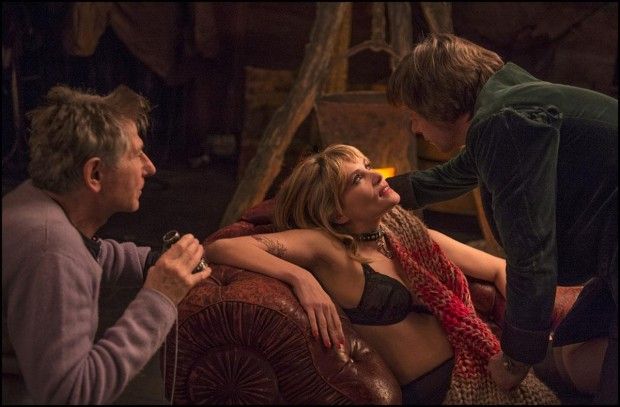
I just finished reading the script for the play the other day and wondered if anyone had seen it performed. God, is it great. And perfect for Polanski. Feels almost made for him. This could, in fact, be a return to real greatness after the folly of Carnage. But I attribute the failure of that to lousy source material, the opposite of the situation here. Polanski himself is, and always has been, utterly reliable. Still, he can only work with what he's got.
This piece provides him a rich range of possibilities. There are the obvious sexual politics and power games to which one might expect him to be attracted. But that description, which was all I knew going in, is woefully inadequate to encompass the depths of what is here. For one thing it's a far more surreal enterprise than I expected. And more inclined to play with blatant symbolism. That translates well in reading and I can imagine it working on stage in a stripped down form but I wonder what Polanski will make of it cinematically. The abstraction of it all, in other words, seems at times posed to overwhelm the specifics. Certainly that is intended but, as I say, renders up some unique challenges for adaptation to a presumably more concrete environment. There is also the issue of the language itself (specifically the slang). That is an element that seems to make the play distinctly American. Here too I wonder how he has handled that in transferring the action to Paris, since language is never just language but also bespeaks a cultural attitude and certain preconceptions.
Though the sexual power play angle will likely be how this is generally received and marketed it really does do a disservice to the material. What's most impressive is how that is sustained throughout, just how frenetic and breakneck it reads (there is little languor in the piece and no act breaks). It's concentrated and intense and relentless. It's also funny as hell. That takes some of the edge off but still here is another of those unique challenges. Obviously Carnage attempts something similar but, as far as I'm concerned, it's weak and shallow material. It just comes across as a grating screed whereas this is rich and smart. But that has to manage against the oppressive relentlessness of the presentation.
The control issues are paramount but what's especially interesting is the really rather profound sense of how implicit that is to art itself, to the creation and maintenance of it. Here the emphasis is on the unavoidability of control and power, its inevitability as a basic component of world comprehension or active re-imagining of the world. That's brilliant and brilliantly done, laced throughout but rarely ever overt. What is overt is the extreme fluidity of the roleplaying (which is channeled through the intensity of presentation). The premise, for those who don't know, is that the director and the actress are reading lines from his play based on Leopold von Sacher-Masoch's classic sadomasochistic tale, Venus in Furs. But what's astonishing is how they flow in and out of those lines of text and into lines from their own originally established characters. In the script for the play this is indicated via italics but I can only assume that's for the actors as I would imagine that the point is the fluidity, the inextricability of it all. Later they go so far as to shift gender assigned roles as things get really intense and confounding. We've seen stuff like this before, of course (I think of Beth B's great Two Small Bodies, others may think of Kiarostami's Certified Copy) but rarely has the device been as unyielding and punishing as this. It's a mental workout just to read. I can't imagine how it plays, especially if there are little to no clear signals to the audience as to the shifts.
Amalric seems like he will make a perfect screen surrogate for Polanski in what can't help but be conceived as a personal project between he and his wife, with all the resultant implications. One such implication is that it brings to mind Bitter Moon specifically and would seem ultimately to form some kind of perverse but ideal diptych with it, reversing in some ways or at least responding to the alarmingly conservative conclusions of the previous picture. And as much as this film would seem to be a continuation of Polanski's signature apartment set series of films this one will likely prove more challenging to produce than most as it's really just a glorified studio space and the sense you get is that there is little shifting away from the almost spotlit and concentrated center of the action. Still, I have no doubt that he can rise to those particular challenges.
I just finished reading the script for the play the other day and wondered if anyone had seen it performed. God, is it great. And perfect for Polanski. Feels almost made for him. This could, in fact, be a return to real greatness after the folly of Carnage. But I attribute the failure of that to lousy source material, the opposite of the situation here. Polanski himself is, and always has been, utterly reliable. Still, he can only work with what he's got.
This piece provides him a rich range of possibilities. There are the obvious sexual politics and power games to which one might expect him to be attracted. But that description, which was all I knew going in, is woefully inadequate to encompass the depths of what is here. For one thing it's a far more surreal enterprise than I expected. And more inclined to play with blatant symbolism. That translates well in reading and I can imagine it working on stage in a stripped down form but I wonder what Polanski will make of it cinematically. The abstraction of it all, in other words, seems at times posed to overwhelm the specifics. Certainly that is intended but, as I say, renders up some unique challenges for adaptation to a presumably more concrete environment. There is also the issue of the language itself (specifically the slang). That is an element that seems to make the play distinctly American. Here too I wonder how he has handled that in transferring the action to Paris, since language is never just language but also bespeaks a cultural attitude and certain preconceptions.
Though the sexual power play angle will likely be how this is generally received and marketed it really does do a disservice to the material. What's most impressive is how that is sustained throughout, just how frenetic and breakneck it reads (there is little languor in the piece and no act breaks). It's concentrated and intense and relentless. It's also funny as hell. That takes some of the edge off but still here is another of those unique challenges. Obviously Carnage attempts something similar but, as far as I'm concerned, it's weak and shallow material. It just comes across as a grating screed whereas this is rich and smart. But that has to manage against the oppressive relentlessness of the presentation.
The control issues are paramount but what's especially interesting is the really rather profound sense of how implicit that is to art itself, to the creation and maintenance of it. Here the emphasis is on the unavoidability of control and power, its inevitability as a basic component of world comprehension or active re-imagining of the world. That's brilliant and brilliantly done, laced throughout but rarely ever overt. What is overt is the extreme fluidity of the roleplaying (which is channeled through the intensity of presentation). The premise, for those who don't know, is that the director and the actress are reading lines from his play based on Leopold von Sacher-Masoch's classic sadomasochistic tale, Venus in Furs. But what's astonishing is how they flow in and out of those lines of text and into lines from their own originally established characters. In the script for the play this is indicated via italics but I can only assume that's for the actors as I would imagine that the point is the fluidity, the inextricability of it all. Later they go so far as to shift gender assigned roles as things get really intense and confounding. We've seen stuff like this before, of course (I think of Beth B's great Two Small Bodies, others may think of Kiarostami's Certified Copy) but rarely has the device been as unyielding and punishing as this. It's a mental workout just to read. I can't imagine how it plays, especially if there are little to no clear signals to the audience as to the shifts.
Amalric seems like he will make a perfect screen surrogate for Polanski in what can't help but be conceived as a personal project between he and his wife, with all the resultant implications. One such implication is that it brings to mind Bitter Moon specifically and would seem ultimately to form some kind of perverse but ideal diptych with it, reversing in some ways or at least responding to the alarmingly conservative conclusions of the previous picture. And as much as this film would seem to be a continuation of Polanski's signature apartment set series of films this one will likely prove more challenging to produce than most as it's really just a glorified studio space and the sense you get is that there is little shifting away from the almost spotlit and concentrated center of the action. Still, I have no doubt that he can rise to those particular challenges.