Something I've been curious about is the occurrences of rückenfigur in cinema and photography. "Rückenfigur" is a term usually associated with German romantic painters such as Caspar David Friedrich where the viewpoint will include another person seen from behind, who may or may not being viewing another scene.
Some instances in cinema come to mind, like the opening scene in Song Il-gon's Spider Forest and scenes in various Tarkovsky films. Just wondering if anyone may recall other films or directors who use this as a style in some of their oeuvre?
Cinematic Rückenfigur
-
ChrisW
- Joined: Mon Apr 10, 2006 2:54 am
- Location: Eastern Eye (Madman Entertainment)
- Contact:
-
Michael Kerpan
- Spelling Bee Champeen
- Joined: Wed Nov 03, 2004 5:20 pm
- Location: New England
- Contact:
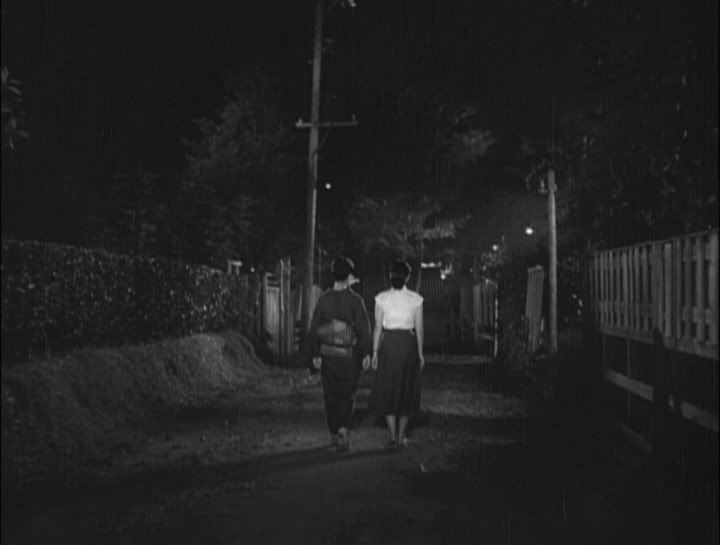
How about Naruse (some of his compositions definitely remind me of C.D. Friedrich):
Ani imoto (Older Brother, Younger sister):

Ukigumo (Floating Clouds):

Meshi (Repast):

Daughters, Wives, Mother(s):

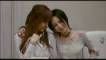
And from one of Naruse's early colleagues - Yasujiro Shimazu's "Watashi no nisan" (My Older Brother):

Ani imoto (Older Brother, Younger sister):
Ukigumo (Floating Clouds):
Meshi (Repast):
Daughters, Wives, Mother(s):
And from one of Naruse's early colleagues - Yasujiro Shimazu's "Watashi no nisan" (My Older Brother):
-
ChrisW
- Joined: Mon Apr 10, 2006 2:54 am
- Location: Eastern Eye (Madman Entertainment)
- Contact:
-
zedz

- Joined: Sun Nov 07, 2004 11:24 pm
Friedrich is a strong visual influence on Herzog. His use of landscape in Heart of Glass shows some of this debt, and there are several instances of the ruckenfigur (my new word for the day) composition in his films. Right away I can think of Every Man for Himself and God Against All. This is an iconic still from the film, even though it isn't the best example of Herzog's Friedrich tributes.

-
Michael Kerpan
- Spelling Bee Champeen
- Joined: Wed Nov 03, 2004 5:20 pm
- Location: New England
- Contact:
These were all screen grabs I did as I watched the various films. Clearly my fondness for Friedrich caused me to capture instances of Friedrich-like composition in Naruse. ;~}
I don't have any "Apart from You" screen captures at present (only a notebook full of notes -- back from when I wrote my article). My recollection is that the scene with our young hero and heroine on the rocky sea shore in her home town had lots of Friedrich-esque compositions.
We get a lot of back views in Ozu -- and some of these show people looking out windows, etc. But Ozu rarely lets us see out the window along with one of his characters (though sometimes he shows us a scene that may -- or may not -- correspond to what his character may have seen).
I agree with zedz on Herzog -- it's hard to watch his films for very long without thinking of Friedrich. ;~}
I don't have any "Apart from You" screen captures at present (only a notebook full of notes -- back from when I wrote my article). My recollection is that the scene with our young hero and heroine on the rocky sea shore in her home town had lots of Friedrich-esque compositions.
We get a lot of back views in Ozu -- and some of these show people looking out windows, etc. But Ozu rarely lets us see out the window along with one of his characters (though sometimes he shows us a scene that may -- or may not -- correspond to what his character may have seen).
I agree with zedz on Herzog -- it's hard to watch his films for very long without thinking of Friedrich. ;~}
-
zedz
- Joined: Sun Nov 07, 2004 11:24 pm
The Freidrich influence is so obvious in Herzog's films that it might be distorting my memory, but I seem to recall him actually mentioning Friedrich in his narration to one of the more recent (late 90s?) documentaries. I'm thinking My Best Fiend or Little Dieter. Does this ring bells for anybody else?
-
Michael Kerpan
- Spelling Bee Champeen
- Joined: Wed Nov 03, 2004 5:20 pm
- Location: New England
- Contact:


-
ChrisW
- Joined: Mon Apr 10, 2006 2:54 am
- Location: Eastern Eye (Madman Entertainment)
- Contact:
Thanks zedz. It seems quite apparent from Nosferatu that Herzog is indeed directly inspired by Friedrich and not just rückenfigur.
I viewed My Best Fiend a couple of months ago and don't recall any mention of Friedrich. Possibly it was the other one (which I haven't seen).
Thanks Michael - now that you mention Ozu I can definitely recall some scenes. I've been meaning to watch Life Show - good reason now to go do so.
I viewed My Best Fiend a couple of months ago and don't recall any mention of Friedrich. Possibly it was the other one (which I haven't seen).
Thanks Michael - now that you mention Ozu I can definitely recall some scenes. I've been meaning to watch Life Show - good reason now to go do so.
-
Anonymous
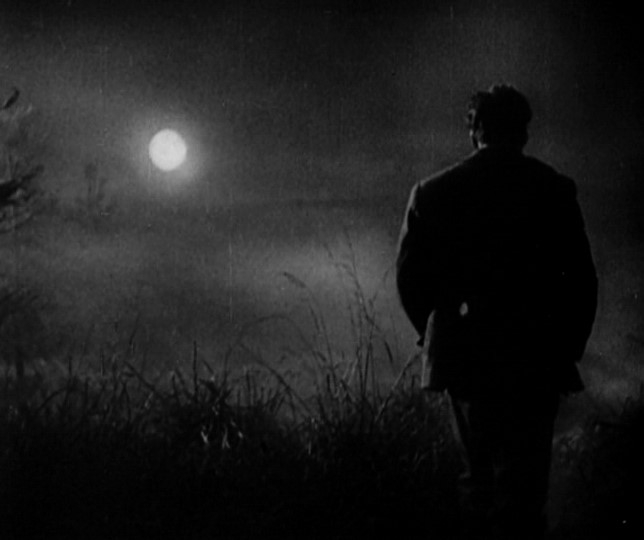
-
whaleallright

- Joined: Sun Sep 25, 2005 4:56 am
Aleksandr Sokurov is deeply implicated in High Romanticism and embeds himself as Rückenfigur into several of his "elegies."
See: Silke Panse, "The Film-maker as Rückenfigur: Documentary as Painting in Alexandr Sokurov's Elegy of a Voyage," Third Text 20, no. 1 (Jan. 2006), 9–25.
See: Silke Panse, "The Film-maker as Rückenfigur: Documentary as Painting in Alexandr Sokurov's Elegy of a Voyage," Third Text 20, no. 1 (Jan. 2006), 9–25.
Last edited by whaleallright on Sun Mar 18, 2007 10:34 pm, edited 1 time in total.
-
ChrisW
- Joined: Mon Apr 10, 2006 2:54 am
- Location: Eastern Eye (Madman Entertainment)
- Contact:
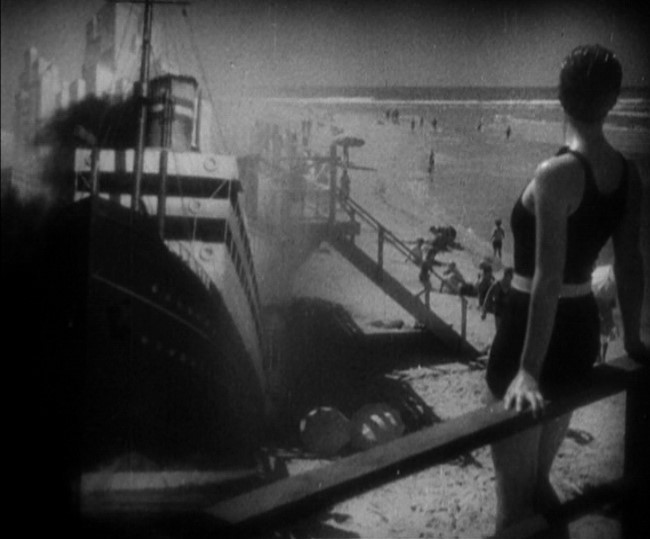
Stan, thanks for pointing out Sunrise - just shows widespread the style is. I'd seen Sunrise a few years ago but it's difficult trying to recall rückenfigur scenes from films from my memory, though you guys seem to have no trouble. 
Jonah, I'll definitely look into Sokurov's "Elegy". Russian Ark was certainly full of rückenfigur due to the first-person roaming viewpoint.
It's interesting that cinema has most likely used rückenfigur more broadly in its artform. German romanticism (I'm no expert however) appears to use it to change the way a scene is viewed and/or create nostalgic sentiment. Cinema seems to do this similarly - I can recall instances where rückenfigur is used in flashbacks... (Tarkovsky's Mirror springs to mind and, if rusty memory serves, a couple of Atom Egoyan films) but it's employed for totally different reasons in horror, particularly Asian cinema, as a substantial amount of horror is derived in hiding the face.
I haven't studied either painting or film so this is just my own rambling.
Jonah, I'll definitely look into Sokurov's "Elegy". Russian Ark was certainly full of rückenfigur due to the first-person roaming viewpoint.
It's interesting that cinema has most likely used rückenfigur more broadly in its artform. German romanticism (I'm no expert however) appears to use it to change the way a scene is viewed and/or create nostalgic sentiment. Cinema seems to do this similarly - I can recall instances where rückenfigur is used in flashbacks... (Tarkovsky's Mirror springs to mind and, if rusty memory serves, a couple of Atom Egoyan films) but it's employed for totally different reasons in horror, particularly Asian cinema, as a substantial amount of horror is derived in hiding the face.
I haven't studied either painting or film so this is just my own rambling.
-
Anonymous
Béla Tarr uses the Rückenfigur as well, as seen here in [url=http://www.dvdbeaver.com/film2/DVDrevie ... 012212.jpg]SÃ
-
Lino

- Joined: Wed Nov 03, 2004 10:18 am
- Location: Sitting End
- Contact:
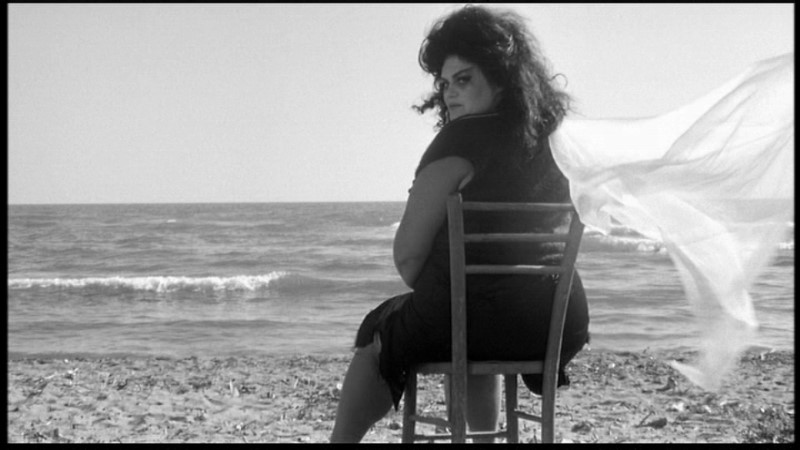
-
tryavna
- Joined: Wed Mar 30, 2005 8:38 pm
- Location: North Carolina
I don't mean to rain on anyone's parade here, but aren't some you guys defining rückenfigur a little broadly? I mean, surely not all filmmakers have the rückenfigur image in mind every single time they film somebody with their back to the camera.
I've always understood the rückenfigur to possess two important qualities:
1.) He is solitary. Perhaps not literally, as there may be other people around. But there's usually a sense of isolation -- either physically or emotionally.
2.) Friedrich's rückenfigur is also invariably a wanderer. (Note the walking stick in the famous painting.)
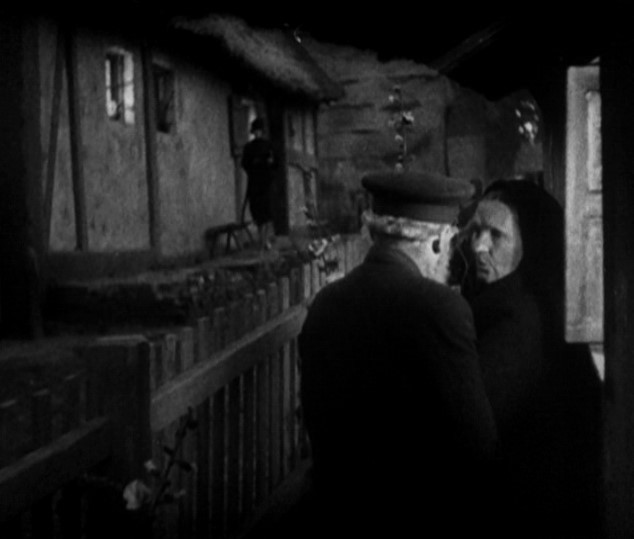
So I find the images from Herzog, Naruse, and Murnau highly persuasive. But I don't find the group shots or the figures with heads turned toward the camera/viewer particularly convincing as examples of rückenfigur.
BTW, I'm making these comments because I find this discussion interesting and would like some degree of consistency we can agree on, not because I'm trying to be contrary.
I've always understood the rückenfigur to possess two important qualities:
1.) He is solitary. Perhaps not literally, as there may be other people around. But there's usually a sense of isolation -- either physically or emotionally.
2.) Friedrich's rückenfigur is also invariably a wanderer. (Note the walking stick in the famous painting.)
So I find the images from Herzog, Naruse, and Murnau highly persuasive. But I don't find the group shots or the figures with heads turned toward the camera/viewer particularly convincing as examples of rückenfigur.
BTW, I'm making these comments because I find this discussion interesting and would like some degree of consistency we can agree on, not because I'm trying to be contrary.
-
Michael Kerpan
- Spelling Bee Champeen
- Joined: Wed Nov 03, 2004 5:20 pm
- Location: New England
- Contact:
Disagree on both wandering and solitude as being Friedrichian requirements.
from: http://www.smb.spk-berlin.de/gdr/vg/s4.html

from: http://www.geocities.com/gennadystolyar ... drich.html


from: http://www.smb.spk-berlin.de/gdr/vg/s4.html
from: http://www.geocities.com/gennadystolyar ... drich.html
-
tryavna
- Joined: Wed Mar 30, 2005 8:38 pm
- Location: North Carolina
Well, my understanding of Friedrich's art has been heavily informed by Joseph Leo Koerner's Caspar David Friedrich and the Subject of Landscape, and he defines the rückenfigur as the "walker-philosopher." That's not to say that he's right, but it's certainly persuasive if we're trying to tie the rückenfigur in with the philosophical as well as the aesthetic aspects of German Romanticism.
I do, however, think that solitude -- or, more properly, a sense of isolation -- is key because it engenders contemplation. (I think that both the first and third examples Michael has posted work -- though I'm less sure of the second.) See, for example, this page on Friedrich from the American Federation of Arts.
Of course, this doesn't mean that artists and filmmakers don't play around with existing -- or their own -- conventions. But there are other conventions in art that employ figures with their backs to the viewer:

I do, however, think that solitude -- or, more properly, a sense of isolation -- is key because it engenders contemplation. (I think that both the first and third examples Michael has posted work -- though I'm less sure of the second.) See, for example, this page on Friedrich from the American Federation of Arts.
Of course, this doesn't mean that artists and filmmakers don't play around with existing -- or their own -- conventions. But there are other conventions in art that employ figures with their backs to the viewer:
-
tryavna
- Joined: Wed Mar 30, 2005 8:38 pm
- Location: North Carolina
I never said that the figure has to be physically isolated. I'm willing to agree that the third image can qualify within the rückenfigur tradition. They seem to be isolated as a group, and they are, crucially, lost in contemplation of the landscape.Michael Kerpan wrote:Still disagree -- what about the party of three in the moonrise viewing painting.kinjitsu wrote:Okay, wanderer, not necessarily, but a solitary figure with back to viewer, certainly.
-
Michael Kerpan
- Spelling Bee Champeen
- Joined: Wed Nov 03, 2004 5:20 pm
- Location: New England
- Contact:
-
tryavna
- Joined: Wed Mar 30, 2005 8:38 pm
- Location: North Carolina
I don't disagree. But what I'm suggesting is that we may need more specific terms for the various permutations. It seems equally inadequate to apply a single term to a variety of artistic conventions and subject-matters. (What differentiates our discussion here from Schrader's "transcendentalism" is the degree of specificity available to us. We can cite individual images as examples rather than highly abstract concepts.)Michael Kerpan wrote:Friedrich has a strong predilection for showing figures from behind that goes well beyond the "solitary wanderer". Any analysis that starts with this abstraction -- and then lops off all the counter-examples -- is an inadequate analysis. (Reminiscent of Schrader on Ozu and "transcendentalism"). ;~}
-
Michael Kerpan
- Spelling Bee Champeen
- Joined: Wed Nov 03, 2004 5:20 pm
- Location: New England
- Contact:
-
tryavna
- Joined: Wed Mar 30, 2005 8:38 pm
- Location: North Carolina
For sure! (I didn't think we were disagreeing about anything essential in the long run. I guess it just depends on how narrowly each of us is defining the term rückenfigur.)Michael Kerpan wrote:I think one can legitimately discuss Friedrich's use of lonely wanderers -- but this motif and that of showing figures from behind are separate (albeit intersecting) ones.
So to return to the larger discussion, perhaps we could start making some sort of distinction between overt cinematic use of the rückenfigur vs. characters who happen to have their backs to the camera (like Bunuel's "nude")....
-
ChrisW
- Joined: Mon Apr 10, 2006 2:54 am
- Location: Eastern Eye (Madman Entertainment)
- Contact:
I think tryavna's post describing subjects "lost in contemplation" does encapsulate well what a lot of what the subjects in rückenfigur are doing in both painting and cinema.
To go back to the example I mentioned in my first post, "Spider Forest" features rückenfigur regularly throughout the movie with its uses appearing to differ only slightly. Perhaps it'll help illustrate some more of its uses in cinema.
The opening scene is a continuous rückenfigur shot that goes for over a minute and introduces a character in contemplation. If the representation is too subtle for some, the initial part of the shot is even framed - the frame disappearing slowly in the zoom.

The second time we see this character is again solely in a rückenfigur shot.

During a flashback, rückenfigur is used to establish some mystery to the scene we are seeing, very reminiscent of the scene when Bill Pullman wanders down the corridor in "Lost Highway".

In this shot it appears to be used to suggest that the door is a gate to a scene beyond.

Here, the rückenfigur character is lost in contemplation...

and again...


To go back to the example I mentioned in my first post, "Spider Forest" features rückenfigur regularly throughout the movie with its uses appearing to differ only slightly. Perhaps it'll help illustrate some more of its uses in cinema.
The opening scene is a continuous rückenfigur shot that goes for over a minute and introduces a character in contemplation. If the representation is too subtle for some, the initial part of the shot is even framed - the frame disappearing slowly in the zoom.

The second time we see this character is again solely in a rückenfigur shot.

During a flashback, rückenfigur is used to establish some mystery to the scene we are seeing, very reminiscent of the scene when Bill Pullman wanders down the corridor in "Lost Highway".

In this shot it appears to be used to suggest that the door is a gate to a scene beyond.

Here, the rückenfigur character is lost in contemplation...

and again...


-
Scharphedin2
- Joined: Fri May 19, 2006 11:37 am
- Location: Denmark/Sweden
I am not familiar with Spider Forrest, or, the aesthetic definitions of what a rückenfigur is or is not supposed to be or express. However, strictly based on the stills in ChrisW's post, would this not qualify more as subjective use of the camera? And/or, as Chris suggests himself, a use of the camera to create suspense?
With Friedrich's paintings, as has already been pointed out above, the qualities of loneliness, contemplation and world-weariness go beyond the motif of the lone figure viewed from behind against a landscape. There are paintings with groups of people, and there are even paintings with no human figures at all. Yet, the quality is always (or, at least in those paintings that I have seen) of a meeting (or juxtaposition) of the human/ephemeral (often even represented by buildings -- the traces of human acitivity -- that are falling into ruins) and the comparatively eternal as represented by mountainpeaks adrift amidst a sea of fog, or even the vastness of the cosmos itself.
With Friedrich's paintings, as has already been pointed out above, the qualities of loneliness, contemplation and world-weariness go beyond the motif of the lone figure viewed from behind against a landscape. There are paintings with groups of people, and there are even paintings with no human figures at all. Yet, the quality is always (or, at least in those paintings that I have seen) of a meeting (or juxtaposition) of the human/ephemeral (often even represented by buildings -- the traces of human acitivity -- that are falling into ruins) and the comparatively eternal as represented by mountainpeaks adrift amidst a sea of fog, or even the vastness of the cosmos itself.
-
Cinesimilitude
- Joined: Tue Jul 09, 2013 4:43 am

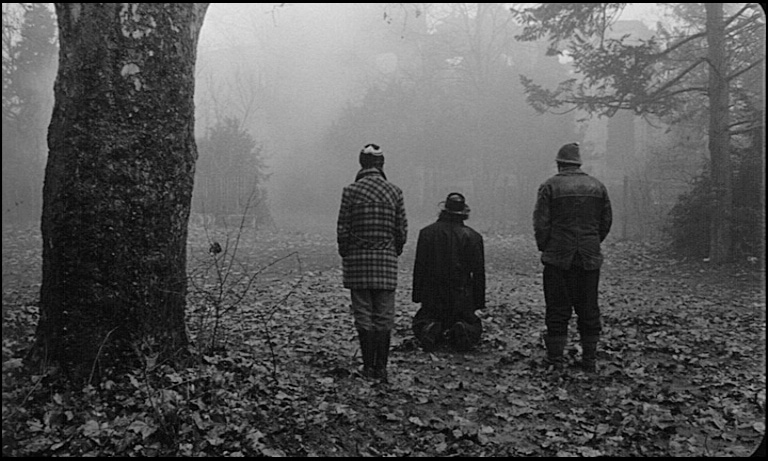
-
ChrisW
- Joined: Mon Apr 10, 2006 2:54 am
- Location: Eastern Eye (Madman Entertainment)
- Contact:
Ah interesting. Likewise for me it was finding myself shooting rückenfigur in photography that led me to think about the connection in media other than painting. You are right that its function can derive itself from different circumstances; especially if the shot is composed that way to avoid the notice of the subject in frame.
Here's some examples out of my photography I have online. I wonder if the last shot may not qualify as proper rückenfigur but I feel it could still conjure a contemplative sentiment so may work in that regard.


Here's some examples out of my photography I have online. I wonder if the last shot may not qualify as proper rückenfigur but I feel it could still conjure a contemplative sentiment so may work in that regard.