So, let us talk about the Czech director Jaromil Jires... that is if anybody is interested, and has anything to comment. As it is, precious little information is available on this director, who was amongst the standard bearers of the brief New Wave that flowered in the old Czechoslovakia in the mid- to late sixties, before Soviet tanks rolled over her borders, and established a puppet regime under the leadership of Gustav Husak, which in turn undertook the re-establishment of communist normalcy, including the banning of numerous films, and the suppresion of future artistic expression.
Jires' contemporaries and early colleagues were such luminaries as Milos Forman, Vera Chytilova, Jan Nemec, Jiri Menzel and Ivan Passer. A number of these directors left the country after the Spring of Prague, but Jires stayed and managed to work within the confines of the new order. However, it is clear from a perusal of his work over the years that the most memorable and innovative of his films were completed prior to 1970. All in all Jires completed at least 20 films, as well as a number of productions for television; his first (feature) film was the celebratd The Cry (1963); his last Dvojrole (1999), completed in the year when he suffered severe injuries in an automobile accident, the complications of which eventually led to his death in October, 2001.
A quick search on the internet turns up a few Czech sites that do not appear to be very elaborate, even if I could read them; a rather long and academic piece on Valerie and Her Week of Wonders at the e-zine Kinoeye; and, an online version of Susan Doll's cine-notes, written for Facets' releases of several of Jires' films on DVD. This last piece is in fact a nice introduction, which serves to contextualize Jires within the times in which he lived, and the history of his country's film production (I have paraphrased rather freely from it in what follows).
Aside from the external pressures that certainly influenced his films in the latter stages of his career, descriptions of his films paint a picture of a versatile and eclectic sensibility. The Cry was a mercurial cinematic exercise apparently inspired by the French New Wave, in which the day's work of a TV repairman is intercut with scenes of his wife giving child birth in a hospital, and flash backs to their early life together. The Joke (1968) was a grim adaptation of an early novel by Milan Kundera, depicting the many bitter years of punishment suffered by a young student, after he is turned in for having written a joke about Leon Trotsky on a postcard to his girlfriend. The next year came Valerie and Her Week of Wonders, a surreal tale of a young girl's flowering into womanhood, and all the strange anxieties and horrors that this transformation engenders (or reveals) in the hamlet, where she lives with her wicked perhaps-grandmother. ...And Give My Love to the Swallows followed a couple of years later in 1971, and was a formally less challenging piece about a young woman's self-sacrifice in the resistance against the German occupation during World War II.
In the decades that followed, the political and ecomonical climates changed drastically in Czechoslovakia (later The Czech Republic and Slovakia), and Jires films appear to have changed with the times. Still under the old regime, some of Jires notable films were Young Man and the White Whale (1978), Payment in Kind (1979), Partial Eclipse (1980) and Catapult (1983) -- all, according to Susan Doll, "...optimistic dramas about ordinary problems in everyday life." Much of his later work was dedicated to films on classical composers and opera. Two of these, Der Ewige Faust (1986) and Opera Moda (1989) won the Big Opera Prix at Salzburg.
On DVD, only Valerie is available domestically in the Czech Repulic (as far as I have been able to ascertain). It is of course also available in the UK and from Facets in R1. The only other films available to my knowledge are the other titles (The Joke and ...And Give My Love to the Swallows) from Facets, as well as his contribution to the groundbreaking Czech omnibus film Pearls of the Deep from 1965 (also Facets).
The only one of Jires films that I have so far viewed is the strange and completely wonderful Valerie. It would be great to hear more about this director's life and work from anyone here in the forum, who may have had greater exposure than I.
Jaromil Jires on DVD
-
orlik

- Joined: Mon May 01, 2006 11:17 pm
- Location: London, UK
How bizarre - I came across this while working on a chapter about Valerie and Her Week of Wonders for my university thesis. I love Valerie... too - my forum name is after a character in the film - though I have to say it's the best film by Jires I've seen. Of his work, I've seen The Cry, The Joke, And Give My Love to the Swallows, a rather conventional film from the '80s called The Dance Master and an early short film called The Hall of Lost Footsteps.
It's easy to get the impression that Jires was something of a journeyman within the New Wave, given the diversity of the films he made, yet a case could be made that he was one of the most visually and stylistically talented Czech directors of his generation. One of the distinctive qualities of his films is his use of rhythmic and non-linear editing, which is manifest even in The Hall of Lost Footsteps, which was - I think - his graduation film for FAMU, and on which Juraj Jakubisko also worked.
After Valerie I really liked The Cry, which is classically, even stereotypically 'New Wave' (French or Czech) in its energetic style and its focus on ordinary people and their daily life. It also includes some interesting snapshots of early tourism in Prague and the Czech intellectual life of the '60s.
The Joke is a highly acclaimed film though I must admit I liked it much less than Kundera's novel. It's a well-made, imaginatively shot film, but I was personally a bit disappointed with the way it focused on the sardonic, satirical elements of the book at the expense of its romantic elements.
Along with the films Jires did make are the many proposed ideas and scripts of his that were rejected during the '60s. One of these in particular sounds fascinating - a film that would have been made as though it were an authentic Nazi propaganda film as made at UFA in the 1930s. As Josef Skvorecky relates in his book on Czech cinema, the film would only gradually have made explicit its ideological slant. But alas, it was never made.
What's also interesting is that while most of the New Wave directors either fled to the West after political Normalisation at the beginning of the 70s, or else were unable to work within the reorganised film industry, Jires carried on making film. And Give My Love... is the only film of his I've seen from this period; even though it deals with a conventionally Socialist Realist subject, it's still worth seeing, and of course it's beautifully shot. It also stars the girl from Marketa Lazarova.
Unfortunately I don't know much about Jires's life beyond the standard bios. I know he was a Party member, and at least during the 60s, a sincere and committed Communist.
By the way, did you know that Valerie... is based on a novel of the same name, written in the 1930s by Vitezslav Nezval, the founder of Czech Surrealism? This novel is now available in English and published by Twisted Spoon.
It's easy to get the impression that Jires was something of a journeyman within the New Wave, given the diversity of the films he made, yet a case could be made that he was one of the most visually and stylistically talented Czech directors of his generation. One of the distinctive qualities of his films is his use of rhythmic and non-linear editing, which is manifest even in The Hall of Lost Footsteps, which was - I think - his graduation film for FAMU, and on which Juraj Jakubisko also worked.
After Valerie I really liked The Cry, which is classically, even stereotypically 'New Wave' (French or Czech) in its energetic style and its focus on ordinary people and their daily life. It also includes some interesting snapshots of early tourism in Prague and the Czech intellectual life of the '60s.
The Joke is a highly acclaimed film though I must admit I liked it much less than Kundera's novel. It's a well-made, imaginatively shot film, but I was personally a bit disappointed with the way it focused on the sardonic, satirical elements of the book at the expense of its romantic elements.
Along with the films Jires did make are the many proposed ideas and scripts of his that were rejected during the '60s. One of these in particular sounds fascinating - a film that would have been made as though it were an authentic Nazi propaganda film as made at UFA in the 1930s. As Josef Skvorecky relates in his book on Czech cinema, the film would only gradually have made explicit its ideological slant. But alas, it was never made.
What's also interesting is that while most of the New Wave directors either fled to the West after political Normalisation at the beginning of the 70s, or else were unable to work within the reorganised film industry, Jires carried on making film. And Give My Love... is the only film of his I've seen from this period; even though it deals with a conventionally Socialist Realist subject, it's still worth seeing, and of course it's beautifully shot. It also stars the girl from Marketa Lazarova.
Unfortunately I don't know much about Jires's life beyond the standard bios. I know he was a Party member, and at least during the 60s, a sincere and committed Communist.
By the way, did you know that Valerie... is based on a novel of the same name, written in the 1930s by Vitezslav Nezval, the founder of Czech Surrealism? This novel is now available in English and published by Twisted Spoon.
Last edited by orlik on Fri Oct 15, 2010 2:11 am, edited 2 times in total.
-
Scharphedin2

- Joined: Fri May 19, 2006 11:37 am
- Location: Denmark/Sweden
Hi Orlik (brother?  ), Thanks for this insightful post, and apologies for not posting a reply sooner.
By the way, have you had a chance to see Pearls of the Deep? You did not mention it above, but it of course includes a segment by Jires.
I know you said that you do not wish to bore the forum with your academic speculations on Jires and his work. However, I do not think you should worry, I for one would be interested to read anything you may have to say on the topic of Jires... academic or not
), Thanks for this insightful post, and apologies for not posting a reply sooner. A funny case of synchronicity, as I had just watched Valerie the evening before writing the initial post.orlik wrote:How bizarre - I came across this while working on a chapter about Valerie and Her Week of Wonders for my university thesis.
How about his work after the early '70s? I know you have not had a chance to view much of it, but have you come across any indications that Jires managed to uphold his visual style (further develop it), even after his films "became less chalenging" in their content?orlik wrote:...a case could be made that he was one of the most visually and stylistically talented Czech directors of his generation. One of the distinctive qualities of his films is his use of rhythmic and non-linear editing, which is manifest even in The Hall of Lost Footsteps, which was - I think - his graduation film for FAMU, and on which Juraj Jakubisko also worked.
The Joke is one of the few books by Kundera that I have not read, but in general I would say that Kundera with all his literary tangents, philosophical asides, and broken up narrative structures is almost impossible to translate faithfully into another medium.orlik wrote:The Joke is a highly acclaimed film though I must admit I liked it much less than Kundera's novel. It's a well-made, imaginatively shot film, but I was personally a bit disappointed with the way it focused on the sardonic, satirical elements of the book at the expense of its romantic elements.
I read about this. He had a reputation for being the filmmaker with most un-produced scripts to his credits up through the '60s. Where did you manage to read in more detail about these scripts?orlik wrote:Along with the films Jires did make are the many proposed ideas and scripts of his that were rejected during the '60s.
This will definitely be in my next order that I place in the States. It sounds like a really beautiful film. Great title too...orlik wrote:And Give My Love... is the only film of his I've seen from this period; even though it deals with a conventionally Socialist Realist subject, it's still worth seeing, and of course it's beautifully shot. It also stars the girl from Marketa Lazarova.
This too is interesting. I think it is worth speculating that Jires may have been feigning ignorance. After all, he could not have been blind to the critique of the system inherent in The Joke, and, while I think it is easy to read intentions into a film like Valerie that may not be there (and, in a way I would like to maintain innocence in respect to the film), certainly someone wishing to see the Grandmother and other monsters in the film as being agents of the system preying upon the young and innocent, could easily substantiate such a reading.orlik wrote:Unfortunately I don't know much about Jires's life beyond the standard bios. I know he was a Party member, and at least during the 60s, a sincere and committed Communist - Pavel Juracek, in his recently published diaries, makes fun of Jires's good-natured credulity towards the authorities: whenever they prevented a project of his, he would always believe that this was on grounds of quality and had nothing to do with political reasons.
I knew this was the source of the film, but did not know that it had been published in English. Thank you for the tip!orlik wrote:By the way, did you know that Valerie... is based on a novel of the same name, written in the 1930s by Vitezslav Nezval, the founder of Czech Surrealism? This novel is now available in English and published by Twisted Spoon.
By the way, have you had a chance to see Pearls of the Deep? You did not mention it above, but it of course includes a segment by Jires.
I know you said that you do not wish to bore the forum with your academic speculations on Jires and his work. However, I do not think you should worry, I for one would be interested to read anything you may have to say on the topic of Jires... academic or not
-
orlik
- Joined: Mon May 01, 2006 11:17 pm
- Location: London, UK
Thanks for your reply - glad it was helpful!
It's interesting to speculate on whether he 'lost faith' after the Soviet invasion and subsequent normalisation. Indeed, perhaps 'Valerie' can be seen as a very oblique response to the political realities of the time. I think you're right to say that Grandmother and the other adult characters can be seen in political terms. There's also an implicit parallel between Communism (or Stalinism) and the Catholic Church - eg. there's a scene with Father Gracian where he's sitting at a table by a lake, and this scene is a direct visual reference to 'A Report on the Party on the Guests', where the same actor plays a secret policeman!
On the other hand, it's possible to see the film as an allegory on Stalinism vs. reformist or libertarian Communism - if the priests represent the authorities, the musicians, acrobats, actors etc suggest an alternative order. It reminds me of an essay by the Polish Marxist philosopher Kolakowski called 'The Priest and the Jester' - he says Stalinists are like priests insofar as they believe there is only one true version of the 'faith', while he implores Marxists to be more like jesters, i.e. willing to contradict themselves and resistant to orthodoxies. In addition, the carnivalesque imagery is I think intended to evoke the Czech avant-garde (from which Vitezslav Nezval emerged), which saw Communism as a 'liberatory', humane system.
Maybe this is over-reading, but given the film's context it's hard to believe the story had no political resonance for Jires. I know what you mean though about wanting to retain innocence while watching 'Valerie'. Probably the best way to enjoy it as a beautiful daydream and by resisting the attempt to interpret it or understand it. The music and cinematography (and most of the cast, especially the girl who plays Elsa/Grandmother) are gorgeous.
Peter Hames, in his book 'The Czechoslovak New Wave', writes a bit about 'People From the Metro'/'Lide z Metra' from 1974, and basically says it's a beautifully edited, lyrical film but fairly empty in terms of content. Another film that sounds interesting is a film from the post-communist period called 'Labyrinth' that deals with a director trying to make a film about Kafka. It gets a terrible review in the Time Out Film Guide - but then, they also dismiss 'Daisies', so you never know...Scharphedin2 wrote:How about his work after the early '70s? I know you have not had a chance to view much of it, but have you come across any indications that Jires managed to uphold his visual style (further develop it), even after his films "became less chalenging" in their content?orlik wrote:...a case could be made that he was one of the most visually and stylistically talented Czech directors of his generation. One of the distinctive qualities of his films is his use of rhythmic and non-linear editing, which is manifest even in The Hall of Lost Footsteps, which was - I think - his graduation film for FAMU, and on which Juraj Jakubisko also worked.
From Josef Skvorecky's book 'All the Bright Young Men and Women: A Personal History of the Czech Cinema' - probably out of print now, but I'm sure there's copies available still around the web. It's an interesting book, not exactly rigorous in critical terms, but lots of interesting info and pictures.Scharphedin2 wrote:I read about this. He had a reputation for being the filmmaker with most un-produced scripts to his credits up through the '60s. Where did you manage to read in more detail about these scripts?orlik wrote:Along with the films Jires did make are the many proposed ideas and scripts of his that were rejected during the '60s.
Yes, it seems amazing that he could have made a film that deals with the labour camps in the 50s and still have had faith in Communism. I assume that, like Kundera and others at that time, he accepted that there had been great crimes in the past but that there was still hope for a humane form of Communism to develop, especially given the reform process that was setting in around the mid-60s. In a quote from the Skvorecky book he says that he feels that socialism/Communism, in its 'ideal' form, is the best and fairest sociopolitical system, but that it can also be the worst.Scharphedin2 wrote:This too is interesting. I think it is worth speculating that Jires may have been feigning ignorance. After all, he could not have been blind to the critique of the system inherent in The Joke, and, while I think it is easy to read intentions into a film like Valerie that may not be there (and, in a way I would like to maintain innocence in respect to the film), certainly someone wishing to see the Grandmother and other monsters in the film as being agents of the system preying upon the young and innocent, could easily substantiate such a reading.orlik wrote:Unfortunately I don't know much about Jires's life beyond the standard bios. I know he was a Party member, and at least during the 60s, a sincere and committed Communist - Pavel Juracek, in his recently published diaries, makes fun of Jires's good-natured credulity towards the authorities: whenever they prevented a project of his, he would always believe that this was on grounds of quality and had nothing to do with political reasons.
It's interesting to speculate on whether he 'lost faith' after the Soviet invasion and subsequent normalisation. Indeed, perhaps 'Valerie' can be seen as a very oblique response to the political realities of the time. I think you're right to say that Grandmother and the other adult characters can be seen in political terms. There's also an implicit parallel between Communism (or Stalinism) and the Catholic Church - eg. there's a scene with Father Gracian where he's sitting at a table by a lake, and this scene is a direct visual reference to 'A Report on the Party on the Guests', where the same actor plays a secret policeman!
On the other hand, it's possible to see the film as an allegory on Stalinism vs. reformist or libertarian Communism - if the priests represent the authorities, the musicians, acrobats, actors etc suggest an alternative order. It reminds me of an essay by the Polish Marxist philosopher Kolakowski called 'The Priest and the Jester' - he says Stalinists are like priests insofar as they believe there is only one true version of the 'faith', while he implores Marxists to be more like jesters, i.e. willing to contradict themselves and resistant to orthodoxies. In addition, the carnivalesque imagery is I think intended to evoke the Czech avant-garde (from which Vitezslav Nezval emerged), which saw Communism as a 'liberatory', humane system.
Maybe this is over-reading, but given the film's context it's hard to believe the story had no political resonance for Jires. I know what you mean though about wanting to retain innocence while watching 'Valerie'. Probably the best way to enjoy it as a beautiful daydream and by resisting the attempt to interpret it or understand it. The music and cinematography (and most of the cast, especially the girl who plays Elsa/Grandmother) are gorgeous.
Yes, I forgot to mention that - have you seen it? He does, as I remember, the final sequence, perhaps not the best but the sweetest - it was also my favourite of Bohumil Hrabal's short stories.Scharphedin2 wrote:By the way, have you had a chance to see Pearls of the Deep? You did not mention it above, but it of course includes a segment by Jires.
-
leo goldsmith
- Joined: Mon Nov 08, 2004 5:13 pm
- Location: Kings County
- Contact:
Peter Hames also has a very good essay on the history of Czech cinema (emphasizing surrealism) in his BFI book on Svankmajer, Dark Alchemy. It's a surprisingly comprehensive essay for a book on what would seem to be a more limited subject. He doesn't discuss Jires at length (Svankmajer doesn't like Jires), but he gives a great deal of context for Jires and Czech surrealism in general. A good intro if anyone's new to Czech cinema and wants a quick primer.
As for interpretations of Valerie (my review of which I will shamelessly link here), most critics identify it as a menstruation fable and not a political allegory. There is obviously a lot of suggestion of social/sexual repression in the film, but I'd track this more to the international sexual revolution (read: hippies) at the time and not necessarily to political oppression, though that naturally ties in.
As for interpretations of Valerie (my review of which I will shamelessly link here), most critics identify it as a menstruation fable and not a political allegory. There is obviously a lot of suggestion of social/sexual repression in the film, but I'd track this more to the international sexual revolution (read: hippies) at the time and not necessarily to political oppression, though that naturally ties in.
-
orlik
- Joined: Mon May 01, 2006 11:17 pm
- Location: London, UK
I think you're right - in my chapter on the film I'm giving precedence to the Freudian/psychoanalytic aspects and the idea of sexual awakening: in some ways, the film is like a direct illustration of Freud's essay on family romances.
As for political aspects, the film can be interpreted - if one desires to do so - as a critique of Stalinist or neo-Stalinist orthodoxies - but from the position of the libertarian left/counterculture of the '60s. However, as you say, 'authority' in the film need not be interpreted only in terms of 'really existing socialism', but on a much broader scale. This ties in with much radical and 'New Left' theorising of the 60s (Marcuse, the Situationists, etc) which conceives 'repression' not only as the overtly oppressive tactics of Communist states, but as a deeper phenomenon prevalent in both East and West. After all, the central conflict in the film is between the old and young - with the young representing positive values (kindness, art, free love, etc). This links with the nature of the youth culture of the time, and perhaps also with the important role of young people in the Prague Spring and in Czech '60s culture generally.
It's right to point out the presence of hippie culture in the film - Orlik, it seems, is made to look like a hippie intellectual, even alternating his lute with an acoustic guitar. The end of the film suggests an idyllic return to nature - and at more of a stretch, the pearl Valerie swallows in order to change the course of events (a change from the novel incidentally, where Valerie drinks from a magic bottle) can be seen, even pre-Celine and Julie Go Boating, as a reference to psychedelic drugs (?).
I wonder whether Svankmajer's professed dislike of Jires and other New Wave filmmakers has something to do with a sense that these 'mainstream' filmmakers were stealing the Surrealists' patch to some extent. Other 'bona fide' Czech Surrealists of the '60s, such as Vratislav Effenberger and Zbynek Havlicek, are similarly dismissive of what they see as an opportunistic, 'eclecticist' appropriation of Surrealism by mainstream or 'overground' Czech culture. Perhaps this relates to a slight feeling of insularity, or even moral superiority, amongst a tight-knit group of intimates who had in many cases preserved their artistic independence and occupied the cultural 'underground' during the extraordinarily difficult years of Nazi Occupation and Stalinism. In any case, it does seem unfair to dismiss a filmmaker like Jires for only offering ersatz Surrealism - indeed, from today's perspective, Valerie looks like something truly rare and special.
As for political aspects, the film can be interpreted - if one desires to do so - as a critique of Stalinist or neo-Stalinist orthodoxies - but from the position of the libertarian left/counterculture of the '60s. However, as you say, 'authority' in the film need not be interpreted only in terms of 'really existing socialism', but on a much broader scale. This ties in with much radical and 'New Left' theorising of the 60s (Marcuse, the Situationists, etc) which conceives 'repression' not only as the overtly oppressive tactics of Communist states, but as a deeper phenomenon prevalent in both East and West. After all, the central conflict in the film is between the old and young - with the young representing positive values (kindness, art, free love, etc). This links with the nature of the youth culture of the time, and perhaps also with the important role of young people in the Prague Spring and in Czech '60s culture generally.
It's right to point out the presence of hippie culture in the film - Orlik, it seems, is made to look like a hippie intellectual, even alternating his lute with an acoustic guitar. The end of the film suggests an idyllic return to nature - and at more of a stretch, the pearl Valerie swallows in order to change the course of events (a change from the novel incidentally, where Valerie drinks from a magic bottle) can be seen, even pre-Celine and Julie Go Boating, as a reference to psychedelic drugs (?).
I wonder whether Svankmajer's professed dislike of Jires and other New Wave filmmakers has something to do with a sense that these 'mainstream' filmmakers were stealing the Surrealists' patch to some extent. Other 'bona fide' Czech Surrealists of the '60s, such as Vratislav Effenberger and Zbynek Havlicek, are similarly dismissive of what they see as an opportunistic, 'eclecticist' appropriation of Surrealism by mainstream or 'overground' Czech culture. Perhaps this relates to a slight feeling of insularity, or even moral superiority, amongst a tight-knit group of intimates who had in many cases preserved their artistic independence and occupied the cultural 'underground' during the extraordinarily difficult years of Nazi Occupation and Stalinism. In any case, it does seem unfair to dismiss a filmmaker like Jires for only offering ersatz Surrealism - indeed, from today's perspective, Valerie looks like something truly rare and special.
-
Scharphedin2
- Joined: Fri May 19, 2006 11:37 am
- Location: Denmark/Sweden
I just watched it, and you are right, Jires' film is the last of the five shorts, and definitely the sweetest (also my favorite). In fact, I think it would have made quite a nice feature.orlik wrote:Yes, I forgot to mention that - have you seen it? He does, as I remember, the final sequence, perhaps not the best but the sweetest - it was also my favourite of Bohumil Hrabal's short stories.Scharphedin2 wrote:By the way, have you had a chance to see Pearls of the Deep? You did not mention it above, but it of course includes a segment by Jires.
The rest of the shorts, in my opinion, are a mixed bag. Nemec's film is fun but very short -- little more than a vignette, really. Schormm's seemed heavy handed to me, and left me cold to be honest. Schytilova's contribution is excellent and actually on a par with Jires' segment. The very first short is by Jiri Menzel, and there are a couple of nice sequences and a general oddness to the story that has its charm, but it is also a real talk fest that did not really seem to go anywhere.
The disc is fine. Not "Criterion" quality by any means, but a clean and clear print of the film that is presented adequately by Facets. There is a nice little interview with Nemec that explains the genesis of the project (but does not touch on Jires hardly at all).
-
domino harvey

- Dot Com Dom
- Joined: Wed Jan 11, 2006 6:42 pm
-
vogler

- Joined: Thu Jun 29, 2006 12:42 pm
- Location: England
There is a U.K. dvd of Valerie and Her Week of Wonders released by Redemption. It's far from perfect but is much better than the Facets I think. I'm very happy with it (although the gothic/metal menus and extras are appalling). The print has a lot of damage but it looks like a film print rather than the VHS looking Facets dvd. The print damage doesn't really bother me much. It can also be picked up very cheap.
Here is a DVDbeaver comparison. There is also a czech dvdbut I don't think it has English subtitles.
Here is a DVDbeaver comparison. There is also a czech dvdbut I don't think it has English subtitles.
-
MichaelB

- Joined: Fri Aug 11, 2006 10:20 pm
- Location: Worthing
- Contact:
Seconded - but it's not a BFI book. Flicks Books published the out-of-print first edition, and a revised second edition is coming from Wallflower Press this summer that will presumably add extra material covering the last ten years of Svankmajer's output. I think it's out in July.leo goldsmith wrote:Peter Hames also has a very good essay on the history of Czech cinema (emphasizing surrealism) in his BFI book on Svankmajer, Dark Alchemy. It's a surprisingly comprehensive essay for a book on what would seem to be a more limited subject. He doesn't discuss Jires at length (Svankmajer doesn't like Jires), but he gives a great deal of context for Jires and Czech surrealism in general. A good intro if anyone's new to Czech cinema and wants a quick primer.
...albeit with painfully out-of-sync subtitles that make viewing this a chore at best and an ordeal at worst. Obviously, if you speak Czech, this isn't an issue (aside from them being large, yellow, ugly and non-removable), but those who don't should be warned. Sadly, though, it's the only option at present, unless someone like Second Run picks it up.The disc is fine. Not "Criterion" quality by any means, but a clean and clear print of the film that is presented adequately by Facets.
-
leo goldsmith
- Joined: Mon Nov 08, 2004 5:13 pm
- Location: Kings County
- Contact:
You're quite right. Praeger put this out in the US.MichaelB wrote:Seconded - but it's not a BFI book. Flicks Books published the out-of-print first edition, and a revised second edition is coming from Wallflower Press this summer that will presumably add extra material covering the last ten years of Svankmajer's output. I think it's out in July.leo goldsmith wrote:Peter Hames also has a very good essay on the history of Czech cinema (emphasizing surrealism) in his BFI book on Svankmajer, Dark Alchemy. It's a surprisingly comprehensive essay for a book on what would seem to be a more limited subject. He doesn't discuss Jires at length (Svankmajer doesn't like Jires), but he gives a great deal of context for Jires and Czech surrealism in general. A good intro if anyone's new to Czech cinema and wants a quick primer.
-
Gordon
- Joined: Thu Nov 11, 2004 12:03 pm
The Czech transfer of Valerie and Her Weeks of Wonders isn't great, but it's probably the best, though it lacks English subs.
-
domino harvey
- Dot Com Dom
- Joined: Wed Jan 11, 2006 6:42 pm
-
MichaelB
- Joined: Fri Aug 11, 2006 10:20 pm
- Location: Worthing
- Contact:
...And Give My Love To The Swallows turned up this morning. I'll watch the whole thing tonight, but a quick glance suggests that it's above average for Facets.
Picture quality is clearly analogue tape-sourced, and there's plenty of artefacting, but it's definitely better than VHS. And while the subtitles are as hideous as ever (urine-yellow, ugly typeface, non-removable), they do at least appear to be reasonably in sync for once.
Picture quality is clearly analogue tape-sourced, and there's plenty of artefacting, but it's definitely better than VHS. And while the subtitles are as hideous as ever (urine-yellow, ugly typeface, non-removable), they do at least appear to be reasonably in sync for once.
-
Felix

- Joined: Fri Nov 24, 2006 5:48 pm
- Location: A dark damp land where the men all wear skirts
I wouldn't let that stand in anyone's way, it's not as though it is much more comprehensible with subtitles. Just go with the proverbial flow. I hate to say it but what an incredible trip. Where on Earth did this come from? I only know The Joke of his other films and it is fine but it doesn't seem to have anything to do with this, and I don't believe his others do either. How I wish it could get a deluxe edition.Gordon wrote:The Czech transfer of Valerie and Her Weeks of Wonders isn't great, but it's probably the best, though it lacks English subs.
Morgiana in the box set they link to is a good film, anyone know anything about the third one there?
-
petoluk
- Joined: Tue Jun 12, 2007 11:31 am
- Location: Czech Republic
Felix wrote:Morgiana in the box set they link to is a good film, anyone know anything about the third one there?
Morgiana is a great film, very atmospheric! There's also a Czech DVD out, but it's not English friendly.

The 3rd film from that Japanese box set, Juraj Herz's Deváté srdce is basically a fairy tale, about a poor guy, who is forced to save a princess "in distress"
(otherwise his friends would be thrown into the jail). At the beginning it's not much, but as soon as the story gets to the "underworld," there's some wonderful imagery & haunting eerie music. I love the film very much! Cheers!
Peto
-
MichaelB
- Joined: Fri Aug 11, 2006 10:20 pm
- Location: Worthing
- Contact:
As a footnote, it's well worth noting that the production design on Deváté srdce was by Jan Å vankmajer - it was one of the films he worked on when he was banned from directing his own work in the 1970s.petoluk wrote:The 3rd film from that Japanese box set, Juraj Herz's Deváté srdce is basically a fairy tale, about a poor guy, who is forced to save a princess "in distress" (otherwise his friends would be thrown into the jail). At the beginning it's not much, but as soon as the story gets to the "underworld," there's some wonderful imagery & haunting eerie music. I love the film very much!
-
patrick
- Joined: Sun Mar 11, 2007 4:15 pm
- Location: Philadelphia
Well, I have to say that if you live in New York or London, you really should catch this performance when it comes your way. The new music was absolutely wonderful, and in a way the film almost plays better silent.
The bad news is that the print I saw last night was in absolutely terrible shape - it looked like a public school filmstrip from the 60's. Does the Facets DVD have the Janus logo before the film? I didn't remember it being there, but this print certainly had it. I wonder if there are just no good elements for this film.
The bad news is that the print I saw last night was in absolutely terrible shape - it looked like a public school filmstrip from the 60's. Does the Facets DVD have the Janus logo before the film? I didn't remember it being there, but this print certainly had it. I wonder if there are just no good elements for this film.
-
domino harvey
- Dot Com Dom
- Joined: Wed Jan 11, 2006 6:42 pm
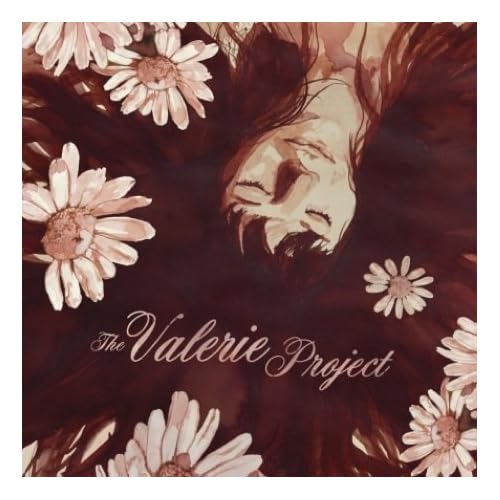
members of the Drag City band Espers are touring and providing live accompaniment to Valerie and Her Week of Wonders as The Valerie Project
-
domino harvey
- Dot Com Dom
- Joined: Wed Jan 11, 2006 6:42 pm
-
MarcM
- Joined: Fri Jul 11, 2008 11:16 am
- Location: London
- Contact:
It's funny you should say thatMichaelB wrote:Sadly, though, it's the only option at present, unless someone like Second Run picks it up.
 Valerie and Her Week of Wonders coming to UK DVD
-
MichaelB
- Joined: Fri Aug 11, 2006 10:20 pm
- Location: Worthing
- Contact:
I was actually talking about Pearls of the Deep, not Valerie.MarcM wrote:It's funny you should say thatMichaelB wrote:Sadly, though, it's the only option at present, unless someone like Second Run picks it up.