Modern Silent Films
-
Der Müde Tod

- Joined: Thu Sep 21, 2006 1:50 pm
I recently watched Aki Kaurismäki's Juha, which is from 1999, black and white, and silent (in the sense that there is no spoken dialogue, and no sound expect a score). The only other 'recent' silent film I enjoyed was Sidewalk Stories by Charles Lane from 1989 which is also black and white and has only a tiny bit spoken language at the very end. Of course there are also recent experimental silent films, but what I am looking for are films that have the look and feel of silent era silent films but are set in modern times. Any recommendations?
-
Gordon
- Joined: Thu Nov 11, 2004 12:03 pm
The Call of Cthulhu (2005) is great - shot on DVCAM, but it's in black and white, 'degraded' film, ie. scratched up, wobbly, grainy. Get it now, you'll hopefully love it!
Available here for $20
Available here for $20
-
BrightEyes23
- Joined: Tue Dec 28, 2004 1:46 pm

-
Lemmy Caution
- Joined: Wed Mar 29, 2006 7:26 am
- Location: East of Shanghai
I just watched Blood Tea & Red String, a stop-motion animation feature released in October 2006.
No dialogue, but some bird caws from the crow-beaked wolves, squeaks from the aristocratic mice, and a lovely score most often centered around an odd flute piece. The film is 71 minutes long, and seems related to fairy tales, dream imagery and Svankmajer features. Clearly a labor of love from Christiane Cegavske, who on the commentary track says that it took her approximately 12 years to complete. So any decade now, they'll be a sequel. I would be interested if she discusses her influences, and maybe she does, but I haven't listened to all of the commentary track.
It's an odd, quirky journey. There's a basic storyline of creation and loss and the quest to regain something dear, but it all flows more along the lines of dream logic and surrealism. I think it's more about the visuals and the creation of this odd world,rather than any hidden meanings. Or to put it another way, the meaning is ambiguous enough that the viewer can connect the threads as she chooses.
When I get more time, maybe I'll start a new thread on this, or mention it in a Svankmajer or Bros. Quay thread. I just hope word gets out and more people get a chance to see this.
Btw, I loved Sidewalk Stories when I saw it in a theater in NYC summer of 1989. Hope to find it on Dvd and re-watch it.
No dialogue, but some bird caws from the crow-beaked wolves, squeaks from the aristocratic mice, and a lovely score most often centered around an odd flute piece. The film is 71 minutes long, and seems related to fairy tales, dream imagery and Svankmajer features. Clearly a labor of love from Christiane Cegavske, who on the commentary track says that it took her approximately 12 years to complete. So any decade now, they'll be a sequel. I would be interested if she discusses her influences, and maybe she does, but I haven't listened to all of the commentary track.
It's an odd, quirky journey. There's a basic storyline of creation and loss and the quest to regain something dear, but it all flows more along the lines of dream logic and surrealism. I think it's more about the visuals and the creation of this odd world,rather than any hidden meanings. Or to put it another way, the meaning is ambiguous enough that the viewer can connect the threads as she chooses.
When I get more time, maybe I'll start a new thread on this, or mention it in a Svankmajer or Bros. Quay thread. I just hope word gets out and more people get a chance to see this.
Btw, I loved Sidewalk Stories when I saw it in a theater in NYC summer of 1989. Hope to find it on Dvd and re-watch it.
-
sevenarts

- Joined: Tue May 09, 2006 11:22 pm
- Contact:

-
Mise En Scene
- Joined: Mon Oct 03, 2005 8:24 pm
-
Felix

- Joined: Fri Nov 24, 2006 5:48 pm
- Location: A dark damp land where the men all wear skirts
Absolutely, and it is on any list of best silent films I would make. I would say that virtually all of Maddin's films are "silent" or at least they follow the silent aesthetic. The Quay Bros seem to inhabit the same space as well.portnoy wrote:Maddin's done a few silent films, the best of which is probably his short The Heart of the World.
-
MichaelB

- Joined: Fri Aug 11, 2006 10:20 pm
- Location: Worthing
- Contact:
Most of Jan Ã…Â vankmajer's films have no spoken dialogue (including the feature-length Conspirators of Pleasure), though the only one that bears much resemblance to a traditional silent aesthetic is The Flat (1968) - which could conceivably be characterised as Franz Kafka meets Mack Sennett, with some aggressive Soviet montage thrown in along the way.
-
zedz

- Joined: Sun Nov 07, 2004 11:24 pm
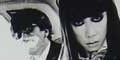
This is a particularly inspiring example, as it imagines what might have been had the 'silent aesthetic' (whatever that is) survived into the era of sound film. Hou makes use of the soundtrack to deliver music (including synchronised music performed on screen by characters), but delivers all dialogue in intertitles.Mise En Scene wrote:Hou's Three Times - the second story (give or take 40 minutes long)
-
HerrSchreck

- Joined: Sun Sep 04, 2005 3:46 pm
Don't forget the stunning DEMENTIA by JJ Parker (the original unedited cut of DAUGHTER OF HORROR), a top contender for my 50's list and a sonorized silent in the tradition of material like TABU, MAN WHO LAUGHS, SUNRISE, STREET ANGEL etc, where the score is sonorized on the optical track but the film is a silent.
-
Mise En Scene
- Joined: Mon Oct 03, 2005 8:24 pm
I was mightily impressed by it. The few reviews I've read barely mention it, if at all. For a while, I was thinking maybe no one brings it up because it's been done better or been done many times already.zedz wrote:This is a particularly inspiring example, as it imagines what might have been had the 'silent aesthetic' (whatever that is) survived into the era of sound film. Hou makes use of the soundtrack to deliver music (including synchronised music performed on screen by characters), but delivers all dialogue in intertitles.Mise En Scene wrote:Hou's Three Times - the second story (give or take 40 minutes long)
-
MichaelB
- Joined: Fri Aug 11, 2006 10:20 pm
- Location: Worthing
- Contact:
And don't forget Luc Besson's debut Le Dernier Combat, an entirely dialogue-free feature that I still reckon is the best thing he ever did (hilariously in retrospect, it was regarded as some kind of art movie when it opened in Britain).
In fact, the tin-eared dialogue that afflicts all Besson's subsequent films (aside from Atlantis) suggests that he was on the right track at the start, but got tragically diverted.
In fact, the tin-eared dialogue that afflicts all Besson's subsequent films (aside from Atlantis) suggests that he was on the right track at the start, but got tragically diverted.
-
Gordon
- Joined: Thu Nov 11, 2004 12:03 pm
Interesting sound films with no dialogue
The Thief (1952, Russell Rouse) [Film Noir shot by Preminger's ace DP, Sam "Cape Fear" Leavitt; on DVD; review]
The Naked Island (1960, Kaneto Shindô)
A Day with the Boys (1969, Clu Gulager) [Extra on Criterion's George Washington]
Quest for Fire (1981, Jean-Jacques Annaud) [Perhaps a contentious example, but a fine experiment]
Le Bal (1983, Ettore Scola) [History of a French ballroom from the 20s to the present, ie. the 80s]
De Illusionist (1984, Jos Stelling) [Dutch film shot in scope]
Few of Us (1996, Sharunas Bartas) [Rilkian poetry-film shot in Siberia by the Lithuanian, Bartas; see also his 1994, The Corridor]
After the Apocalypse (2004, Yasuaki Nakajima) [Depressing yet striking Japanese film shot in monochrome]
SkrÃÂtek (2005, Tomás Vorel) [Outrageous slapstick satire from those crazy Czechs!]
The Thief (1952, Russell Rouse) [Film Noir shot by Preminger's ace DP, Sam "Cape Fear" Leavitt; on DVD; review]
The Naked Island (1960, Kaneto Shindô)
A Day with the Boys (1969, Clu Gulager) [Extra on Criterion's George Washington]
Quest for Fire (1981, Jean-Jacques Annaud) [Perhaps a contentious example, but a fine experiment]
Le Bal (1983, Ettore Scola) [History of a French ballroom from the 20s to the present, ie. the 80s]
De Illusionist (1984, Jos Stelling) [Dutch film shot in scope]
Few of Us (1996, Sharunas Bartas) [Rilkian poetry-film shot in Siberia by the Lithuanian, Bartas; see also his 1994, The Corridor]
After the Apocalypse (2004, Yasuaki Nakajima) [Depressing yet striking Japanese film shot in monochrome]
SkrÃÂtek (2005, Tomás Vorel) [Outrageous slapstick satire from those crazy Czechs!]
-
Felix
- Joined: Fri Nov 24, 2006 5:48 pm
- Location: A dark damp land where the men all wear skirts
Thanks for pointing me in the direction of this one, keenly awaiting my copy to arrive.Gordon wrote:The Call of Cthulhu (2005) is great - shot on DVCAM, but it's in black and white, 'degraded' film, ie. scratched up, wobbly, grainy. Get it now, you'll hopefully love it!
Available here for $20
This one, the Sandman, was posted on alt.movies.silent (I was reminded of it on the Classic Horror Board) and there are a few others by the same guy.
vids.myspace.com/index.cf...1211124942
-
dadaistnun
- Joined: Thu Nov 04, 2004 12:31 pm
It's been a while since I've seen it, but what about Begotten?
-
Kinsayder

- Joined: Mon Oct 10, 2005 10:22 pm
- Location: UK
Themroc is a film that dispenses with words in the same way that Michel Piccoli's character rejects all the other social niceties and conventions.
My first viewing of this movie was a moment of great anticipation as it came with the dual recommendation of a Channel 4 red triangle and a Mary Whitehouse diatribe. It's available on a German DVD.
My first viewing of this movie was a moment of great anticipation as it came with the dual recommendation of a Channel 4 red triangle and a Mary Whitehouse diatribe. It's available on a German DVD.
-
Herman Witkam
- Joined: Mon Mar 26, 2007 11:15 pm
- Location: Netherlands, EU
- Contact:
Great list!Gordon wrote:Interesting sound films with no dialogue
The Thief (1952, Russell Rouse) [Film Noir shot by Preminger's ace DP, Sam "Cape Fear" Leavitt; on DVD; review]
The Naked Island (1960, Kaneto Shindô)
A Day with the Boys (1969, Clu Gulager) [Extra on Criterion's George Washington]
Quest for Fire (1981, Jean-Jacques Annaud) [Perhaps a contentious example, but a fine experiment]
Le Bal (1983, Ettore Scola) [History of a French ballroom from the 20s to the present, ie. the 80s]
De Illusionist (1984, Jos Stelling) [Dutch film shot in scope]
Few of Us (1996, Sharunas Bartas) [Rilkian poetry-film shot in Siberia by the Lithuanian, Bartas; see also his 1994, The Corridor]
After the Apocalypse (2004, Yasuaki Nakajima) [Depressing yet striking Japanese film shot in monochrome]
SkrÃÂtek (2005, Tomás Vorel) [Outrageous slapstick satire from those crazy Czechs!]
I am composing the score for two short silent films, so these might be some great titles to study.
-
zedz
- Joined: Sun Nov 07, 2004 11:24 pm

-
Person
- Joined: Sat May 19, 2007 7:00 pm
Ah, sounds interesting. Thanks for pointing this one out. In the same vein, there is the highly unusual black and white 1968 film, The Noah, (not released until 1975) starring the great Robert Strauss as a latter-day Robinson Crusoe.zedz wrote:Not quite what this thread is about, but the significant New Zealand feature Broken Barrier (1952) was shot silent, with no capacity for post-synchronisation, so the drama unfolds without dialogue while the soundtrack carries music and voiceovers expressing the thoughts of the main characters.
-
Herman Witkam
- Joined: Mon Mar 26, 2007 11:15 pm
- Location: Netherlands, EU
- Contact: