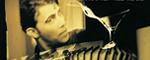
zedz wrote:Hey, I've even managed to dig out my old VHS of Gasoline in your Eye. The video was directed by Peter Care (not Case), and the 'cinematographer' (these are bootstrap productions, so I'm sure we're talking operating as well) was Care himself, or Gary Wraith, or both. (In the case of this particular shot, I'd say 'both'). Take a bow, guys. Peter, you're even forgiven Johnny Yesno
Actually, the "Gasoline..." tape (or, some other collection of CV's videos deserve a DVD release). Aside from "Sensoria," which was the show stopper, Mallinder and Kirk enjoyed to play around with found footage. Borough's was one of their heroes, and several of their videos were cut-up affairs that had your head smarting at the end of five minutes. Also, the tape included a track called "Diffusion," which I never managed to track down on an audio release, the video featuring the descent of a nude woman down a staircase, cut-up, and re-played endlessly to fit the beat of the song -- the experience has never left me. "Automotivation" and "Slow Boat..." also stand out in memory. "Cabs were Fab..."
Sorry, Schreck, to insert an underground music chat in this excellent thread (although, somehow I think you will not mind too much).
In order to contribute something to the original the topic. When talking about the moving camera, I imagine that I am not the only one, who was first made conscious of the impact of tracking shots by the films of Orson Welles. A whole thread could be dedicated to that topic alone; for me
Magnificent Ambersons is the most graceful display of Welles' mercurial use of the camera, even if several of his tour-de-force tracking shots were truncated in post production on this particular film. There is still the amazing shot early on at the Ambersons' ball, when the camera enters the mansion together with a group of guests, and just goes on and on through the various rooms, and in and out of the conversations of different people at the party. Later, there is the severely edited backwards track (I believe), when the Major has died, and the family is consoling each other.
More recently, I was awestruck by the choreography of both crowds and camera in Goulding's
Razor's Edge, when Larry and Isabel are shown making their rounds of the Paris nightlife. In the brief moments that it takes the camera to travel from one end of a dancehall to the other, a whole palette of human interactions are displayed from the tenderness of dancers on the floor to the outbreak of an argument and ensuing fistfight in the far distance.
And, then, the most subtle use of tracking shots can hold immense emotional impact. In Ozu's
Early Summer, the camera probably moves no more than a handful of times; one instance is when the family has invited their uncle to a play, and there is a brief tracking shot down the aisle of the theatre, showing the audience from behind, as they are watching the play. Much later in the film, Ozu returns and performs the exact same tracking shot in the same theatre, only, this time with no audience, just the empty seats. Likewise, in
Sansho, at the very end, there is a tracking shot (if it can even be called that) of at most a couple of feet, with Sansho in the foreground, as the mother enters her hut.
I would not venture an off-the-cuff explanation of the emotional impact of these tracking shots by Ozu and Mizoguchi. However, at the moments when these tracking shots occurred, these stories all of a sudden seemed in some strange way universal -- almost as if the brief motion of the camera suggested some spiritual level hitherto unrevealed.