While I don't agree with you HS I think you are onto something with your comment about the photography being the primary, maybe even only, focus of Suspiria. I like Suspiria and the first section of Inferno very much and like the way they play as beautiful almost incoherent nightmares with a sliver of dream logic running through them to tie the set pieces loosely together.
In that sense a lot of the horror doesn't come from what is actually occuring on screen but from the feelings the situation creates. I wasn't really thinking about whether it was barbed wire or just a rather large slinky that Stefania Casini was wrestling around with in that room or even why the ballet school would have a wire room with only two high small windows! It was the film tapping into that frightening feeling of struggling and only getting more and more stuck, knowing that death is approaching but still futilely trying to escape that made the sequence so memorable for me. The film seemed more concerned with creating primal feelings of terror rather than situations from which the fear might naturally arise - in fact it felt as if coherence was consciously being dismissed as irrelevant. Similarly the blind man having his dog turn on him plays on fears of not even being able to trust your closest companion (Herr Schreck, have you tried any of Lucio Fulci's films yet? Fulci in a way managed to turn being a second-tier director into an art form - for example by cashing in on Dawn of The Dead with Zombi 2 - because he took second hand film concepts and set pieces and did them in his own style.
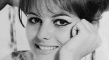
The Beyond contains a similar 'blind person's dog turning on its owner' sequence and indeed contains a similar kind of nonsensical world as the Argento film, yet it is done with a relatively straight-ahead narrative, which strangely makes the film's set pieces when they come feel even more bizarre and off kilter than Suspiria! I'd certainly recommend checking out The Beyond though for some amazing sequences such as the main character replaying the footsteps of a person running out in their mind to realise they didn't make a sound and are therefore a ghost, or the final sequence. Plus it features the lovely Catriona MacColl which more than makes up for the set pieces that don't come off such as the drawn out spider attack and the various Fulci trademarked eye violence scenes!)
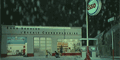
I also love the use of hyper closeups in Suspiria, sort of an Argento trademark, and love the opening sequence of Suzy Bannion in the airport (with the ominous approaching exit doors and a big close up of the automatic door opening mechanism illustrating the transition from the modern, ordered world into the dark, rainy night) and her taxi ride to the school (big close ups of storm drains). I thought it was a wonderfully frightening opening sequence, using just editing and sound to create fear. Even the amazing double murder that follows is notable for the way that more attention is paid to how the violence is staged and looks than for any realism. The sudden way the first girl's location changes from the bathroom to an attic space is unexplained but that jump creates tension. The way the knife comes in to stab her is absurd but it feels an illustration of the way death can suddenly come from any part of the frame. The cut from the hyper close up of the hole in the heart suddenly seeming to 'pop' larger to the girl's head smashing backwards through the stained glass window seems to create an aesthetic connection between the two images (and a victim's head smashing through glass as they die crops up again in Tenebrae and Phenomena). That whole sequence of course climaxes in the big pan across the two dead girls and it is almost as if the whole architecture of the space is completed by the tableau the scene ends with - it is a gory and nasty image but the bodies seem disturbingly posed and serene as if they were those tiny portions of food served in high class restaurants with the blood splattered around them like little drizzles of sauce a chef pours round the dish!
Similarly everyone else has a significant location for their deaths - the blind man in the darkened ampitheatre, the wire room, the bedchamer of the head witch. It is almost as if the characters would be completely safe if they could just have avoided that one 'death area'! - something that constantly crops up in Argento's films from the similarly structured Inferno, to the girl exploring the killer's house in Tenebrae, to the way locations are used as stages for death in Phenomena and Opera (with the development of another constant theme of the main characters either accidentally or being forced to witness the killer's acts rather than their just being played out for the audience - it starts as just witnessing by accident as in The Bird With The Crystal Plumage, moves to being forced to witness in a film like Opera and then to witnessing causing the character to take on some of the killer's characteristics in a film like The Stendahl Syndrome).
Even non violent locations are aestheticised - I'm thinking of that amazing outdoor sequence with Udo Kier explaining the plot to Jessica Harper. It is a rather mundane expository scene but the way it is filmed (love the extremely high top-down shot of the location with the characters looking like ants in the plaza below!) as well as the scene being one of the few shot in daylight helps it to stick in the memory. It could be seen as another example of the actual plot, action and dialogue coming a far distant second to the way in which the sequences are shot and edited.
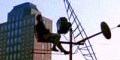
As I said a few months ago in the Three Mothers thread, I feel that the first half hour or so of Inferno really picks up and runs with this beautifully staged horror concept, so much that when the actual killing and gore comes it is unwelcome as so much tension has been created just from detailed portrayals of falling beams, underwater rooms, dark libraries and Verdi!
Unfortunately the life seems to drain from Inferno once Mark becomes the main character, and even the set pieces seem lacklustre and not as illogically beautiful as those that came earlier (the cats and rats are particularly ho-hum and overly drawn out). I would generally agree with the thoughts expressed in
this video on the film - though I quite liked the score!

Alan Jones commented during the Bird With Crystal Plumage commentary that when he was filming some interviews for the
Eye For Horror documentary that the only real objections raised about the film was due to the choice of title, that many of the interviewees considered Argento much more of a thriller director but the success of Suspiria had the effect of 'blotting out' the rest of his filmography and making audiences feel that he was
only a horror director.
Though I really like Suspiria and Inferno I love his more giallo oriented pieces the most (and get the purely personal impression that is more where Argento's interests lie) such as Deep Red and especially Tenebrae (I prefer the title spelt with the extra 'a'!) which to me seemed like a surprisingly logical murder mystery and combines a more 'naturalistic' setting with the set piece 'beauty of horror'-style moments in a masterful way.