The Best Books About Film
-
jesus the mexican boi
- Joined: Fri Nov 05, 2004 9:09 am
- Location: South of the Capitol of Texas
Re: The Best Books About Film
A rather nice trip down memory lane to a time when stills in a big book were like windows to a lost world.
-
Matt

- Joined: Tue Nov 02, 2004 4:58 pm
Re: The Best Books About Film
Those days aren't over. Peter Kobel's Silent Films is chock full of big, gorgeous stills, as is Mark Vieira's book on Thalberg, Hollywood Dreams Made Real.jesus the mexican boi wrote:A rather nice trip down memory lane to a time when stills in a big book were like windows to a lost world.
-
Cosmic Bus

- Joined: Tue Sep 12, 2006 2:12 am
- Location: Seattle, WA
- Contact:
Re: The Best Books About Film
Without having much to add to the overall discussion, I just wanted to say that this topic has been an excellent resource for me over the past several months. I've used many of the recommendations here to obtain a number of books through Paperback Swap for nothing more than the cost of mailing out some old pulp novels from time to time. Durgnat's book on Psycho, Carney's Cassavetes tome, Bergman's Images, O'Brien's Phantom Empire, Prince's Savage Cinema, J.P. Telotte's Voices In the Dark, a handful of the BFI's Film Classics and the Projections series... I'm set for a while!
-
yaojinlong
- Joined: Fri Jul 10, 2009 5:25 am
Re: The Best Books About Film
"Magic Lantern" an autobiography by Swedish filmmaker Ingmar Bergman. I like it. Bergman is so honest in this book about his family, his childhood, his wives & his career.
-
klee13
- Joined: Tue Jan 15, 2008 6:33 pm
- Location: NYC
Re: The Best Books About Film
Could anyone here recommend books on Eric Rohmer? I'm mainly looking for criticism, with perhaps a little biography.
Is Colin Crisp's book any good? I've heard good things about the Cambridge book, but I can't seem to find it anywhere for very cheap.
Is Colin Crisp's book any good? I've heard good things about the Cambridge book, but I can't seem to find it anywhere for very cheap.
-
Jean-Luc Garbo

- Joined: Thu Dec 09, 2004 5:55 am
- Contact:
Re: The Best Books About Film
This is a great one to read. I own a copy and it's an excellent overview and analysis of his work.
-
puxzkkx
- Joined: Fri Jul 17, 2009 4:33 am
Re: The Best Books About Film
Surely it has been mentioned already, but Thomson's "Biographical Dictionary of Film" is a delight to read.
-
Jean-Luc Garbo
- Joined: Thu Dec 09, 2004 5:55 am
- Contact:
Re: The Best Books About Film
Can anyone recommend some good film noir reference sources? I've tried Overlook's Film Noir Encyclopedia, but it only offered plot summaries. I'm looking for dictionaries or encyclopedias that focus on the stylistic traits and define them in cinematographic terms. Naremore's book was just a history and not the type of source I wanted either.
-
psufootball07

- Joined: Wed Apr 02, 2008 6:52 pm
Re: The Best Books About Film
Try the Film Noir Reader it has many essays on the genre or however you define it, and provides some great examples. Great book.
-
Ovader
- Joined: Wed Nov 03, 2004 5:56 am
- Location: Canada
Re: The Best Books About Film
Has anyone read and can offer an opinion for Orson Welles Remembered by Peter Prescott Tonguette and Orson Welles at Work by François Thomas & Jean-Pierre Berthomé? Both book descriptions look very promising even though the authors of Orson Welles at Work are not happy with the final published work.
-
ellipsis7

- Joined: Tue Nov 02, 2004 5:56 pm
- Location: Dublin
Re: The Best Books About Film
Two reccomendations...
1/.
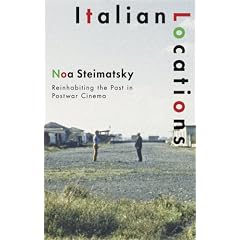
Interesting and stimulating study how 4 filmmakers - Antonioni, Visconti, Rossellini and Pasolini - reframed landscape to reimagine a post-fascist Italy and invent the cinema of neo-realism and beyond...
2/.
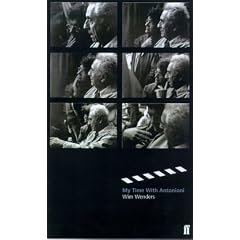
This English language version of 'My Time with Antonioni' from Faber provides an excellent translation of Wim Wenders' diary of working with Antonioni on the making of BEYOND THE CLOUDS...
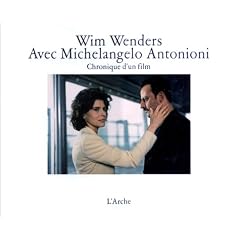
However it almost completely omits the 200 plus pages of beautiful photographs in colour (by Wim Wenders of the scenes being shot) and black and white (by Donata Wenders of MA working with cast, crew and collaborators including WW), which provide a parallel and equally valuable record of the experience - these photographs can be found in the larger format German, French and Italian editions of Wenders' book...

1/.
Interesting and stimulating study how 4 filmmakers - Antonioni, Visconti, Rossellini and Pasolini - reframed landscape to reimagine a post-fascist Italy and invent the cinema of neo-realism and beyond...
2/.
This English language version of 'My Time with Antonioni' from Faber provides an excellent translation of Wim Wenders' diary of working with Antonioni on the making of BEYOND THE CLOUDS...
However it almost completely omits the 200 plus pages of beautiful photographs in colour (by Wim Wenders of the scenes being shot) and black and white (by Donata Wenders of MA working with cast, crew and collaborators including WW), which provide a parallel and equally valuable record of the experience - these photographs can be found in the larger format German, French and Italian editions of Wenders' book...
-
Matt
- Joined: Tue Nov 02, 2004 4:58 pm
Re: The Best Books About Film
For all you film book lovers, University of California Press is having a huge sale (up to 70% off). Use discount code 10M9352 at checkout. Lots of fundamental texts there, including Bazin, Arnheim, Vertov, Painting with Light, Movies and Methods, and the 10-volume History of the American Cinema series. Sale ends October 31.
-
Forrest Taft

- Joined: Fri Mar 16, 2007 12:34 am
- Location: Stavanger, Norway
Re: The Best Books About Film
Thank you very much for link. Bazin x 2, Arnheim and Alton on its way to my shelf. 
-
domino harvey

- Dot Com Dom
- Joined: Wed Jan 11, 2006 6:42 pm
Re: The Best Books About Film
WOW, these are AMAZING prices. Thank you so much for the heads up! =D>
-
Ovader
- Joined: Wed Nov 03, 2004 5:56 am
- Location: Canada
Re: The Best Books About Film
Thanks for the notice! I will definitely get Kevin Brownlow's The Parade's Gone By available for $17.95, James Naremore's More than Night plus some others already mentioned above.
-
Mr Sausage
- Has Risen from the Grave
- Joined: Thu Nov 04, 2004 1:02 am
- Location: Canada
Re: The Best Books About Film
You can find some find cool stuff on there, like Luis Bunuel's An Unspeakable Betrayal.
-
Cash Flagg
- Joined: Fri Jan 25, 2008 3:15 am
Re: The Best Books About Film
Very nice deals, I was just looking for an good Antonioni book. Loving's Dresier bio (hardcover no less) is only $5.95.
-
Peacock
- Joined: Mon Dec 22, 2008 11:47 pm
- Location: Scotland
Re: The Best Books About Film
Has anyone here read Sarris' Interviews with Film Directors oop book(s?)? What is the quality like and could anyone give a run down of some of the directors featured?
-
Sanjuro

- Joined: Fri Nov 03, 2006 5:37 am
- Location: Yokohama, Japan
Re: The Best Books About Film
Oh, you can always rely on the small print to dash expectations.*Sale prices are only available in the United States and Canada.
-
Forrest Taft
- Joined: Fri Mar 16, 2007 12:34 am
- Location: Stavanger, Norway
Re: The Best Books About Film
Are you sure? I´m in Norway, and bought four books from them. No problems so far, but the order hasn´t shipped yet... [-o<Sanjuro wrote:Oh, you can always rely on the small print to dash expectations.*Sale prices are only available in the United States and Canada.
-
Mr Sausage
- Has Risen from the Grave
- Joined: Thu Nov 04, 2004 1:02 am
- Location: Canada
Re: The Best Books About Film
Not all books ship outside the States, either. I added two to my cart only to discover they were US bound only.Sanjuro wrote:Oh, you can always rely on the small print to dash expectations.*Sale prices are only available in the United States and Canada.
But whatever. I'm getting a $60 hard cover book for $10, I've got no complaints.
-
Forrest Taft
- Joined: Fri Mar 16, 2007 12:34 am
- Location: Stavanger, Norway
Re: The Best Books About Film
My prayers were not answered...RobertAltman wrote: Are you sure? I´m in Norway, and bought four books from them. No problems so far, but the order hasn´t shipped yet... [-o<

We have received your order from the UC Press online sale. Unfortunately,
this offer extends only to customers in the US and Canada. It does not
extend to customers in Europe.
Thank you,
Sherry Rakes
CPFS Order/Customer Services Representative
609-883-1759 ext 506
-
colinr0380
- Joined: Mon Nov 08, 2004 8:30 pm
- Location: Chapel-en-le-Frith, Derbyshire, UK
Re: The Best Books About Film
This could easily go in the Historical Accuracy In Film thread, the "Art of Political War" thread or even the 50s list project threads (where I note that Gregor Samsar has mentioned it), but I thought that perhaps this would be the best place to recommend Peter Biskind's book, Seeing Is Believing: Or, How Hollywood Taught Us To Stop Worrying And Love The 50s.
The main premise of the book is to perform an ideological reading of 50s American films across genres and budgets and Biskind provides a commendably unbiased response to the film he discusses, suggesting that identifying ideological trends is different from considering whether a film is 'good' or not - it is more whether a film is successful at putting across its message, whatever that may be. Although, as with studying the flaws of poorly made films, it can be enlightening in itself to study the more ideologically muddled films as they can help to show some of the underlying processes more clearly for the way they are not so slickly presented.
I'm about a third of the way through re-reading it at the moment and am finding it even more interesting having watched some of the films that are discussed in the intervening period. The main idea is that set against the fears of Communism on the left and memories of Facism on the right moved both political sides to fight over the centre ground.
The opening discussion of 12 Angry Men provides an excellent introduction to the 'centreist' theory about forming a consensus. This is suggested as a more centre-left attitide - a 'corporate liberal' one mostly in co-operation with, but with slight ideological differences to, a centre-right 'conservative' attitude. 12 Angry Men is about including everyone, whether they want to be or not.
Then the book moves on to 'cops and docs', i.e. films like Panic In The Streets where the cracks in the consensus show - while most centreist films agree on co-operating the corporate liberal ones preferred treatment (i.e. curing doctors) while more conservative films preferred punishment (i.e. police). Much more attention is paid to the struggles for predominance of the group than actually fighting off a plague or catching the criminals. There is also the conflict between 'experts' (graduates and those whose learning comes mostly from books) and 'professionals' (a more conservative approach where knowledge has been gained through practical experience). But once a particular ideology is dominant the centre can finally 'close ranks' against the radical elements who have gone too far (and who usually must die to restore the status quo).
The next major section of the book deals with war films where these tensions are just more pronounced - the enemies in 50s war films are usually far less important than tensions within the unit, and here a whole number of factors are used to analyse the centre-left or centre-right swing in a film - how different ranks are portrayed and what senority means to a particular film (i.e. where the suspicion is placed - on trigger happy soldiers who need to be kept firmly in line, or on incompetent or lazy superiors); how court martials or the threat of mutiny are used; how significant a threat a rebellious character poses to group unity and where the line is drawn; the conflict between domestic home (wife, mother - women in general) and the home of the army (or air force, since the main film analysed as illustrative of this point is Strategic Air Command). And scientists (or more correctly engineers) begin to merge with the doctor role.
I'm just going through the next section now, on Science Fiction films, but have already found a couple of comments very interesting - one on the way that compared to the extremely atmospheric lighting and sets, not to mention extreme performances, of the 30s films like the Frankensteins and Draculas, that the 50s disaster movies with their enormously increased threat to the whole world were mostly characterised by their flat style and callow actors.
That is actually something I particularly like about 50s sci-fi - it makes the over the top threat seem more low key in a strange way. It also gives a feeling that the emphasis is far more on the mass spectacle than the individual - not exactly for any ideological reasons but more for industrial ones (similar to those that could be applied to today's blockbusters where CG destruction takes precedence over all but the most cardboard and cliched relationships).
I also liked the comment on the alien threat, or Other, in sci-fi, and that while this can stand for anything there is a constant of the Other being associated with nature. It may be a mad scientist's creations that causes nature to awaken and run amok, or grow to enormous size but the scientist is also the one with the idea of how to stop the monsters that cannot be stopped by just the armed forces firepower alone, thereby fulfilling the professional vs expert and theraputic vs force criterias depending on how the scientists are weighed against the army - usually they are in mutual co-operation against the threat, such as in Them! (Them! is actually a particularly interesting film to study from this perspective, since there are two scientists (one elderly and his daughter) and two cops (one local and one FBI). The film ends with the hopeful union of the scientist's daughter with the FBI officer, and while the elderly scientist is spared the local cop sacrifices himself. This would likely place Them! as a corporate liberal film in Biskind's terminology, since the group is emphasised but the symbol of big government (the FBI man) is rewarded while the local cop gets an, albeit heroic, death)
Anyway this rough stumble through the opening chapters of this extremely well written book should hopefully have been of interest. I certainly prefer this book to Biskind's later and more celebrated, but more gossipy, books. Seeing Is Believing reads like an extended essay that persuasively analyses the films being discussed to back its points up (it perhaps should be pointed out that of course the basic plots of all of the films discussed are 'spoiled', but at the same time the writing makes me want to immediately rewatch the films, and I can't think of a higher compliment to pay the work than that!) While sometimes I may disagree on the comments on a film or the focus on a particular aspect to the exclusion of some others that are also relevant, the arguments are also always enjoyable to read too.
Plus of course the discussions of the films in the book have implications far beyond the 50s cinema.
The main premise of the book is to perform an ideological reading of 50s American films across genres and budgets and Biskind provides a commendably unbiased response to the film he discusses, suggesting that identifying ideological trends is different from considering whether a film is 'good' or not - it is more whether a film is successful at putting across its message, whatever that may be. Although, as with studying the flaws of poorly made films, it can be enlightening in itself to study the more ideologically muddled films as they can help to show some of the underlying processes more clearly for the way they are not so slickly presented.
I'm about a third of the way through re-reading it at the moment and am finding it even more interesting having watched some of the films that are discussed in the intervening period. The main idea is that set against the fears of Communism on the left and memories of Facism on the right moved both political sides to fight over the centre ground.
The opening discussion of 12 Angry Men provides an excellent introduction to the 'centreist' theory about forming a consensus. This is suggested as a more centre-left attitide - a 'corporate liberal' one mostly in co-operation with, but with slight ideological differences to, a centre-right 'conservative' attitude. 12 Angry Men is about including everyone, whether they want to be or not.
Then the book moves on to 'cops and docs', i.e. films like Panic In The Streets where the cracks in the consensus show - while most centreist films agree on co-operating the corporate liberal ones preferred treatment (i.e. curing doctors) while more conservative films preferred punishment (i.e. police). Much more attention is paid to the struggles for predominance of the group than actually fighting off a plague or catching the criminals. There is also the conflict between 'experts' (graduates and those whose learning comes mostly from books) and 'professionals' (a more conservative approach where knowledge has been gained through practical experience). But once a particular ideology is dominant the centre can finally 'close ranks' against the radical elements who have gone too far (and who usually must die to restore the status quo).
The next major section of the book deals with war films where these tensions are just more pronounced - the enemies in 50s war films are usually far less important than tensions within the unit, and here a whole number of factors are used to analyse the centre-left or centre-right swing in a film - how different ranks are portrayed and what senority means to a particular film (i.e. where the suspicion is placed - on trigger happy soldiers who need to be kept firmly in line, or on incompetent or lazy superiors); how court martials or the threat of mutiny are used; how significant a threat a rebellious character poses to group unity and where the line is drawn; the conflict between domestic home (wife, mother - women in general) and the home of the army (or air force, since the main film analysed as illustrative of this point is Strategic Air Command). And scientists (or more correctly engineers) begin to merge with the doctor role.
I'm just going through the next section now, on Science Fiction films, but have already found a couple of comments very interesting - one on the way that compared to the extremely atmospheric lighting and sets, not to mention extreme performances, of the 30s films like the Frankensteins and Draculas, that the 50s disaster movies with their enormously increased threat to the whole world were mostly characterised by their flat style and callow actors.
That is actually something I particularly like about 50s sci-fi - it makes the over the top threat seem more low key in a strange way. It also gives a feeling that the emphasis is far more on the mass spectacle than the individual - not exactly for any ideological reasons but more for industrial ones (similar to those that could be applied to today's blockbusters where CG destruction takes precedence over all but the most cardboard and cliched relationships).
I also liked the comment on the alien threat, or Other, in sci-fi, and that while this can stand for anything there is a constant of the Other being associated with nature. It may be a mad scientist's creations that causes nature to awaken and run amok, or grow to enormous size but the scientist is also the one with the idea of how to stop the monsters that cannot be stopped by just the armed forces firepower alone, thereby fulfilling the professional vs expert and theraputic vs force criterias depending on how the scientists are weighed against the army - usually they are in mutual co-operation against the threat, such as in Them! (Them! is actually a particularly interesting film to study from this perspective, since there are two scientists (one elderly and his daughter) and two cops (one local and one FBI). The film ends with the hopeful union of the scientist's daughter with the FBI officer, and while the elderly scientist is spared the local cop sacrifices himself. This would likely place Them! as a corporate liberal film in Biskind's terminology, since the group is emphasised but the symbol of big government (the FBI man) is rewarded while the local cop gets an, albeit heroic, death)
Anyway this rough stumble through the opening chapters of this extremely well written book should hopefully have been of interest. I certainly prefer this book to Biskind's later and more celebrated, but more gossipy, books. Seeing Is Believing reads like an extended essay that persuasively analyses the films being discussed to back its points up (it perhaps should be pointed out that of course the basic plots of all of the films discussed are 'spoiled', but at the same time the writing makes me want to immediately rewatch the films, and I can't think of a higher compliment to pay the work than that!) While sometimes I may disagree on the comments on a film or the focus on a particular aspect to the exclusion of some others that are also relevant, the arguments are also always enjoyable to read too.
Plus of course the discussions of the films in the book have implications far beyond the 50s cinema.
Last edited by colinr0380 on Mon Sep 28, 2009 5:26 pm, edited 3 times in total.
-
gubbelsj

- Joined: Fri Apr 14, 2006 6:44 pm
- Location: San Diego
Re: The Best Books About Film
Thanks for the recommendation, Colin. This sounds like one to check out. I note some similarities to J. Hoberman's volume on 60s cinema, in which he points out through example that, far from being a decade of leftist reactionary cinema, much of American cinema in that decade had a much closer ideological identity with the 1950s.
-
Matt
- Joined: Tue Nov 02, 2004 4:58 pm