It's also a trope that was used heavily in Vietnam movies, where even the ones primarily about the atrocities committed by Americans- De Palma's Casualties of War, for instance- are still viewed primarily through the eyes of an American and in terms of the impact on the American.
I suppose you could make the case that it holds true even in something like Graham Greene's work, like The Quiet American and The Third Man, though I would argue that both use the trope in part to critique Western naivete and myopia.
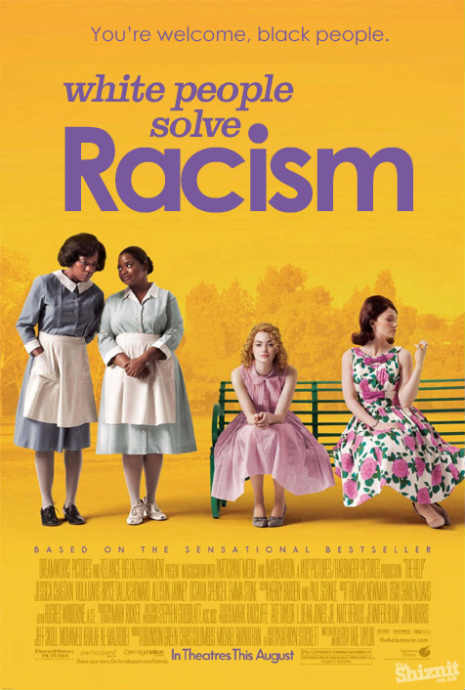
The Help (Tate Taylor, 2011)
-
colinr0380

- Joined: Mon Nov 08, 2004 8:30 pm
- Location: Chapel-en-le-Frith, Derbyshire, UK
Re: The Help (Tate Taylor, 2011)
And that Vietnam template is now just as much applied to the Iraq and Afghanistan conflicts. De Palma's Redacted is much more powerful when seen as a companion piece to/comment on Casualties of War, and shows how the 'witnessing journalist' role has mutated into a third-person view in which various broadcasts, conversations, news reports, propaganda films and so on that are available on the internet are collated together and turned into the narrative (the much more fluid 'internet amorality' vs an overarching perspective of a particular nation state through which events are filtered?).
-
ando

- Bringing Out El Duende
- Joined: Mon Dec 06, 2004 10:53 pm
- Location: New York City
Re: The Help (Tate Taylor, 2011)
I could easily disagree with the above statement and say (with proof) that actually, it's a white woman's story told by a black woman - which makes it a black story by default! Ultimately, this question of the skin color of, or more importantly, experience of the true narrator becomes ludicrous and breaks down altogether, which is probably one of the best things about the film. After all, you can really only assume to whom the film is targeted despite the obvious tropes. Give this first big feature director some leeway. I think there's a great deal of subversion (in terms of tropes) here that actually benefits the film.Foam wrote:The biggest problem I had was that it pretends to be more than the A White Person Explores... piece that it is. The way this film depicts black suffering is clearly the product of a myopic white imagination. If the film admitted to this it would be perversely interesting in that limited way. Instead, it deceptively lets a black character frame and narrate the story, as if it's primarily her story being told, rather than a white woman's.
-
matrixschmatrix

- Joined: Wed May 26, 2010 3:26 am
Re: The Help (Tate Taylor, 2011)
I'm not sure I understand the argument you're making here.
As far as I can tell, both book and movie are a collection of stories told by black people- women who were maids in the South in the 60s- filtered through the voice of a white writer. In the movie, that white writer is to some degree foregrounded and made a central character, as well. The writer and director of the film, Tate Taylor, is a white man. How does having a black person read the narration make it a black story? How are the lines between those voices eroded?
As far as I can tell, both book and movie are a collection of stories told by black people- women who were maids in the South in the 60s- filtered through the voice of a white writer. In the movie, that white writer is to some degree foregrounded and made a central character, as well. The writer and director of the film, Tate Taylor, is a white man. How does having a black person read the narration make it a black story? How are the lines between those voices eroded?
-
ando
- Bringing Out El Duende
- Joined: Mon Dec 06, 2004 10:53 pm
- Location: New York City
Re: The Help (Tate Taylor, 2011)
Any time someone tells a story it changes according to whomever you happen to be.
Now, presumably, the film, narrated by a "black" charcater is telling a "black" story. You may cite it as being false to a "black" experience because a white man directed and produced the film based on a novel written by a white woman. But, obviously, you have to do more than that - you have to cite examples in the film that reflect a perspective that would preclude a black interpretation. How does one do that? To my mind, there is no event in the film that a black person wouldn't convey in the manner in which it's conveyed chiefly because you can't define the black experience. And, let's face it, the film isn't even concerned with that particular dialectic in any serious way.
In fact, as someone intimated, despite the spectre of racial conflict that surrounds the characters, the film avoids dealing with or observing the question of race altogether. It's why the racist Hilly Holbrook charcater is so central to the narrative - she puts the whole issue of race as far away as she can (even to the point of lobbying for increased sepearte but equal legislation). The elephant, as it were, remains in the room and people simply walk out.
Now, that, is something of which we've seen plenty - even in serious lit! I remember Tony Morrison, who was practically mentored by William Faulkner, nevertheless criticizing him in Absalom, Absalom! for not bringing into focus the central dilemma of Thomas Sutpen, who was quite undone because he discovered that he wife had "negro" blood and, thus, disowned his own son. The question of exactly WHY he was obsessed with that fact and what that fact actually means in the life of a so-called white person is never explored. The realtionship is simply abandoned.
Now, presumably, the film, narrated by a "black" charcater is telling a "black" story. You may cite it as being false to a "black" experience because a white man directed and produced the film based on a novel written by a white woman. But, obviously, you have to do more than that - you have to cite examples in the film that reflect a perspective that would preclude a black interpretation. How does one do that? To my mind, there is no event in the film that a black person wouldn't convey in the manner in which it's conveyed chiefly because you can't define the black experience. And, let's face it, the film isn't even concerned with that particular dialectic in any serious way.
In fact, as someone intimated, despite the spectre of racial conflict that surrounds the characters, the film avoids dealing with or observing the question of race altogether. It's why the racist Hilly Holbrook charcater is so central to the narrative - she puts the whole issue of race as far away as she can (even to the point of lobbying for increased sepearte but equal legislation). The elephant, as it were, remains in the room and people simply walk out.
Now, that, is something of which we've seen plenty - even in serious lit! I remember Tony Morrison, who was practically mentored by William Faulkner, nevertheless criticizing him in Absalom, Absalom! for not bringing into focus the central dilemma of Thomas Sutpen, who was quite undone because he discovered that he wife had "negro" blood and, thus, disowned his own son. The question of exactly WHY he was obsessed with that fact and what that fact actually means in the life of a so-called white person is never explored. The realtionship is simply abandoned.
Last edited by ando on Wed Sep 07, 2011 7:53 pm, edited 4 times in total.
-
matrixschmatrix
- Joined: Wed May 26, 2010 3:26 am
Re: The Help (Tate Taylor, 2011)
That seems like an incredibly strict test- I don't know that I can imagine a perspective that would absolutely preclude a black interpretation, and I don't know that doing so is important. Obviously, we're working in the field of identity politics here, but it seems foolish to pretend there isn't a vast and significant different in viewpoint between black and white in the segregated South, and as far as I can tell all the intermediaries in the movie- everyone who shapes the story, as opposed to the original maids who were the storytellers and the black actors who portray them- are white people. That, to me, means that we are having the story interpreted from a white viewpoint.ando wrote:Now, presumably, the film, narrated by a "black" charcater is telling a "black" story. You may cite it as being false to a "black" experience because a white man directed and produced the film based on a novel written by a white woman. But, obviously, you have to do more than that - you have to cite examples in the film that reflect a perspective that would preclude a black interpretation. How does one do that? To my mind, there is no event in the film that a black person wouldn't convey in the manner in which it's conveyed chiefly because you can't define the black experience. And, let's face it, the film isn't even concerned with that particular dialectic in any serious way.
That doesn't necessarily make the movie worthless, and as you say identity politics may not be the movie's foremost concern- but given the subject matter, it seems disingenuous to dismiss race as a fundamental question of the story we're hearing.
-
ando
- Bringing Out El Duende
- Joined: Mon Dec 06, 2004 10:53 pm
- Location: New York City
Re: The Help (Tate Taylor, 2011)
What's the huge difference? I remember noted historian and Mississippi native, Shelby Foote, commenting that his upbringing and perspective on life was shaped by black people. And that, in fact, the black women who raised him meant more to him than all his aunts and uncles put together. Now, I'm not implying that this is the average experience or viewpoint of a southern white person but the lines of separation in terms of experience between the two so-called races are far more pourous than you imply.matrixschmatrix wrote: Obviously, we're working in the field of identity politics here, but it seems foolish to pretend there isn't a vast and significant different in viewpoint between black and white in the segregated South...
Oh no, I'm not dismissing it. I'm just saying that the film doesn't really deal with it. Not that it has to, either. But it does inform the characters and distorts or colors their motivations far more than the film has space or time to admit.That doesn't necessarily make the movie worthless, and as you say identity politics may not be the movie's foremost concern- but given the subject matter, it seems disingenuous to dismiss race as a fundamental question of the story we're hearing.
Last edited by ando on Wed Sep 07, 2011 8:04 pm, edited 1 time in total.
-
Brian C

- I hate to be That Pedantic Guy but...
- Joined: Wed Sep 16, 2009 3:58 pm
- Location: Northwest US
Re: The Help (Tate Taylor, 2011)
Aren't we really just talking about the device of an audience surrogate, though, which is used very generally and just as often in movies that have no racial/ethnic dimension? Scorsese, with Goodfellas, didn't just make a movie about the mob - he made a movie about some random guy who could relay the perspective of an outsider to us. The Last Station could have been a movie about Tolstoy, but instead it was a movie about some idiot who met Tolstoy once. Indeed, James McAvoy has had something of a career playing characters like this, with similar roles in The Conspirator, Wanted (I think, didn't actually see it), and the admittedly problematic The Last King of Scotland. Forrest Gump is, in some ways, a rather sly take on this type of narrative device. The first few Harry Potter films are similar, revolving around a newcomer that gives the audience a perspective into a new world. The Searchers gives us the Jeffrey Hunter character not as a gateway to the American Indian world, which is more or less taken for granted, but as a way to view the John Wayne character. Haneke structured The White Ribbon with its central character as a guy from the next village who was just sorta there when all the stuff happened. Duvall's The Apostle had the Walton Goggins character to turn to Jesus.colinr0380 wrote:But that particular trope is not just something that happened with an African-set film. Cry Freedom's audience mediating white journalist main character can also be seen to have parallels with many other films from the 1980s dealing with white observers of 'foreign' cultures: Under Fire (Nicaragua), The Year of Living Dangerously (Indonesia), The Killing Fields (Cambodia) - even Gandhi has a tangential white (and female, for extra bonus points!) reporter looking on during part of the film. A lot of this would seem to be based as much on the need to create characters who are present to witness every significant event of a historical narrative, though it does feel like a rather lazy way to perform that narrative task.
Anyway, examples are legion. I can't really say how all this relates to The Help specifically, but it's obviously an extremely common structural device. But I will say that this doesn't strike me as a problematic thing on its own terms - while I don't know the backgrounds of the filmmakers in this case, it would be somewhat unusual if a bunch of white people could really give an honest representation of black perspectives from the era. There is, I'd suggest, a good reason why filmmakers don't often try to make movies from the perspective of foreign cultures - it would require an understanding of dynamics that they would have a hard time fully understanding, like a movie from the perspective of the hippies by even a well-meaning conservative.
So what we get instead is a representation of their own cultural/political/racial awakenings, and while that may or may not be worthwhile in each particular case, it ought to stand on its own merits. In other words, it hardly seems fair to the movie to judge it against a backdrop of a bunch of other movies that one may find objectionable for whatever reason.
The problem, as it seems to me, is that Hollywood is, for perfectly understandable albeit gravely unfortunate reasons, a place of rather limited perspectives. And this is where Gregory's stories about Danny Glover come into the picture - when the range of perspectives is being actively limited, that strikes me as deeply objectionable. But that doesn't really have anything to do with The Help; white people were around in the 1960s South also, and they deserve to have their stories told as well. Whether the movie does that honestly and fairly or not, I can't say, but in an ideal world, there ought to be room for stories about the South from multiple viewpoints. It's not like one single movie could ever do more than scratch the surface anyway of what the people of the time thought and did.
-
matrixschmatrix
- Joined: Wed May 26, 2010 3:26 am
Re: The Help (Tate Taylor, 2011)
In some ways, yes- the actual events experienced are often similar- but however close people were, and however much in common they had, Southern society was clearly and intentionally set up to divide the people in power from the people who were subjugated, and there's a tremendous interpretive distance between those two viewpoints.ando wrote:What's the huge difference? I remember noted historian and Mississippi native, Shelby Foote, commenting that his upbringing and perspective on life was shaped by black people. And that, in fact, the black women who raised him meant more to him than all his aunts and uncles put together. Now, I'm not implying that this is the average experience or viewpoint of a southern white person but the lines of separation in terms of experience between the two so-called races are far more pourous than you imply.matrixschmatrix wrote: Obviously, we're working in the field of identity politics here, but it seems foolish to pretend there isn't a vast and significant different in viewpoint between black and white in the segregated South...
I think the issue is that The Help is the only story about black people in Mississippi in the 60s we get- there's nothing inherently wrong with filtering one perspective through another, nor is there anything inherently wrong with having an audience surrogate. The places it does go really wrong are when a.) the culture/people we're meant to be ushered into through the surrogate never characterized beyond a series of vague stereotypes- a place in which it does not sound as though The Help is culpable, but something like Mississippi Burning would be- b.) the surrogate turns out to be way better at being a member of the Others than any of them are, as in The Last Samurai or Avatar- I can't speak to The Help on this one, one way or the other- or c.) we never the story through anyone's perspective other than a white surrogate written by white people, when there are people who are actually members of the group we're shown that are fully capable of relating the experience to us.Brian C wrote:Aren't we really just talking about the device of an audience surrogate, though, which is used very generally and just as often in movies that have no racial/ethnic dimension? Scorsese, with Goodfellas, didn't just make a movie about the mob - he made a movie about some random guy who could relay the perspective of an outsider to us. The Last Station could have been a movie about Tolstoy, but instead it was a movie about some idiot who met Tolstoy once. Indeed, James McAvoy has had something of a career playing characters like this, with similar roles in The Conspirator, Wanted (I think, didn't actually see it), and the admittedly problematic The Last King of Scotland. Forrest Gump is, in some ways, a rather sly take on this type of narrative device. The first few Harry Potter films are similar, revolving around a newcomer that gives the audience a perspective into a new world. The Searchers gives us the Jeffrey Hunter character not as a gateway to the American Indian world, which is more or less taken for granted, but as a way to view the John Wayne character. Haneke structured The White Ribbon with its central character as a guy from the next village who was just sorta there when all the stuff happened. Duvall's The Apostle had the Walton Goggins character to turn to Jesus.
Anyway, examples are legion. I can't really say how all this relates to The Help specifically, but it's obviously an extremely common structural device. But I will say that this doesn't strike me as a problematic thing on its own terms - while I don't know the backgrounds of the filmmakers in this case, it would be somewhat unusual if a bunch of white people could really give an honest representation of black perspectives from the era. There is, I'd suggest, a good reason why filmmakers don't often try to make movies from the perspective of foreign cultures - it would require an understanding of dynamics that they would have a hard time fully understanding, like a movie from the perspective of the hippies by even a well-meaning conservative.
So what we get instead is a representation of their own cultural/political/racial awakenings, and while that may or may not be worthwhile in each particular case, it ought to stand on its own merits. In other words, it hardly seems fair to the movie to judge it against a backdrop of a bunch of other movies that one may find objectionable for whatever reason.
The problem, as it seems to me, is that Hollywood is, for perfectly understandable albeit gravely unfortunate reasons, a place of rather limited perspectives. And this is where Gregory's stories about Danny Glover come into the picture - when the range of perspectives is being actively limited, that strikes me as deeply objectionable. But that doesn't really have anything to do with The Help; white people were around in the 1960s South also, and they deserve to have their stories told as well. Whether the movie does that honestly and fairly or not, I can't say, but in an ideal world, there ought to be room for stories about the South from multiple viewpoints. It's not like one single movie could ever do more than scratch the surface anyway of what the people of the time thought and did.
That last is obviously the one that applies strongly to The Help, and it's largely a critique of the movie industry more than the movie itself- but even within a given movie, it seems pandering at best to have a movie about Gandhi be really about a white reporter, or a movie about Steven Biko be really about a white reporter, or a movie about The Help be really about a white reporter. It's a thin line, because there's no reason why we can't be interested in the journalist's story for their own sake, and also because nobody would accuse (say) Citizen Kane of being secretly about the reporter- but there is nonetheless something a little sad about a situation in which a movie about the experience of black maids in the 60s created and directed by someone who was a black maid in the 60s would never get made, yet this movie is a runaway success.
-
Gregory

- Joined: Tue Nov 02, 2004 8:07 pm
Re: The Help (Tate Taylor, 2011)
This is why Hollywood needs not only more variety in the types of stories told and people portrayed (and cast in general in things that aren't explicitly about those identities per se) but also a greater democratization of screenwriting and directing, so that it's not rich white people trying to tell stories they really know nothing about.Brian C wrote:...while I don't know the backgrounds of the filmmakers in this case, it would be somewhat unusual if a bunch of white people could really give an honest representation of black perspectives from the era. There is, I'd suggest, a good reason why filmmakers don't often try to make movies from the perspective of foreign cultures - it would require an understanding of dynamics that they would have a hard time fully understanding, like a movie from the perspective of the hippies by even a well-meaning conservative.
Edit: typo
Last edited by Gregory on Wed Jan 25, 2012 9:15 pm, edited 1 time in total.
-
Michael

- Joined: Wed Nov 03, 2004 4:09 pm
Re: The Help (Tate Taylor, 2011)
I read the book and saw the film as well. I found them to be pretty good. There are great nonfiction books and documentaries discussing Jim Crow and Southern racism. But The Help is simply a work of fiction that takes place in the Jim Crow climate. The heart of this wonderful story is the empowerment of women, both black and white, more than anything else.
An interesting essay from NY Times. Hats off to Kathryn Stockett for having the guts to go there. Hats off to Patricia Turner for expressing a painful truth.
Someone here mentioned The Blind Side. Now that's a movie I completely loathe.
An interesting essay from NY Times. Hats off to Kathryn Stockett for having the guts to go there. Hats off to Patricia Turner for expressing a painful truth.
Someone here mentioned The Blind Side. Now that's a movie I completely loathe.
-
colinr0380
- Joined: Mon Nov 08, 2004 8:30 pm
- Location: Chapel-en-le-Frith, Derbyshire, UK
Re: The Help (Tate Taylor, 2011)
I agree (you can add to your examples the way that the titular character in Kurosawa's Red Beard is seen through the eyes of the junior doctor. Many of Kurosawa's films have that distance from the more mythical characters, such as in Sanjuro or Hidden Fortress, long before we get to the totally detached from humanity, God's eye view of something like Ran), though I think if I were even more cynical a lot of the 80s 'journalist' films could also be seen as a result of a string of imitators using a currently in fashion trope to structure their own films.Brian C wrote:Aren't we really just talking about the device of an audience surrogate, though, which is used very generally and just as often in movies that have no racial/ethnic dimension?
The interesting thing about these films is that using an audience surrogate character focused on the difficulties of a particular group also has the handy effect of removing that observational character, and the groups they are affiliated to, from criticism. For example the FBI agents of Mississippi Burning never have to have their own reactions to the subject matter too deeply investigated. I also remember Alex Cox, talking about this trend for the Moviedrome introduction to Salvador, talking of the way that these journalist figures often return home (but changed and enlightened) to write their articles at the end of the films, thus also providing narrative closure on complex, often 'unfinishable' issues.
-
ando
- Bringing Out El Duende
- Joined: Mon Dec 06, 2004 10:53 pm
- Location: New York City
Re: The Help (Tate Taylor, 2011)
Ah, but this distance cuts across the color line and is not easily elucidated even with the institution of slavery and its legacy. Nor do I think it as definitive a factor in defining the Southern perspective as historical fiction novels would have us believe.matrixschmatrix wrote:In some ways, yes- the actual events experienced are often similar- but however close people were, and however much in common they had, Southern society was clearly and intentionally set up to divide the people in power from the people who were subjugated, and there's a tremendous interpretive distance between those two viewpoints.ando wrote: I remember noted historian and Mississippi native, Shelby Foote, commenting that his upbringing and perspective on life was shaped by black people. And that, in fact, the black women who raised him meant more to him than all his aunts and uncles put together. Now, I'm not implying that this is the average experience or viewpoint of a southern white person but the lines of separation in terms of experience between the two so-called races are far more pourous than you imply.

-
Matt

- Joined: Tue Nov 02, 2004 4:58 pm
Re: The Help (Tate Taylor, 2011)
Haven't seen the film, haven't read the book, but I thought this statement from the Association of Black Women Historians provided a nice response, particularly:
ABWH wrote:In the end, The Help is not a story about the millions of hardworking and dignified black women who labored in white homes to support their families and communities. Rather, it is the coming-of-age story of a white protagonist, who uses myths about the lives of black women to make sense of her own.
-
swo17

- Bloodthirsty Butcher
- Joined: Tue Apr 15, 2008 2:25 pm
- Location: SLC, UT
Re: The Help (Tate Taylor, 2011)
One of my problems with a film like this is that it sells racism short by depicting it with a kind of cartoonishly unrealistic villainy that ensures that no audience member will ever take a deep look inside and recognize the capacity within themselves to commit a similar offense, even if only in smaller ways. Not to cry "racism against whites," but every single white female character in this movie is a one-dimensional stereotype of a racist '50s housewife, either active or passive, with the exception of Emma Stone's character, in the role of "magical white person," and Jessica Chastain, who I think is supposed to be providing comic relief.
-
flyonthewall2983

- Joined: Mon Jun 27, 2005 7:31 pm
- Location: Indiana
- Contact:
Re: The Help (Tate Taylor, 2011)
"Magical Caucasian" should be the proper buzzword.
-
Brian C
- I hate to be That Pedantic Guy but...
- Joined: Wed Sep 16, 2009 3:58 pm
- Location: Northwest US
Re: The Help (Tate Taylor, 2011)
Well, I actually thought it very ably got to the heart of how segregation worked - as a system for the benefit of socially privileged whites. Such a system really only requires aggressive enforcement by a small number of social elites and passive acceptance by the rest, and that's what the movie showed.swo17 wrote:One of my problems with a film like this is that it sells racism short by depicting it with a kind of cartoonishly unrealistic villainy that ensures that no audience member will ever take a deep look inside and recognize the capacity within themselves to commit a similar offense, even if only in smaller ways. Not to cry "racism against whites," but every single white female character in this movie is a one-dimensional stereotype of a racist '50s housewife, either active or passive, with the exception of Emma Stone's character, in the role of "magical white person," and Jessica Chastain, who I think is supposed to be providing comic relief.
-
knives

- Joined: Sat Sep 06, 2008 10:49 pm
Re: The Help (Tate Taylor, 2011)
I can show you a lemon, doesn't mean I'm Hollis Frampton. Just because you show something doesn't mean you're showing it well or in a way that causes you to intellectually interact with the concept on screen. It's just a hook.Brian C wrote: Well, I actually thought it very ably got to the heart of how segregation worked - as a system for the benefit of socially privileged whites. Such a system really only requires aggressive enforcement by a small number of social elites and passive acceptance by the rest, and that's what the movie showed.
-
swo17
- Bloodthirsty Butcher
- Joined: Tue Apr 15, 2008 2:25 pm
- Location: SLC, UT
Re: The Help (Tate Taylor, 2011)
Yeah, I didn't have a structural problem per se with some characters being more active or passive in their racism. It was more that it seemed like their racism, and the degree to which they each practiced it, was about the only dimension considered in the development of their characters. Even Haggis' Crash realized that all racists have as many as two sides to them.
-
Brian C
- I hate to be That Pedantic Guy but...
- Joined: Wed Sep 16, 2009 3:58 pm
- Location: Northwest US
Re: The Help (Tate Taylor, 2011)
I guess I don't think that's true. Howard of course was set up as the villian of the piece, but aside from her obvious limitations as an actress I don't think she came across as "cartoonishly unrealistic". To the contrary, I think she came across as exactly the kind of gatekeeper of the social order that was required to uphold segregation in the first place. It's not like her hatred of blacks was her only defining trait; she was instrumental in deciding that the Chastain character was socially unfit as well.swo17 wrote:Yeah, I didn't have a structural problem per se with some characters being more active or passive in their racism. It was more that it seemed like their racism, and the degree to which they each practiced it, was about the only dimension considered in the development of their characters. Even Haggis' Crash realized that all racists have as many as two sides to them.
-
swo17
- Bloodthirsty Butcher
- Joined: Tue Apr 15, 2008 2:25 pm
- Location: SLC, UT
Re: The Help (Tate Taylor, 2011)
Well, if her character traits extended beyond being racist, they all seemed to me to be driving home how much of a terrible person she was in every aspect of life. This is where I got the sense of her being an unrelatable villain. I mean, I think it would have only been slightly out of character for her if at one point, one of the maids had just prepared herself a nice, tasty sandwich and sat down for lunch, only to have BDH run into the room and slap it right out of her hand, because the little light had just gone off in her head saying "Something's about to go right for a black person? Not on my watch!"
-
tavernier

- Joined: Sat Apr 02, 2005 11:18 pm
Re: The Help (Tate Taylor, 2011)
that's one of the deleted scenesswo17 wrote:one of the maids had just prepared herself a nice, tasty sandwich and sat down for lunch, only to have BDH run into the room and slap it right out of her hand, because the little light had just gone off in her head saying "Something's about to go right for a black person? Not on my watch!"
-
domino harvey

- Dot Com Dom
- Joined: Wed Jan 11, 2006 6:42 pm
Re: The Help (Tate Taylor, 2011)
Well, much to my surprise, this was pretty damn good. I don't think it works too well as any sort of definitive statement on racism (and it's in good company, as what films do?), but it is an effective examination of the era's general complacency towards conformity. The Help is a well-made, well-written, well-acted social problem pic that like most efforts in the genre reassures those already converted. That said, I thought the real strength of the film was that it's one of the best Women's Pictures I've seen in some time, with females at the forefront of every act in the film. The men, when they do grace the screen, are relegated to furniture and come across at best as either ineffectual or pliant to a woman's will. I think this is rarer and more interesting than looking at it through the contentious issue of race relations, and perhaps this is why I came away from the film much more impressed than most here. It helps that the film has a trio of very game performances from Octavia Spencer, Jessica Chastain, and Bryce Dallas Howard, with the rest of the cast settled in varying steps beneath. Spencer's achievement is the least of the three (though she appears to be the best bet for an Oscar for the film), if just because the world-wise advisor is a naturally likable script construct, but she does rise to the occasion. However, I think Chastain and Howard show stronger talent with game spirits that make their rather one-dimensional characters sparkle with energy and breathe life into roles that could have been more functional than showy in lesser hands.
-
jbeall

- Joined: Sat Aug 12, 2006 1:22 pm
- Location: Atlanta-ish
Re: The Help (Tate Taylor, 2011)
Melissa Harris-Perry on The Help
Waiting for a free weekend to see this, although that probably won't be this coming weekend, as it's long past time to protest some of Alabama's recent idiocy.
Waiting for a free weekend to see this, although that probably won't be this coming weekend, as it's long past time to protest some of Alabama's recent idiocy.