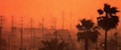
Roger Ryan wrote:On the other end would be the controversial "car ride" scene in Tarkovsky's SOLARIS. Regardless of how Tarkovsky wished to sculpt this particular real time experience, it effectively stops the film. Is it the fact that a Western and/or modern audience is too familiar with Tokyo for it to appear as alien as Soviet audiences might have found it in 1971? Did Tarkovsky feel obligated to extend the sequence to justify his trip to Japan? This can't just be pinned on Tarkovsky's very deliberate style; with every viewing, the pacing of SOLARIS seems quicker than I remembered it being...with the exception of that one scene that significantly overstays its welcome.
I tend to think that, alongside its weeding-out effects on certain viewers, this scene works if you interpret it in a particular way. Burton makes his exit from the film through that scene; the way that he slowly blends into a then-modern landscape, accompanied by the child Burton brought along and by the disturbing sounds around him, is an interesting way to dissolve a character into the background of the story. It's definitely a sequence I've come to appreciate after my second run-through of the film. And though I'll probably skip it on later runs of Solaris, I don't feel like it adversely affected the pacing of the film. Solaris is a film designed to make the most of a bad situation. Since it's been observed that Tarkovsky planned to shoot a similar sequence at an earlier time in Japan, this highway sequence may haver been all he was able to procure.
Still the weakest part of Solaris, alongside that slow zoom into Kelvin's outer ear and the inconsistent tinting, lol.
Pacing, to me, is the hardest element of film-making to tackle confidently. To pace a film efficiently is to understand the visual style, directorial quirks, and overall scenario of a film—not including individual scenes and editing styles. Solaris enveloped me in its real-time atmosphere like no other film I've ever seen, mainly through noticeably-long tracking shots and precise match cuts. In addition to the cinematography, though, Tarkovsky's film used alien sound design and contrasts between (character) perspectives to develop the story through new means. The film worked because of a variety of storytelling devices being used to unfold each layer of Kelvin's past, present, and future. As a psychological film using a science-fiction background, too, Tarkovsky contrasted ideas of humanity with alien ideas, the future city being one of those alienating, inhuman institutions in the film.
Another film that's considered "slow and difficult" is Rossellini's Cartesius. For many of the same reasons as listed above, though, I was immersed in the film to the point that it felt correctly paced—told in a way I could comprehend, in a way through which Rossellini communicated his thoughts to me. Medium-range opening shots, followed by intense zooming and occasional panning. On top of all this is the concept of a "moving painting", a concept of how the film should feel that. And when I first thought of Cartesius as a moving painting, wherein constant zooming and alteration of spatial relationships communicates subtle changes in the story, the film just came to life and never felt off-step. It was only towards the end that the film's length crept up on me, that this film was ending soon, that it was running out of interesting developments. Rossellini had, by the time in the story that Descartes was going to publish his thoughts, run out of interesting ways to develop Descartes as a character, and the ending was preceded by some less remarkable scenes overall. But the movie turned a cerebral individual into an emotional recluse, and the pacing felt right for the most part.
A film that feels together, in every way possible, is good enough for me, and is well paced.. Though I don't know if that definition is specific enough for the term "pacing", it's the best I can come up with. My problem with defining it, right now, is that I simply haven't seen that many movies yet. That activity's going to take a while.