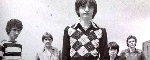
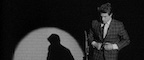
Der Spieler wrote:Am I the only one who thinks the contrast looked better on the DVD?
The shot of Mabuse's face looks way too bright.
On the other end, if you look at the cap with the guy on top of the electric pole, the BD gives us back a lot of details, making the DVD looking much too dark.
It might have been adjusted on the shot by shot basis (logically, it should have), and the Mabuse's face shot is only one shot where they went too far but it's not representative of the whole result. I mean, that's 10 frames out of 4.5 hrs of movie.
The steelbook came in the mail today, and to my mind those caps aren't very accurate. The Beaver caps for the Eureka DVD is actually a better indication for the contrast on the BD, IMO. But I'm only 2 min 56 sec into the movie (and so far I've been able to compare with the first two beaver caps...good thing Tooze takes from grabs in the beginning of the movies/chapters!).
Hopefully this is OK to link to, if not, please remove this post (sorry)....this page leads to a PDF of what should be in public domain, the 1923 translation of Norbert Jacques' original Mabuse novel. To date, as mentioned by David Kalat, this is the only English translation, and fetches very high prices in it's original form.
That's completely fantastic--thanks so much for that link!
I'm a little perplexed by the transfer on this disc. It looks like dot art, or the way a newspaper image is comprised of a greyscale comprised of dots of greater and lesser size, rather than color variants.
I'm a little perplexed by the transfer on this disc. It looks like dot art, or the way a newspaper image is comprised of a greyscale comprised of dots of greater and lesser size, rather than color variants.
It shouldn't - but it has very sharp grain from the nitrate source. What are your display settings?
Bringing this thread back from the dead to see if anyone now has any further thoughts they're willing to share on the picture quality of the Mabuse BDs. I own the Kino Gambler and Criterion Testament but am considering springing for one or both of the MoC BDs.
Both blu rays look fabulous in motion! Sure, they show their age, but they are wonderful to watch. And Testament has the added bonus of a unique-to-MOC commentary by Kalat that is different than the one on the Criterion.
Testament uses the same HD transfer as the Criterion DVD so I wouldn't call it a major upgrade, but it's certainly very nice. Gambler however is from a whole new restoration and is superior to the old MoC DVD, which was already superior to the Kino DVD! So I wouldn't hesitate to pick up that one.
EddieLarkin wrote:Testament uses the same HD transfer as the Criterion DVD so I wouldn't call it a major upgrade, but it's certainly very nice. Gambler however is from a whole new restoration and is superior to the old MoC DVD, which was already superior to the Kino DVD! So I wouldn't hesitate to pick up that one.
That's exactly the sort of information I've been waiting for. Thanks much.
After enjoying fantastic success with Fritz Lang’s two-part “Indian Epic” in 1959, German producer Artur Brauner signed the great director to direct one more film. The result would be the picture that, in closing the saga he began nearly forty years earlier, brought Lang’s career full-circle, and would come to represent his final celluloid testament—by extension: his final film masterpiece.
Die 1000 Augen des Dr. Mabuse [The Thousand Eyes of Dr. Mabuse] finds that diabolical Weimar name resurfacing in the Cold War era, linked to a new methodology of murder and mayhem. Seances, assassinations, and Nazi-engineered surveillance tech—all abound in Lang’s paranoid, and ultimate, filmic labyrinth.
One of the great and cherished “last films” in the history of cinema, Die 1000 Augen des Dr. Mabuse provides a stylistic glimpse into the 1960s works on such subjects as sex-crime, youth-culture, and LSD that Lang would unfortunately never come to realise. Nonetheless, Lang’s final film remains an explosive, and definitive, closing statement. The Masters of Cinema Series is proud to present Fritz Lang’s final film on Blu-ray.
SPECIAL FEATURES
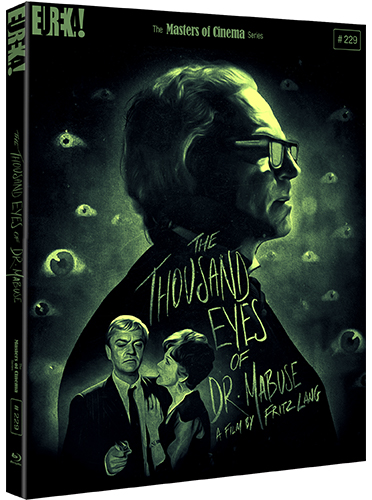
LIMITED EDITION O-CARD SLIPCASE [2000 Units]
1080p presentation on Blu-ray
Original German soundtrack
Optional English audio track, approved by Fritz Lang
Optional English subtitles
Feature-length audio commentary by film-scholar and Lang expert David Kalat
2002 interview with Wolfgang Preiss
Alternate ending
Reversible sleeve featuring newly commissioned and original poster artwork
A collector’s booklet featuring a new essay by Philip Kemp; vintage reprints of writing by Lang; an essay by David Cairns; notes by Lotte Eisner on Lang’s final, unrealised projects
I'm overall mixed on Lang, and enjoy but am not in love with the original Mabuse films, but to my surprise The Thousand Eyes of Dr. Mabuse was wonderful on just about every level. The key here is that Lang delves into full camp mode (the opening minutes involve Goldfinger as a lead detective reading a book titled Criminal Psychology before taking a call from a fortune-teller magician who ‘sees’ a crime). Lang’s knack for formalism and pacing strings together the nonstop, creative crime-fantasy into a tight, enthusiastic cinematic dimestore novel. Lang usually loses me when his films slow down to meditate on decorative dressing in performance or visual exposition that add unnecessary fat to an otherwise strong film, and none of that exists here because those pretentious poles don’t belong in this world. It’s pure shlock, but absurd adventures coated in masterful direction is cinematic exuberance. The plot moves through imaginative channels and with energy that recalled some of the most piercing and engaging noirs and wrong-man pictures of the 40s and 50s. There are clear noir tropes and yet it’s too eclectic in its mood to remain married to one genre. All the Lang-ian(?) interests are here: Nazis, cops, spies and skeptics; as well as insinuations that touch on history, psychology, society, and mysticism.
Lang’s camera knows no bounds, yet it's not erratic in its careful movements, following whatever direction is necessary to capture the significant details for a shot. There is voyeurism behind the camera and implemented into the story. There are paranoia thriller components that recall Rivette's most anxious characters in his early works though deliberately fulfilling those quotas here. Anti-paranoia is not what Land is after - just good, clean, validated fun. I love how at the end when the police report says the license plate number and the criminals change it, the radio immediate changes to “license plate unknown.” It’s such a silly, taunting goof, but is completely aligned with the constructive inauthenticity of the film. The deadpan facial expressions of the villains are perfect, and moments like this reminded me that my fears that this might turn into a overly didactic exercise could rest easy. Even the slimiest-seeming character falls into a last-minute deux ex machina, that mockingly gets tossed aside as a story for another day. All of these cushy scenes would be disrespectful to the audience if they were not entirely in step with Lang's humble divorcement from realism, including emotional authenticity. This is a shiny, flavorful ride, accentuating directoral flourishes to the max to cast rays of pleasure on every interaction, idea, and setpiece.
It's too bad that this was Lang's last film as director, as it's one of my favorites and a clear sign of finally abandoning the dead weight of his self-gratifying ideas in favor of pure lubricated cinema. I can't argue that it's an objectively "better" film than some of his celebrated masterpieces, but there is a loosening of ego and a devotion to amusement that make me smile.
MoC’s website says they’re sold out of the slipcover version of Thousand Eyes, but my copy from Amazon.co.uk placed last week still had one, if anyone’s looking for it