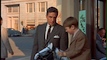
I don't really find Stephen Lack's acting lacking (he also briefly turns up as the sculptor in Dead Ringers later on, which is an interesting development from Scanners!) as he is performing in a kind of spaced out, other worldly manner that you can also see happening in Jennifer O'Neill's more powerful performance (as someone who has learnt to control and wield her powers rather than being buffeted around by them, as Cameron is), which helps O'Neill's character to be able to be more of an equal to him, and even end up having her own significant revelation outside of Cameron's story. I think we're also meant to be a bit ambivalent to his heroic qualities anyway, as Cameron moves from a kind of child-like clean slate at his opening induction through to becoming a kind of corporate agent against Revok's rebel leader, which anticipates the muddling up of hero and villain (both halves of a whole family) in the ending.
I love this film for all of its slightly laughable qualities because all of those qualities end up sort of defining the fun factor of the film for me: the horror movie soundtrack, at its worst over the exterior shot of Dr Ruth's warehouse laboratory (a warehouse location reminiscent of The Fly later on); the heartbeat yoga guru who gets more than he bargained for; the touchy-feely cult commune of ineffectually liberal scanners (which of course gets wonderfully brutally disrupted); the computer sequences (which do date the film but I remember my dad talking about
Commodore PET computers, with this film being the only one that I could turn to for examples of that technology! And I love that the end credits are done in that style! The second half of the film stands as kind of a testament to a particular era of technological development, when home computers were co-existing networked into giant supercomputers running spinning discs of information!), and so on. The one flaw I would perhaps point to is that the film often becomes more conventional when you get into the spy henchmen, paranoia thriller stuff (strangely very similar to the scenes that crop up in De Palma's The Fury a couple of years earlier!), but even here you get the magnificently slimy Keller as the career climbing middle manager villain!
I even love the moment of twisting the vision of two guards and making them see our heroic duo as members of their family, which is both funny and raises questions of just how dangerous the scanners are if they can not only do physical damage but perform a kind of mental assault too.
But there are also a lot of magnificent scenes, particularly the introduction of Jennifer O'Neill's character in the art gallery followed up by the visit to Robert Silverman's tormented artist character.
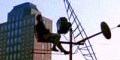
The early internet version of networking with computers over long distances is also fantastic (the film brings up still relevant questions of massive private databases of information - banking, medical, national security, etc - being built up for nefarious means). The gloved fist gripping the melting payphone handset is a fantastic image as powerful as any to come in Videodrome and makes for a great expression of emotion through technology, in this case rage rather than lust/power of Videodrome. Making the film a key throughline from The Brood's psychically manifested expressions of rage through to Videodrome's hallucinatory techno-manipulations of the psyche!
And of course the final, almost endless seeming battle scene with imagery that still goes beyond anything else and accentuated by Howard Shore's sawing, circular, glacially shocked score. (I love the conversation scene between Lack and Ironside that precedes it just as much though, and this whole thing is getting at the key Cronenberg theme of cosy environments suddenly being tainted by unspeakable horror taking place within them. It is also interesting to compare that final discussion scene with the one at the end of Cosmopolis)
I think it is no accident that our main scanner hero and villain were both born in 1945. It does feel like a film dealing with the fallout of a lot of aspects of the Second World War, abstracted through genre (much as say the giant ants in Them!, or Godzilla itself are legacies of nuclear tests) - there are themes of medical experimentation , trauma expressed through art, minorities persecuted for the threat they pose to society, assassination/slaughter squads, and finally the nuclear bomb metaphor itself of devastating power unleashed and unchecked.
There are also the obvious allusions to Thalidomide swirling around in there (although here the unborn are left with unintended superpowers), although it would be reductive to just say that is the only theme of the film in the same way that, yes, The Fly could stand as a metaphor for AIDS but also for aging in a wider sense and what that deterioration does to all relationships.
Plus I've always like the montage of whispering voices. Who wouldn't be driven crazy by hearing hundreds of people asking themselves whether they left the oven on, or that they must pick up their dry cleaning?
And who hasn't wanted to almost kill the person who even
thinks horrible things about you?