Sorry no link, http://plainarchive.com/collections/plain-archive
yeah grab 'em while you can, I guess their are only 50 left? Or is that just some South Korean propoganda. I dunno, but this was a favorite, so I figured I would spring for it. 68 page book (English Translation inclusive) is nice too.
Melancholia (Lars von Trier, 2011)
-
swo17

- Bloodthirsty Butcher
- Joined: Tue Apr 15, 2008 2:25 pm
- Location: SLC, UT
Re: Melancholia (Lars von Trier, 2011)
I got that set from Plain Archive in the mail today, and it is indeed a lovely package. PQ looks comparable to the Magnolia release, which is not surprising since all the extras are the same. The menu screen is all in Korean but not difficult to navigate, and Korean subs are the default (though they are removable). Not that any of this particularly matters though, since it's already all sold out.
-
Antarctica

- Joined: Thu Dec 31, 2015 2:48 pm
- Location: United States
Re: Melancholia (Lars von Trier, 2011)
There is a great contrast between the commotion of the wedding and the quiet during Claire's story.
I did think the wedding went on a bit too long, but overall thought the film was moving, unique, and beautiful.
Spoiler
It's calming when the mansion is vacated, but I feel something else I can't describe. "Creepy" isn't the right word, but it may be similar. Whatever that feeling was, it stood out for me in this film. Maybe "stillness" best describes it. I felt it when Claire adjusts the wire.
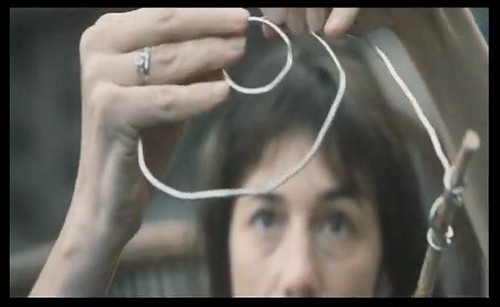
I don't know why, but another image that stands out is the Nestle chocolate sauce on the table outside during Claire's story. This may be a strange, obsessive observation that the filmmakers didn't think about, but it seemed so weird to be enjoying Nestle chocolate sauce when the world was ending.
I don't know why, but another image that stands out is the Nestle chocolate sauce on the table outside during Claire's story. This may be a strange, obsessive observation that the filmmakers didn't think about, but it seemed so weird to be enjoying Nestle chocolate sauce when the world was ending.
-
mfunk9786

- Under Chris' Protection
- Joined: Fri May 16, 2008 8:43 pm
- Location: Miami, FL
-
domino harvey

- Dot Com Dom
- Joined: Wed Jan 11, 2006 6:42 pm
-
mfunk9786
- Under Chris' Protection
- Joined: Fri May 16, 2008 8:43 pm
- Location: Miami, FL
Re: Melancholia (Lars von Trier, 2011)
If you can't trust the distinguished New York Post, who can you trust?
-
therewillbeblus

- Joined: Tue Dec 22, 2015 7:40 pm
Re: Melancholia (Lars von Trier, 2011)
I may have more to say in a specific reading on this film at a later time, but it's one that when I first saw in theatres was my least favorite von Trier against the grain of the public, and has grown in esteem on each rewatch where now I can see it especially in context with his other films as the one where von Trier seems to be the most stable in acceptance of his mental health and individualized perspective on the world. That stability does not reflect his actual management of his life, as this was the last film he made before actually attempting to get sober (and it's interesting to look at Nymphomaniac as his first- perhaps only- "sober" film, at least written while off drugs and very clearly indicative of a man trying to overexplain himself to himself, while this one is almost a serene shrug gently welcoming his nihilistic side); but the film appears to be that of a man just before his 'bottom' of drug abuse, or a suicidal person who has developed a plan to kill themselves, when one levels out briefly in comfort staring out toward the sea of the actual task of confronting the hopelessness yet to come, relieved of the pain momentarily but removed enough to avoid the flooding of action: the calm before the storm. There is definitely an inspiring 'secret to life' proposed in Sutherland's character appearing secure but only as far as the facade of logic will take him, for once that is only shown to be a piece of the pie he crumbles and we see how the 'need' for tangibility and control is most destructive, while the ability to let go, to any degree, and accept the cosmic unpredictability of the emotional intangibility of life, is necessary to survive.
I really appreciated reading through this thread and want to single out Jeff''s comment about von Trier validating his own nihilistic part, and Sausage's about the eventual movement of each character to emerge from their own neuroses to connect and share with one another, even if for one moment, which to me signifies the meaning of life in all its impermanent wonder: Validation of the parts within the self including the limitations, and the ability to recognize and seize opportunities for empathy and connection when possible. I also want to thank mfunk for explaining depression in a level-headed way under those frustrating circumstances. Others mentioned how depression can be constant, and while that's true in some cases (Major Depressive Disorder requires some consistency for two weeks) it's much more common to have a less rigid mood disorder like Bipolar or Cyclothymia, which include depressive symptoms with more fluctuation, though even MDD allows for that too. mfunk is right that this comes unprovoked and I think that it's a stretch to think that Dunst was having reservations about the wedding beforehand or that her sociopolitical views of bourgeois created her state... she had an attack and like Sausage said she doesn't have support to heighten her finite will power to overcome obstacles and stressors that may include those (natural) reservations or (natural) annoyances with her job/social circle. Even more than the power of the ending, I think von Trier should be commended for giving himself - and by extension many of us - some affirmations that it is acceptable to have unpredictable mental health issues flare up, even if we cannot give ourselves that affirmation in the moment. That he does this for all audiences who care to look in this film is one of the most humanistic maneuvers of any filmmaker ever, and should be food for thought for those who label him a 'provocateur,' put him in a drawer and throw away the key. I mean, he allows Justine's psychological pain to externalize itself to the entire world: What could possibly be more empathetic and supportive of her worth?
I really appreciated reading through this thread and want to single out Jeff''s comment about von Trier validating his own nihilistic part, and Sausage's about the eventual movement of each character to emerge from their own neuroses to connect and share with one another, even if for one moment, which to me signifies the meaning of life in all its impermanent wonder: Validation of the parts within the self including the limitations, and the ability to recognize and seize opportunities for empathy and connection when possible. I also want to thank mfunk for explaining depression in a level-headed way under those frustrating circumstances. Others mentioned how depression can be constant, and while that's true in some cases (Major Depressive Disorder requires some consistency for two weeks) it's much more common to have a less rigid mood disorder like Bipolar or Cyclothymia, which include depressive symptoms with more fluctuation, though even MDD allows for that too. mfunk is right that this comes unprovoked and I think that it's a stretch to think that Dunst was having reservations about the wedding beforehand or that her sociopolitical views of bourgeois created her state... she had an attack and like Sausage said she doesn't have support to heighten her finite will power to overcome obstacles and stressors that may include those (natural) reservations or (natural) annoyances with her job/social circle. Even more than the power of the ending, I think von Trier should be commended for giving himself - and by extension many of us - some affirmations that it is acceptable to have unpredictable mental health issues flare up, even if we cannot give ourselves that affirmation in the moment. That he does this for all audiences who care to look in this film is one of the most humanistic maneuvers of any filmmaker ever, and should be food for thought for those who label him a 'provocateur,' put him in a drawer and throw away the key. I mean, he allows Justine's psychological pain to externalize itself to the entire world: What could possibly be more empathetic and supportive of her worth?