

G. W. Pabst brought the war movie into a new era with his first sound film, a mercilessly realistic depiction of the nightmare that scarred a generation, in the director's native Germany and beyond. Digging into the trenches with four infantrymen stationed in France in the final months of World War I, Pabst illustrates the harrowing ordeals of battle with unprecedented naturalism, as the men are worn away in body and spirit by firefights, shelling, and the disillusion that greets them on the home front. Long unavailable, the newly restored Westfront 1918 is a visceral, sobering antiwar statement that is as urgent today as when it was made.
SPECIAL FEATURES
• New high-definition digital restoration, with uncompressed monaural soundtrack on the Blu-ray
• Hour-long French television broadcast of World War I veterans reacting to the film in 1969
• 2016 interview with film scholar Jan-Christopher Horak
• New restoration demonstration featuring Martin Koerber and Julia Wallmüller of the Deutsche Kinemathek
• New English subtitle translation
• PLUS: An essay by author and critic Luc Sante
Kameradschaft
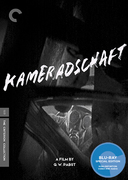
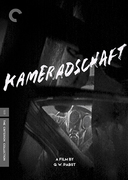
When a coal mine collapses on the frontier between Germany and France, trapping a team of French miners inside, workers on both sides of the border spring into action, putting aside national prejudices and wartime grudges to launch a dangerous rescue operation. Director G. W. Pabst brings a claustrophobic realism to this ticking-clock scenario, using realistic sets and sound design to create the maze of soot-choked shafts where the miners struggle for survival. A gripping disaster film and a stirring plea for international cooperation, Kameradschaft cemented Pabst's status as one of the most morally engaged and formally dexterous filmmakers of his time.
SPECIAL FEATURES
• New high-definition digital restoration, with uncompressed monaural soundtrack on the Blu-ray
• New interview with German film scholar Hermann Barth on the film's production
• 1988 interview with editor Jean Oser
• 2016 interview with film scholar Jan-Christopher Horak on the historical context of the film
• New English subtitle translation
• PLUS: An essay by author and critic Luc Sante