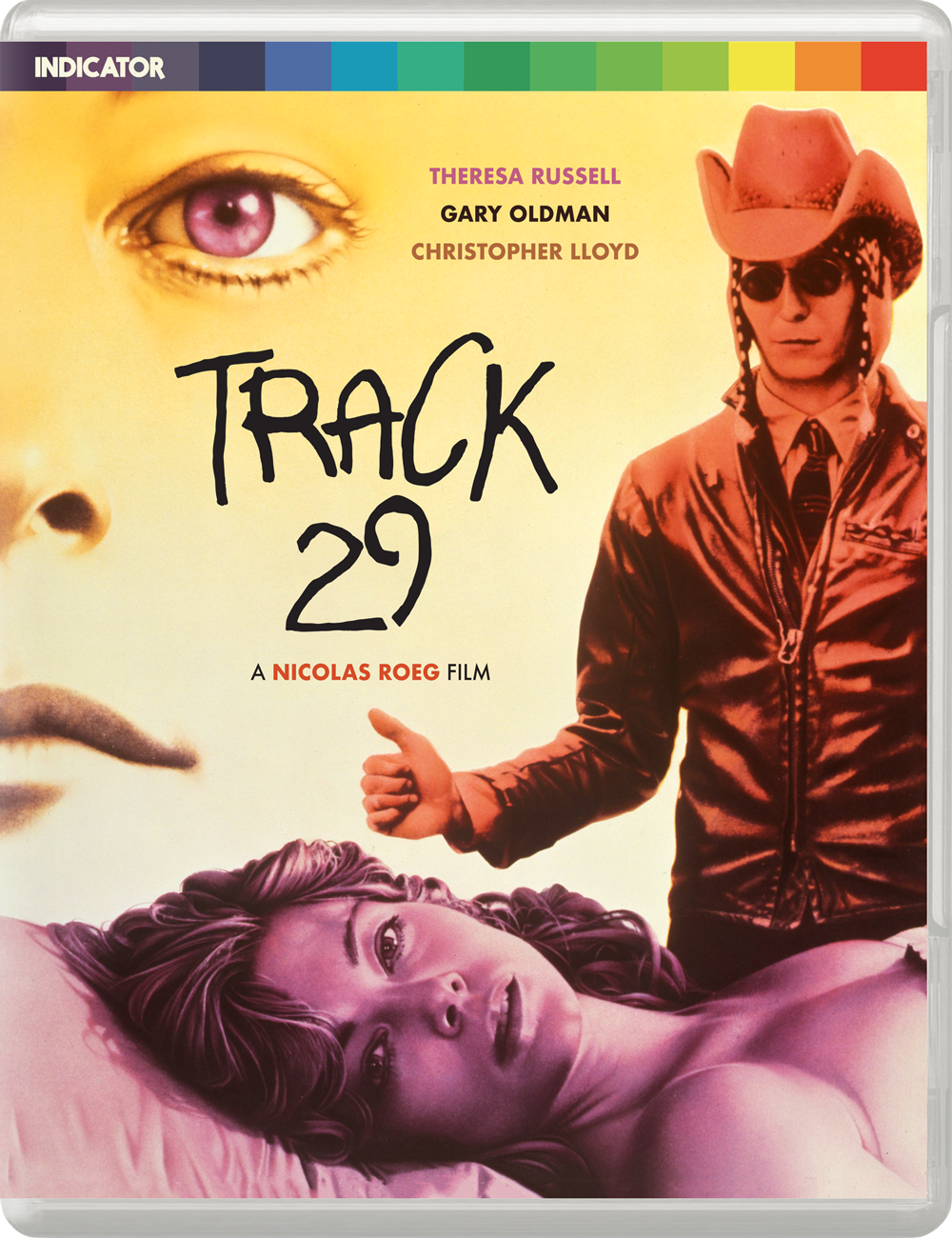
I struggled with this one. There are enough eccentric perversions to keep one invested, and Russell does a great job as the central character showing a lot of range even in understated dispositions, but the projections of trauma get too ridiculous and Potter’s script’s tendencies to make surrealism boundless in scope to the point of disengagement has never been more dull.
The “twist” of Oldman as a manifestation doesn’t work on so many levels of pragmatism, but is also ruined early on when we cut to the bartender who says Russell is talking to herself. If you’re going to go for broke, at least drag that out passed the halfway mark - or maybe stay with the subjective character so that the externalized trauma fits with the ideas?
Roeg’s flexibility is a good fit for faithfully visualizing Potter’s wildness, and I can see how appealing this concept would be to get a green light: Potter’s scattered madness and Roeg’s nonlinear stylistic flairs combining to explore the experience of trauma! I’d sign up for that, since this subject
should be treated with such imagination and willingness to gravitate away from expected cinematic logic.. but unfortunately the result isn’t deserving of the salute it got on paper, and we wind up with a kind of film has been done countless times before and since, and aside from Russell getting a much deserved spotlight placement, I can’t say I cared much about anything here except for a cool John Lennon credits opener.
Speaking of, in hindsight Oldman literally popping into the frame makes a ton of sense- or does it? I suppose we’re meant to see his narrative as Russell’s daydreams.. but what of the interaction in the diner with Colleen Camp? Why did he only pop in now, is there any indication that Russell hit a particular place where she had to conjure that part into being? Maybe I missed something... Or maybe he was half-real, or whatever.