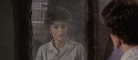
When her best friend and roommate abruptly moves out to get married, Susan (Melanie Mayron), trying to become a gallery artist while making ends meet as a bar mitzvah photographer on Manhattan’s Upper West Side, finds herself adrift in both life and love. Could a new job be the answer? What about a fling with a married, older rabbi (Eli Wallach)? A wonder of American independent filmmaking whose remarkably authentic vision of female relationships has become a touchstone for makers of an entire subgenre of films and television shows about young women trying to make it in the big city, this 1970s New York time capsule from Claudia Weill captures the complexities and contradictions of women’s lives and relationships with wry humor and refreshing frankness.
DIRECTOR-APPROVED SPECIAL EDITION FEATURES
New, restored 4K digital transfer, supervised by director Claudia Weill and director of photography Fred Murphy, with uncompressed monaural soundtrack on the Blu-ray
New interview with Weill
New interview with Weill and actors Melanie Mayron, Christopher Guest, and Bob Balaban
New interview with screenwriter Vicki Polon
New interview with Weill and writer and director Joey Soloway
Joyce at 34, a 1972 short film by Weill and Joyce Chopra
Commuters, a 1973 short film by Weill
Trailer
English subtitles for the deaf and hard of hearing
PLUS: Essays by critic Molly Haskell and scholar Carol Gilligan
I've seen this three (maybe three and a half) times now and every time I return to it, I enjoy and admire it more. It's a wonderful selection of extras, as well. And based on the print they run on TCM, it definitely could use a proper release.
I whole-heartedly recommend this film. A real delight. Saw it a few years ago in 35 and really enjoyed it. It takes a twist and turn or two that you wouldn't expect but really works.
One of those films I've seen in the theater multiple times. I sort of always expected this to come considering the heavy reevaluation it's gotten in the last several years. It felt like an ideal license from Warner Bros. for years, so my only surprise is that it took this long to begin with!
Now if I could just convince Criterion that Nancy Savoca’s Dogfight deserves a number in the Collection, I would be able to cross another dream release off my list.
I'm surprised I hadn't heard of this one before, given how it has obviously inspired the surge of candid portraits of the feminine-individualist existential journeys-in-staticity in urban spaces of late (Tiny Furniture, Girls, Frances Ha, a chunk of mumblecore, etc.) Though I appreciated this film more than the others for its peripheral focus, that the others generally ignore by the nature of the millennial solipsistic perceptiveness; which is not a dig per se, since those films are very much about having empathy for young people who cannot escape the quicksand of self-pity (which hardly anybody is completely safe from engaging in from time to time, if anybody at all). The warm fabric of this film is in the details, like the genial "good luck" pact to quit smoking or conversation of spiritual yearning with Wallach or the eccentric hitchhiker, all populating banal exchanges and spaces with casual conversations that would appear empty in another film. However here they are honest, bursting with the kind of authenticity that is self-conscious in muted playful attempts at humor and inhibited expressions of one's thoughts in small talk.
When Wallach and Mayron are flirting, the jokes aren't for us but for them, and watching the scene has the opposite effect from those modern-day comic examples that work hard to include us with punchlines in the screenplay and editing room for artificial amusement to align with the characters. Weill and Polon seem to understand that a lot of these 'real' moments of connection between people feed off of the energy in that room, and they make the bold choice to allow their characters to exist in a relationship of separation-triggering-involvement with the audience. So the funny bits cause me to smirk and nod and even laugh sometimes, but less because due to a script catering to me and more of an acknowledgement of the feeling of being in a social exchange where inside jokes develop before your eyes, disconnected from the rest of the world.
The "mumps" scene, for example, is funny and sweet and intimate, but through a detached compassion derived from the separation between viewer and character rather than blending, where I'm much more high from recognition and humanistic care than being 'in' on the gag. Through excluding us from direct subjective-surrogation, the film involves us as admirers and empathizers, reflecting a part of ourselves in the universality of the experiences and invested in observing what we may have missed from all the times we were in our own solipsistic nosedives, and unable to part from our own perspective in a duo. One of my favorite moments has Mayron sitting with Guest awkwardly trying to work through the barriers we put up for protection without any catharsis from measurable gain. It's riveting in how little is said or done because the tension and possibilities are felt. This is a very mindful film; humble, funny, considerate, and empathic to all involved. I can see how repeat viewings would yield improved returns, and am looking forward to checking out the shorts on the disc especially come November.