Meszaros doesn't seem to have a filmmaker thread, so this might be the best place to post this. I've been catching up with some of her early features recently, so here are some capsule reviews:
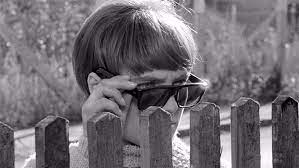 The Sun Has Gone
 (1968) - Also known by the dreary title
The Girl, this is a sharp, stylish study of a young woman seeking out the mother who abandoned her, turning up on her doorstep after being kind of invited and kind of uninvited. The modern city girl is a bad fit for the traditional village, and the reunion doesn't go the way she hopes - without descending into any kind of hysterics or melodrama. The compelling thing about the main character, Erszi, is that she's extremely willful and unswayed by familial and societal expectations, and after a great title sequence that's composed of nouvelle vague freeze frames implying pause and reflection, the film instead gallops along at a headlong pace energized by ellipses. And like these other early features, it's accompanied by a soundtrack of late 60s Hungarian pop music (including the title track that soundtracks the final sequence.)
 Binding Sentiments
 (1969) - More intergenerational tension, with the great Torocsik Mari (
Elektra,
Love) as the widow of a Great Man dealing with her cranky son and his new girlfriend. He uses his girlfriend to manage his mum's "hysteria" and they resort to kidnapping her and locking her up in an alpine prison to die for - more like a luxury dacha. Ultimately, both women come to the realization that their blokes were pretty shitty. Again, it's beautifully shot in black and white, is laced with cool Hungarian pop music, and smuggles in an oblique critique of the Communist patriarchy / patriarchal Communism (chicken, meet egg).
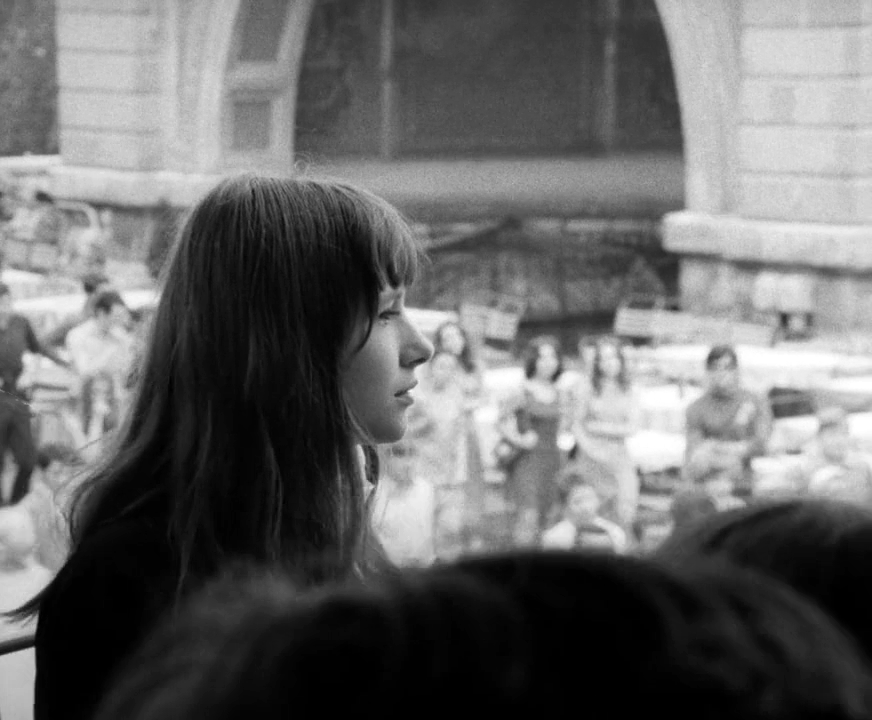 Don't Cry, Pretty Girls!
 (1970) - It's almost inevitable that Meszaros makes a musical after the major role pop music played in her first two features, and this one is wall-to-wall music. The slender story is about a young couple planning to marry, and falling in and out of love with the idea, if not each other. They're deeply enmeshed in the youth scene and the film is as much about their cohort and the bands they follow as about the central relationship. The action of the film is basically concert, concert, concert, punctuated by various clashes with authority. The music is really good, and it stretches along a folk / psych / prog axis.
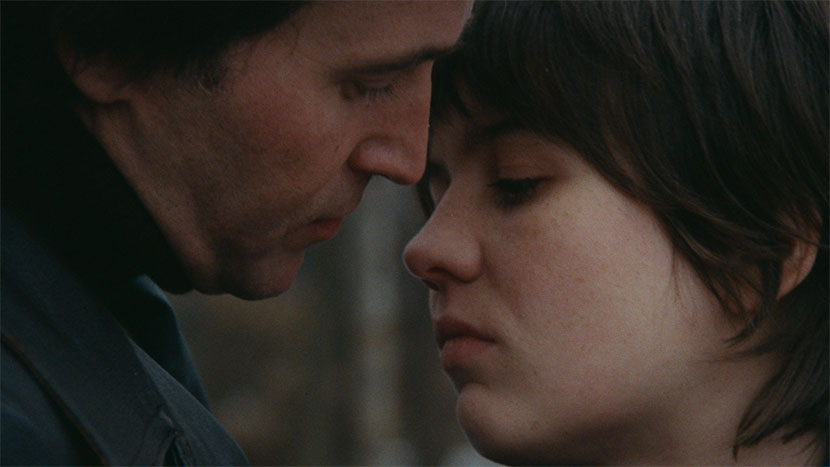 Nine Months
 (1976) - This is a really well-made and toothsome film that's extremely off-putting due to its neanderthal premise. Monori Lili plays Juli, a new, drafted employee at a factory who's immediately stalked by her creepy boss Janos (Jan Nowicki). He waits for her after work, follows her around town, proposes marriage the day after they meet (he already has the rings), follows her to her parents' home in another town, and ultimately rapes her. What does Juli do? She tells him to leave her alone, but only for about five minutes of screen time. Then she falls head over heels in love with him. They plan to marry, even though she already has a child by her former professor. Janos continues to behave in a grotesque fashion, being violently jealous, bullying and controlling. That's okay, because Juli reckons he's that old-fashioned movie type: the rapist with the heart of gold. Things finally (finally!) come to a head after Janos refuses to tell his snobbish family about Juli's sprog and Juli takes it upon herself to do so. She was expressly forbidden to do this, so this act of defiance is unforgivable and Juli is thrown out into the snow. Eventually Janos comes crawling back, but to our great relief Juli won't have a bar of it and heads off to a new career in a new town. Until the next psychopath comes along. Oh, and the film ends with the actress giving birth to Janos's child (graphic and unsimulated), also in defiance of his edict.
I think I can see what Meszaros was doing here: taking the most atrocious misogynist fantasy and seeing if she can scrape a feminist parable out of it. But for me, it doesn't really work, because Juli just seems to flip-flop from doormat to iron lady as each scene demands, and for much of the film it's as if she doesn't realize how abusive Janos is, even when it's blatantly obvious to us and the other characters. And it's not as if this is a good relationship gone bad, which might have cut her some slack: he's clearly bad news from the first day they meet and she seems rather dim not to run a mile.
 The Two of Them
 (1977) - And how weird it is that Monori and Nowicki are back for Meszaros's next feature, still called Juli and Janos, and still a nightmare couple - though they don't seem to be playing the same characters. This time Nowicki is an abusive alcoholic, and the attraction / repulsion dynamic is more comprehensible. In this film, they're offset by Marina Vlady, Monori's boss at a textile factory, who takes Juli under her wing when she realizes how difficult her situation is. She ends up becoming a mediator between the estranged husband and wife, and their child, who is kind of an afterthought throughout much of the film until the very end, when, in a deft dramatic twist, she gets the last word. This second-hand turmoil allows Mari to realize that her husband is also a shit. A good, uncomfortable drama that makes great use of its unusual setting (Mari and Juli both live in the dormitory attached to the factory, a constrained setting with its own set of rules and petty policers of them.)