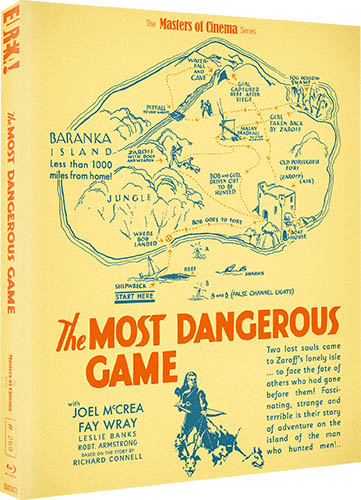
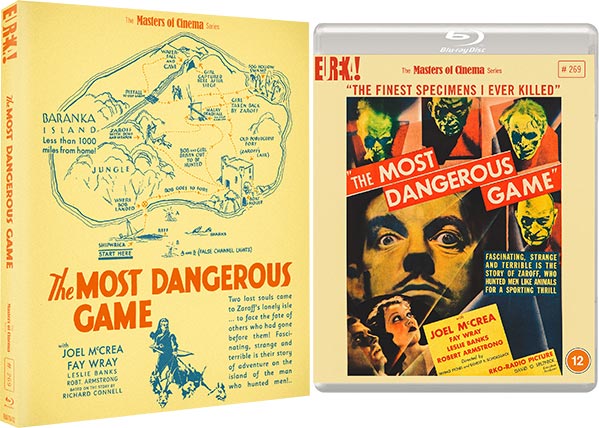
Apropros of nothing but I remember getting particularly frustrated a couple of years ago when composer Neil Brand did a series of BBC programmes called Sound of Cinema: The Music That Made The Movies and devoted a section to how unique and out of nowhere Max Steiner's score of King Kong was without mentioning The Most Dangerous Game
at all, which felt like an egregious oversight due to Steiner working out a lot of the same themes (particularly in the driving score during the chase sequence) that would later be elaborated on in in the Kong score (even the rising, surprisingly mournful and almost romantic theme over the toppling body of the villain in the final shot!)
FrauBlucher wrote: Sat Jul 23, 2022 2:20 pm
I would also throw
The Island of Lost Souls in as a sort of companion piece. They were both released within a few months of each other in 1932. Throw in
Frankenstein the previous year and you get a feeling that a theme in that era was man playing God. This is a simplistic overview, one creates man, one one kills man and one changes beast to man. Granted 2 of the 3 source materials were written in the 1800s. Clearly there was a fascination back then with these type of stories and there were others that I'm respectively leaving out. Maybe on the heels of WWI and The Great Depression helped to create this dark genre.
There are also the other Fay Wray films of the period: Doctor X and The Mystery of the Wax Museum. The whole era of pre-Code horrors, as jeghar and therewillbeblus say, is rife with fascinating and difficult explorations of compulsive behaviour if not outright perversity and frank sexuality. Throw in The Mask of Fu Manchu, Freaks and the Fredric March version of Dr Jekyll and Mr Hyde too, which all probably helped contribute to the Hays Code.
This is probably all going to get covered in the Stephen Jones and Kim Newman commentary, but I want to particularly praise the Bruce Eder commentary on the Criterion. I particularly like that he talks about the nuances of the relationship between McCrae and Banks as a comment about two big game hunters who respect their prey and want to test their mettle against them (as the explorers-turned-filmmakers Schoedsack, Pichel and Cooper apparently were sympathetic to) which could contrast against those who hunt purely just for trophies. And that Eder points out that Robert Armstrong's character of the alcoholic brother plays as both an extra pointed aspect for the time due to the film being made and released during the era of Prohibition, but also that apparently Cooper was a very anti-alcohol person which may have resulted in the buffoonish portrayal of the drunkard figure here (as well as how later on drunk characters are responsible for causing the chaos or getting their comeuppances in Son of Kong and Mighty Joe Young). Which made him an ironic collaborator with John Ford (the king of the good natured drunk scene) in the late 1940s!
Eder also mentions that The Most Dangerous Game was subject to a lot of RKO's notorious cost cutting to keep the studio afloat whilst Kong was in its lengthy production period (the same kind of situation which occurred a decade later to the films surrounding Citizen Kane) which apparently caused entire characters and scenes to "simply be ripped out of the script" (even before the laboratory/trophy room scene was removed, which is this film's notoriously lost, too extreme for contemporary sensibilities, equivalent of Kong's spider canyon scene), which makes the film run at a breathlessly fast 63 minutes as compared to Kong's 100 minutes. There simply isn't time in this film for any lulls in the action and that brutal streamlining of everything really ends up working to the film's benefit.