This played at TIFF in '08, where it got mixed reviews and then seemed to descend into distribution hell for more than a year. It finally arrived at my local theatre today and, being an admirer of Linklater (specifically the Sunrise/Sunset films and Waking Life), I caught the first screening of it (with one other person in the theatre, I might add). It was billed with Welles' name spelt "Wells". I pointed this out to the lady at the register who replied an uninterested "oh yeah...". Yes we really are at the end of history.
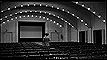
Anyways, the film itself was good - one of the first "craftsman" type films from Linklater. Excellent period piece set design and locations which gave us views of some of the great designs of the time (the theatre stand in for the Mercury was amazing to see in itself). Being a huge trad.jazz fan myself, the soundtrack was also A+... and being a huge Woody fan (as is Linklater), you definitely got the feel of a good Bullets/PurpleRose/RadioDays Woody period piece at times, especially with the clever use of the jazz recordings on the soundtrack. The songs added some emotion that was sometimes missing in the scenes.
Christian MacKay made a terrific Orson Welles - though eve the best understudies aren't always up to the task of reading Orson's dramatic lines with the nuances and subtle phrasing twists that made Orson a master of speech.
The film's biggest problem is that (and this might be more in line with the book, I don't know I haven't read it) it has all the ammunition to make a big footprint with the 1937 time period, the global / political backdrop and what made Orson's adaptation so brilliant and meaningful at the time... and to use that as a political/philosophical truth that digs deep into the dark realities of human nature and how it can/does manifest itself in organized civilizations and politics. But the politics of the period are referenced, at best, in expository dialogue in some scenes and instead the character's love/lust/career pursuits of ego are seemingly far more important here... which is doubly unfortunate as they never dig too deep or have anything approaching a more penetrating wit even. It's like those Woody films previously mentioned minus all the Woody-isms that make his films so intelligent. By the time we got to the opening night of the play, the content seemed like a huge after throught to the process of putting it on and the self interests of all the characters involved... which is shocking because, even in this presentation some 73 years later, Orson's depiction of Caesar is still quite effective. Linklater even gives us an "audience view" of the vanishing poet scene to point out it is still as effective now as it was then. But by the time the film wraps up, such scenes make you wonder why on earth wasn't that emphasized more.... why not use newsreels of Hitler or Mussolini or something to show Orson's increasing awareness and concern as a motivating factor? Something aside from Claire Danes' concern over whether or not David O.Selznick was going to show up and maybe notice her. Even that could have been emphasized a bit more - self absorbed Americans continuing on with their lives while trying to ignore the mess the world was becoming.
Anyways... not to disparage the film too much, as I liked it well enough. Being such a big Orson fan myself, I can only imagine what he might've made of the whole thing if he were still around today. Although, being who he was, he would probably wonder why he wasn't allowed to make the film himself.

Also - read somewhere this will get the Criterion treatment on second run? True or False?