reaky wrote: Thu Nov 21, 2024 9:23 pm
I’d appreciate thoughts on the tone of these early Sirks - are notes of his mature style detectable, or was he following contemporary templates?
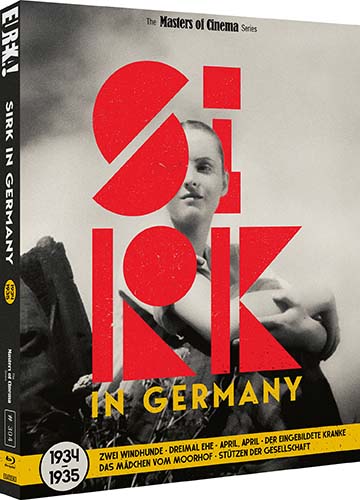
I'm a bigger fan of Sirk than most, I think, but I would argue yes. April, April! is the least Sirkian of the bunch, but it's light and pleasant. The other two films, however, are very rich and striking. There's a maturity in dealing with character, ambiguity, and rhythm and while I consider his first film where he's fully developed his style to be Schlussakkord, there's enough of his touch and talent to recommend these.
When I watched these films a few years ago, I wrote short write-ups on letterboxd which contain some slight spoilers (I don't think I ever talk about the plot at length enough to coherently spoil anything), but they reflect an exuberant feeling towards all three films:
Dietlef Sierck's first film is instructive for understand his body of work in several ways. What's primarily obvious is that his experience as a theatre director already prepared him thoroughly for filmmaking. Equipped with the competent resources of UFA, which as has been noted by scholars was very consciously attempting to replicate Hollywood filmmaking during the Nazi regime, Sierck already has a sophisticated understanding of decoupage and staging. Shots are often blocked to allow for elegance and grace, and his use of cutting between scenes for rhythm or irony is on display. Although the material is predisposed to be slight and his handling is not perfect – the final act with its audacious cross-cutting is faulty if almost impressive – it's clear from the first that Sierck is a capable filmmaker.
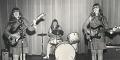
That the film is a satire is also notable. In his later films, Sirk's clear-eyed criticisms of contemporary American ideals will become the stuff of legends. But being melodramas, 'satire' will not be the first word on people's minds for all the ironic bitter comedy that fills them. But take a film like HAS ANYBODY SEEN MY GAL? (1952) and APRIL, APRIL! feels like a natural starting point. Quickly sardonic, the film nevertheless follows through with our pompous, unlikable family to the end, even as halfway through the screwball comedy gives way to the straightforward romance of the prince and the secretary. That we need not see their ruin, but lambast them right to the end; that we get lighthearted antics like the slamming of the cane on the table by the two dunderheads; that the fiancé is only acceptable upon becoming a drunken bull – this is typical Sirkian dramaturgy.
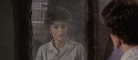
In his second feature of 1935, everything lacking from his first film in terms of polish, dynamism, emotional rigor, can be found here. In only his second feature film, Sierck has made a great film. Whereas APRIL, APRIL! even with its fluid, Hollywood-esque style feels still somewhat flat and uninspired, THE GIRL FROM THE MARSH CROFT has a soft, naturalistic lighting scheme, high contrast, often haunting composition and camera movement. The visual bluntness from the later films, like the oil rig or pony in WRITTEN ON THE WIND, find its equal here in the triple bladed compositions of Karsten trying to tell Helga that he must let her go. The looming scythe, suggestive of Death (one of Sirk's recurring motifs), serves as background towards the powerful axe-chopping of his that so dwarfs her delicate, ineffective knife cutting. (Yet, ironically, it's t the knife of these three things that will return as a murder weapon.) This is Sierck at his dramaturgical strength. The scene is rooted in the material, everyday reality of the characters, but works outward into symbolic power.
There is also a poetry here that didn't quite come off in his previous film. Although he had a pictorial style that led to some interesting use of objects, there is nothing so beautiful in APRIL, APRIL! as the transition from that previously discussed scene, to the shot of farmers reaping the wheat with their scythes, to the bundles of wheat – almost as if the men themselves, in the fade, have become those stacks. Sierck's affection for the countryside is palpable; the tenderness for all the mysticism and superstition never goes so far as to supernaturalness, but neither does it laugh at it.
And in Gertrud, we have one of the split characters Sierck would later go on to laud at such length. Not quite developed enough to be as compelling as the ones played by Sanders or Stack, nevertheless her begrudging, hurt relinquishment at the climax of her fiancé is powerful and vital.
Heinrich George's central performance as Consul Bernick is certainly one of the finest in all of Sierck/Sirk's filmography. Few others are as dramatically tuned into the shifting sympathies/antipathies the audience is to have towards a character. Likewise, Sierck the director is up for the Ibsen's deft plotting and characterization. He shows the same level of sophistication with the camera and cutting as before, although the results are at times a little less inspired/idiosyncratic.
Thematically speaking though it's interesting to observe already the emergence of the pattern of a lost child/losing a child. In THE GIRL FROM THE MARSHA CROFT, we already Helga living without her child, trying to live an atoned life by vanquishing her right to raise it singly (as well as claim the father as the father); here, we have a dual case. First, is Dita, a child the Consul claims as his niece, but who is actually his daughter. The remove clearly troubles him, as does the strained relationship his wife creates with her. (We see in the Consul's wife the same societal snoodiness that has already permeated the first two Sierck films). Then, at the climax of the film, in the most Shakespearean of moments, the Consul howls into a storm, willing it to return his lost son.
The influence of Nazism is more apparent here than elsewhere. Johann's cowboy regalia is designed with Nazi imagery in mind, between the armbands and the eagle located on the back. The film ends with the launching of a new ship, clearly brand sparkling new and made of ironwork, heralding a bright future and new beginning, compared with the halfhearted, ramshackled attempt to patch up the Gazelle. Compare the Nazi Party's image of itself with the postwar governments in Germany.
But the Nazi imagery here is also clearly modeled on America: America is seen in many ways as it modeled itself: a land of opportunity, a land of entrepreneurship, much less the invocation of the cowboy and the eagle. The Nazi Party took much inspiration from the United States in many aspects of its government operations and cultural works. But just as Johann isn't really part of the circus that totes this imagery, just as the cowboy mythology is really a falsehood, there is the temptation to read an ambivalence into Sierck's presentation of this by conflating the Nazi with the myth of the cowboy. One must tread lightly on this matter.
Let me also note, as I've failed to do so elsewhere – Sierck has consistently satired, criticized, and condemned capitalists, the upper class, etc. in his films thus far. The hoarding of wealth, gluttony (to the point of fatphobia), greed all play a part in the satire of the ignoble characters he presents.