217 Tokyo Story

Discuss releases by Criterion and the films on them. Threads may contain spoilers!
Post Reply
Message
Author
User avatar
Jun-Dai
監督
Joined: Thu Nov 04, 2004 8:34 am
Location: London, UK
Contact:

Bull in a china shop

#126 Post by Jun-Dai »

HerrSchreck wrote:This is bull in a china shop posting indeed.
Now that's an accurate summary. The question is whether the real problem here is the bull or the china shop.

Shit-eating grin is definitely not an appropriate description, given that it would imply something along the lines that she's overly self-satisfied or that she looks like she's happy about someone's misfortune and unable to hide it (that's what I usually take the phrase to mean).

That said, that anyone would take offense to it sort of indicates the pedestal to which they've put her and/or the movie, and if that's really the way we are, then we should probably put a notice on this thread indicating that only sycophants need enter or that posters should be sure to prostrate themselves sufficiently before daring to offer any negative opinion. After all, would anyone take offense if I said that one of the most obnoxious traits of Tom Cruise was his ever-present shit-eating grin?
User avatar
HerrSchreck
Joined: Sun Sep 04, 2005 3:46 pm

Re: 217 Tokyo Story

#127 Post by HerrSchreck »

Jun-Dai wrote:The question is whether the real problem here is the bull or the china shop.
No it's not. Folks are reactive to oddball and overly caustic remarks, especially vs a person of universally celebrated and delicate persona. There's nothing wrong with that, provided its handled properly and folks don't jump in and try to escalate it into something personal.

Your calling into question that sensitivity is a sensitivity in itself-- now we can spin on our heels and call you the china shop. Everybody has something that gives them pause. That doesn't mean there's anything wrong with the conversation. The question is not when permissiveness viz expression of jaggedly hydrochloric opinion ends, or freedom of speech, or anything like that. It's a discussion. Controversial statements on a message board manufacture-- uh huh-- controversy. I don't think GIllusion was all that surprised, though his being called an ass is flat out absolutely not right. That's escalation into the personal with insults.

Bottom line-- the same way he has every right to say whatever he wants about Noriko/Hara, folks have a right to their wtf's when those comments get superweird. If someone sets an abrasive and challenging tone, the conversation may turn out abrasive and challenging.
Grand Illusion
Joined: Wed Sep 26, 2007 11:56 am

Re: 217 Tokyo Story

#128 Post by Grand Illusion »

So many replies, many of them very worthwhile. Sorry in advance that I can't touch upon everything.
Sloper wrote: The performances themselves are not ‘different’ in the straight-to-camera shots, and you can find several examples where, in the wide shots, characters turn their heads to speak in exactly the way you describe. This movement is more noticeable and unnerving in the close-ups because, as you say, it breaks a cinematic ‘rule’ by having the character address the camera.
First, I just want to say that I appreciate your post, and it is very well articulated.

However, on this point I have to disagree. There are "several examples" in the wides where the character turn their heads exactly like the mediums. But that's not enough. There are also several examples where they do not turn their heads like that in the wides. However, they do in 99% of the mediums.

Because the disparity is there between the wides and the mediums (even if it sometimes matches up), I would say that it isn't an issue of stylization vs realism, instead it's an issue of consistency.
Look at the scene where Shukishi sits with Fumiko looking out of the window: they see Tomi out walking with one of the children, and the old man says ‘Look, there they are.’ We see the child and the old woman, from a distance, as they walk in the grass; then we see them up close and realise that the child is not listening to Tomi’s heartbreaking attempts to bond with her grandson, which turn into ruminations on her own imminent death. What looked sweet from a distance looks very different close up; we then see Shukishi again, only now Fumiko has left him and he is alone. Tomi’s lines in this scene are not delivered straight to camera because the child is not looking back at her; he does not even pretend to listen. So these kind of shots tell us something about the communication (or lack thereof) going on between the characters.
No argument here. I was touched by this scene as well.
The artificiality of the straight-to-camera shots often conveys the artificiality, the pretence, in which the more sophisticated adults engage. For instance, when Shige tells her mother she can borrow her sandals, she does one of those ‘turn to the camera’ moves. There is a cut to the mother as she takes the sandals and goes out, then we cut back to Shige, still looking at the door, her impatience more visible now. Immediately afterwards she phones Noriko to get her to take care of the old folks.
Here, I would say that it is the cut that makes the scene work. We see Shige staring out, there's an edit, and then when we come back she is still looking out. Due to the inherent time lapse of an edit, we can imagine her impatience if she is still looking out towards her mother. Then picking up the phone is the final action that seals the deal.

The "turning and looking" just conveys a formality, which I believe could have been shown more appropriately. It seems like a small detail, but the return to this motif is what makes the performances predictable. And if they are predictable, they are not spontaneous. And if they are not spontaneous, then they are not living in the scene. To me, Ozu is having the edit and the lapse in time create the suspense when it is truly a performance-based moment that could've worked even better.
Noriko turns away as well, turns off the light and goes to bed; her face, lit up in the darkness, is pensive and sad, as it is in the train at the end – both moments when no one is looking at her, and so when she can look the way she feels.
Yes! This is a great moment, but it is one that I believe exhibits the folly of Ozu's chosen stylization. In two moments, Noriko is "pensive and sad," and in the other moments she is "forced and formal." What makes an alive performance is not the oscillation between two extremes. A living, breathing human has shades of grey.

What makes a performance alive is when an actor can convey, not only that they are showing themselves to be polite, but that the character knows it is merely a show. For Noriko, there are not the shades of grey. There is not a chink in the armor of her civility. We either see her with the armor on or the armor off.

What is exhilarating in a performance is getting that medium-close shot, finally moving in, and seeing the life in the eyes, the subtlety in the face. For Noriko, there is sad and there is the *grin. For Bergman, the face is the most interesting thing in cinema. For Bela Tarr, the face is a landscape. A landscape has many features. An examination of it reveals many things. If Ozu is to convince me that it is worth my time to see the action up close, then I need to see the different forms of the land, not just a plain with the promise of hills in the background.
I'm oversimplifying a great and complex film but this post has to stop... Does this address some of your issues with the film, GI?
I certainly appreciate your position more. And I lean even further towards the character of Noriko being fully intentional in the way it was portrayed, even if I disagree with that method.
Jun-Dai wrote:I only see this as a problem when one looks for realism in Ozu's films, which a lot of people do. But Ozu's films are not very realistic or naturalistic. Intimate, obsessed with mundane details, prosaic, yes, but never very realistic. On the contrary, his films are very stylized, and this very restricted manner of acting that you see so much in Ozu's films—particularly in a film like Tokyo Story, where Ozu's style has reached the height of its refinement—is very much in keeping with his editing style, cinematographic style, dialogue, and even the story itself. Other than in subject matter, Ozu's films are actually about as far removed from naturalistic as you can get. I think the confusion around this comes from the fact that Ozu's films seem to be borne from an attention to detail in the way that people behave and their motivations that exceeds even Neorealist filmmaking, but these details are then brought into intense focus by stripping out everything that doesn't need to be there, including a more realistic acting style.
Thanks for another well-written reply. I would say, though, that it is not the stylization that bothers me. I just believe that the degree of stylization and formality ignores many shades of grey, especially in the case of Noriko. There is either "putting on airs" mode or "revealing emotion" mode. I want to see the cracks in the sidewalk.

Also, the formalism is to such a degree that it forces the performances to be robotic and predictable. As an example, this issue will always be the difference in Shakespeare adaptations to me. Shakespearean dialog and performance will always be stylized. But there is Branagh, who treats the material like words that real humans have spoken, and there is Olivier who treats the material like he's reading poetry and tells Dustin Hoffman to "try acting."
Also, when the actors do break away momentarily from the form of the rest of the film, it brings much more attention to that moment that it would otherwise, creating a very subtle kind of emphasis.
You're contradicting yourself here. If it brings "much more attention," it's not a very subtle kind of emphasis. I agree that it brings this much more attention to the moments of breaking away, and, because of that, it makes the two states of being seem like polar opposites. Black and white performances.
I wouldn't chalk it up to cultural difference as others have, other than the fact that there tends to be a much stronger appreciation for a restrained aesthetic in Japanese art than in Western art (see ikebana, suiseki, rock gardens, haiku, tea ceremony), and that Ozu's style is in keeping with that.
I think you're making an excellent point here. And I do think that non-Western art has more restraint and subtlety. In fact, European screenwriters are known to get to their Act II much later than American screenwriters. Ozu, though, crosses the line from restraint and subtlety to simply obscuring and hiding the inner life of his characters. For me, it's not a rock garden; it's a pet rock.
HerrSchreck wrote:I don't think GIllusion was all that surprised, though his being called an ass is flat out absolutely not right. That's escalation into the personal with insults.
I'm not surprised. And I was way more offended by the fact that ozukarodzi said I didn't back up my personal tastes with any arguments after I posted paragraphs of reasoning for my criticism. If someone wants to call me an ass, whatever, ad hominems speak more about the name-caller than anyone else. Although I do agree that a film forum, which focuses on film criticism, should probably be less sensitive, let's not make this thread about forum etiquette. I may have a dissenting opinion, but I've done my best to keep this on topic about Tokyo Story.

By the way, everybody knows Touch of Evil is better than Citizen Kane.
User avatar
Michael Kerpan
Spelling Bee Champeen
Joined: Wed Nov 03, 2004 5:20 pm
Location: New England
Contact:

Re: 217 Tokyo Story

#129 Post by Michael Kerpan »

There are far more gradations in Setsuko Hara's performance as Noriko than you are perceiving/acknowledging. But the gradations are tiny (compared to what one typically finds in Western films) -- and you have to be watching pretty intently for them to register -- and you also have to acclimate yourself to the different sense of scale.

Though I'm not aware of any comment by Ozu on Bergman's films, Ozu's general position was that such "in your face" film making was unduly intrusive (believing that even fictional characters were entitled to a certain degree of "privacy").

I think it is clear that Ozu's methodology irritates you at a gut level (just as, for example, Tsai's does me) -- and you are straining for intellectualizations to prove that your irritation is the "right" response to the work of an artistically-limited director. It is perfectly okay to be irritated by a director -- but I think it is (most of the time) wisest to simply acknowledge such a director's work is just "not for you" (at least at present) than to try to justify your dislike (and try to convince others of the "objective" correctness of your position). So -- when the topic of the greatness of Tsai comes up, I have learned to simply step back from the discussion. I realize that my gut-level distaste makes it impossible for me to really analyze his work in a meaningful way (and I see no reason why I should waste my time trying to talk anybody else out of liking his films). I have to confess that I simply am not equipped to judge the work of certain film makers. Because when you dislike something enough, it is all too easy to find "flaws" that support your reaction.

I don't see any reason why anyone needs to worship Ozu (or Setsuko Hara). At the same time, dismissing Ozu as a defective film maker because he doesn't follow the sort of rules one is used to (or prefers) -- without realizing that he was fully familiar with those rules (and _capable_ of following them) and deliberately chose to do things differently, strikes me as both ignorant and arrogant. (it's quite like accusing Picasso of being incapable of drawing and painting "properly").
User avatar
Jun-Dai
監督
Joined: Thu Nov 04, 2004 8:34 am
Location: London, UK
Contact:

Re: 217 Tokyo Story

#130 Post by Jun-Dai »

Thanks for another well-written reply. I would say, though, that it is not the stylization that bothers me. I just believe that the degree of stylization and formality ignores many shades of grey, especially in the case of Noriko. There is either "putting on airs" mode or "revealing emotion" mode. I want to see the cracks in the sidewalk.

Also, the formalism is to such a degree that it forces the performances to be robotic and predictable. As an example, this issue will always be the difference in Shakespeare adaptations to me. Shakespearean dialog and performance will always be stylized. But there is Branagh, who treats the material like words that real humans have spoken, and there is Olivier who treats the material like he's reading poetry and tells Dustin Hoffman to "try acting."
I definitely agree with Kerpan in that you should consider that these ignored shades of grey and 'robotic and predictable' performances are an intentional part of Ozu's method of filmmaking—one that he arrived at and continually refined over his career. You have produced an excellent example with Branagh and Olivier, both of whom have considered by some at certain points in time to be the best living Shakespearean actors (and I'm sure there are many that don't particularly love either). I essentially understand this as being different ways to appreciate Shakespeare, and depending on which one you take, Branagh or Olivier (or someone else) is the supreme interpreter and the other is decidedly not. To be honest, I'm not a particular fan of either, at least as it comes across on film.

Ozu likes to make his films out of building blocks. He tells a story through a series of scenes that are often not really directly connected to the plot, insofar as there is a plot. He often uses almost exactly the same shot to introduce scenes (smokestacks, hanging laundry, etc.). He uses most of the same actors from film to film, and he even reuses most of the characters' names from film to film. Most of his shots can be broken down into a handful of types, and camera motion is fairly rare. Many sets are reused. The dialogue also seems to follow certain patterns, but it is probably the greatest source of variety in his films. It is the individual scenes and their dialogue that I believe are the initial building blocks of any Ozu film from which he later develops characters, plot, and motivations, and regardless of how true this actually is, I think his films certainly make a lot of sense to me that way. From this perspective it would also make sense that the range of acting would be small and the number of facial expressions somewhat limited. Setsuko Hara's performance in Naruse's Meshi probably covers a greater range of expression than all of her performances in Ozu films put together.

If I understand Kerpan's argument, it's that we can find a world of detail within the limited range of acting (and other aspects of the filmmaking?)—maybe not so much in terms of shades of grey between each of the facial expressions or other characteristics as shades of grey within the expression of each. There is something about the acting in Ozu films that I find terribly compelling and it's definitely not the range or variety—it may be this that Kerpan's talking about. Or perhaps it's something else. Perhaps it's just that when Setsuko Hara is crying, I feel she does it so well. Or perhaps it's just that by limiting the range of acting, Ozu uses the context to encourage us to scrutinize the details of the performance to understand the emotions—or even to project ourselves into the unusually blank performances and feel the emotions ourselves (the ultimate Kuleshov effect)—and in doing so I find myself more engaged than I do in any other director's films. Whichever of these it is, it works incredibly well for me.
User avatar
Sloper
Joined: Wed May 30, 2007 2:06 am

Re: 217 Tokyo Story

#131 Post by Sloper »

There isn’t much I can add to what Michael and Jun-Dai have said, though I also feel there’s a lot more gradation in these performances than Grand Illusion suggests. However, he makes an interesting point when he says that there are no shades of grey – either ‘putting on airs’ or ‘revealing emotion’. Like Jun-Dai, I find there is something inexplicably compelling about the acting in Ozu’s best films, and for me it has to do precisely with the way the very formalised acting styles force one to scrutinise each facial expression and each verbal intonation for, as it were, signs of life beneath the formality. As I mentioned in an earlier post, when I first saw Late Spring I spent the whole film looking for such signs, and the experience was strangely suspenseful – I couldn’t wait to find out whether the floodgates would eventually open, whether someone would finally break down in tears as they do in Tokyo Story. In the end, the opening of the floodgates consisted in the tiniest movement of Chishu Ryu’s head; I think he’s peeling an apple, and just suddenly stops and bows his head; and it’s devastating.

The emotional tensions beneath the surface are often very hard, or even impossible, to see or hear, and yet somehow you know they’re there; and I feel this is a very accurate representation of what people are really like, and how they really express themselves. In an Ozu film you see people who love (or hate) each other talking as though nothing dramatic were happening, and without being obvious or melodramatic about it this spectacle really cuts to the heart of something very tragic (but also inevitable) about human relationships. But I'm being way too platitudinous now.

One last thing about the straight-to-camera shots. GI, I think you exaggerate in your statistics about these, but I would say that if some types of shots tend to be arranged in a certain way, it’s because Ozu tends to be aiming for a particular effect with such shots. It isn’t possible to generalise too much about this, because the effects vary a lot – but take another look at that scene near the end between Noriko and Kyoko. When Noriko tries to get the younger woman to understand how people change when they get older, the characters are framed in a two-shot; but when she goes on to apply what she has been saying to herself, she speaks straight to the camera, and Kyoko’s reactions to her quietly devastating words are filmed in the same way. This is just one example, but it demonstrates quite simply how Ozu put a lot of thought into where and when he employed such techniques. (Also, I just saw Passing Fancy for the first time, and all I can say is – like Picasso, Ozu was perfectly capable of creating ‘conventionally’ well-made, beautiful works of art; like him or not, nothing in his late style is accidental or ‘inconsistent’.)

With (belated) reference to the wonderful discussion on an earlier page about Shige and Koichi – I do agree she’s meant to be more funny than appalling. The most humanising moment for her, I thought, was when her father said how she used to be so much gentler, but that ‘daughters change when they get married’. Michael said he sees Shige’s husband as a kind of moral barometer in the film, and indeed he seems kindly and considerate. But I wonder if Shukishi’s remark about marriage having changed Shige suggests that, like many couples, this one has settled into a good cop/bad cop arrangement, where the husband can afford to be nice while his wife does all the dirty work (I know loads of couples like this). Keizo and Shige’s conversation about sending their parents to Atami is transparently self-interested (another good example of close-ups exposing the artificiality of their conversation, and showing that both of them know very well what they’re really saying), and when the husband steps in he says, more considerately, that Atami would be better for old people than Tokyo. Of course he couldn’t be more wrong about this, and even if Atami was usually meant to be precisely such a resort, the film seems pretty clearly to show that this was a bad idea. I get the feeling that Shige’s husband is as relieved as she is to get rid of the old couple; his character is a wonderfully subtle portrait of a particular kind of very mild selfishness, less obviously ‘dressed up’ in a show of considerateness than that of the other characters, but dressed up nonetheless.
thebadsleepwell
Joined: Sun Jun 01, 2008 4:30 pm

Re: 217 Tokyo Story

#132 Post by thebadsleepwell »

I watched this for the first time this evening. Without diving too deep into the sentimental pool, the last 25 minutes wrecked me. What I find most astonishing in Ozu's films and this film in particular, is not the distanced feelings some people get from the film (people mention the non moving camera, the "inappropriate" smiles, etc.) but the contemporary aura they give off. They feel real. In real life people hide behind smiles. Things happen slowly. People dust and talk and eat. I think it hit a note for me because it all felt so real and so intimate. The ending sequence made me bawl and a film hasn't made me do that in a long, long time. I know I am over simplifying it but it certainly is an overwhelming feeling to be touched so deeply by a piece of art and have it pierce my intellect and emotions at the same time. I see all the passionate discussions about it logistically, but did anyone else feel like this when they saw it for the first time?
User avatar
HerrSchreck
Joined: Sun Sep 04, 2005 3:46 pm

Re: 217 Tokyo Story

#133 Post by HerrSchreck »

Many, many, many people felt the way you do. There are very few filmmakers as skilled as Ozu was, and even fewer films that have the capacity to move-- and in doing so do a(n) (seemingly effortless) service to you as a human being in a most excellent fashion -- than Tokyo Story.
User avatar
dad1153
Joined: Thu Apr 16, 2009 2:32 pm
Location: New York, NY

Re: 217 Tokyo Story

#134 Post by dad1153 »

My second Ozu film cements the good impression left by his 1942 little-seen jewel "There Was a Father" (and further cemented by my recent exposure to "Late Spring"). Anchored by solid performances from Chisu Ryu (Ozu's DeNiro) and Chieko Higashiyama as the elder couple ignored by their grown-up kids on a vacation trip, "Tokyo Story" paints a sympathetic but accusatory look at the way a younger generation treats their elders like a nuisance. Not a single shout is thrown or a raised voice heard (except for little kids being disciplined for being kids) but the raw emotions below the polite rituals of Japanese life shown in this movie touch a universal nerve of raw truthfulness. Setsuko Hara's portrayal of widowed daughter-in-law Noriko (who treats her in-laws with all the kindness and love the couple doesn't receive from their flesh and blood) will break your heart when she finally has a heart-to-heart with family members that are more concerned for her future than she is. Edited with Ozu's typical leisurely pace (the static shots that mark the passage of time feel oddly soothing and relaxing) "Tokyo Story" stayed with me long after it ended, just as Kurosawa's "Ikiru" (and Ozu's aforementioned "Late Spring") haven't left my mind since I've seen them.
Thief of Bagdad

Re: 217 Tokyo Story

#135 Post by Thief of Bagdad »

This was one of my first Criterion Collection DVDs I ever purchased and my first viewing left me unimpressed. I became tired of the static shots, and the ordinariness of it all was really something I wasn't used to. I gave it another viewing a few weeks ago and my appreciation of it skyrocketed. The first viewing was sort of an exercise for me so that I could better enjoy it the second time around. I could keep up with the journey and exactly what family member was being visited. I always noted the pillow shots that provided a transition between two settings. And I got really into the subtlety of the acting and how every performance reflected facets of human behavior. By the end of the movie I was definitely teared up though not quite crying. I'm hoping my third viewing will be able to make that happen.
User avatar
DignanSWE
Joined: Tue Jun 17, 2008 3:30 pm
Location: Sweden

Re: 217 Tokyo Story

#136 Post by DignanSWE »

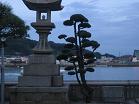
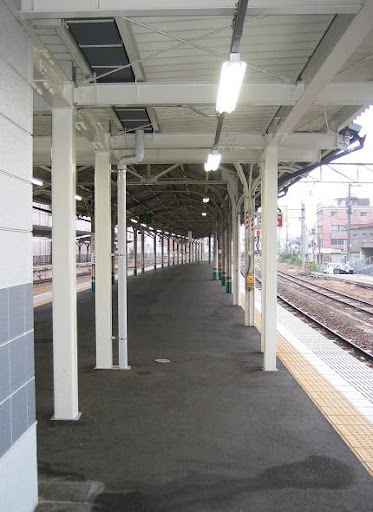
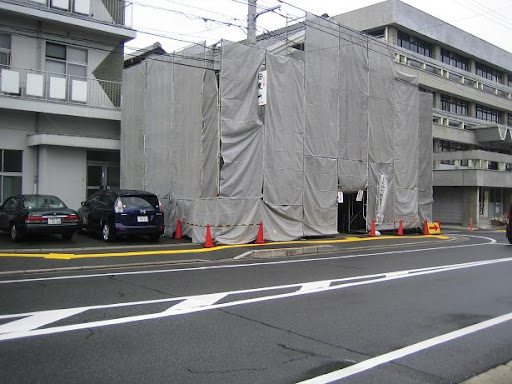
Image
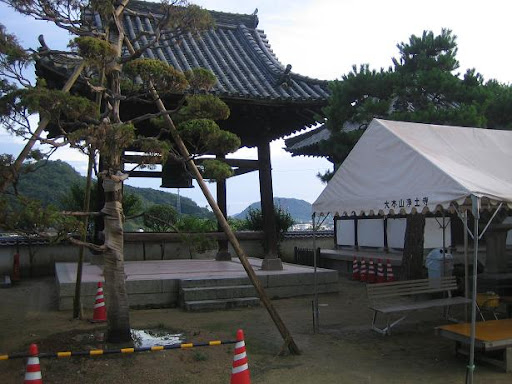
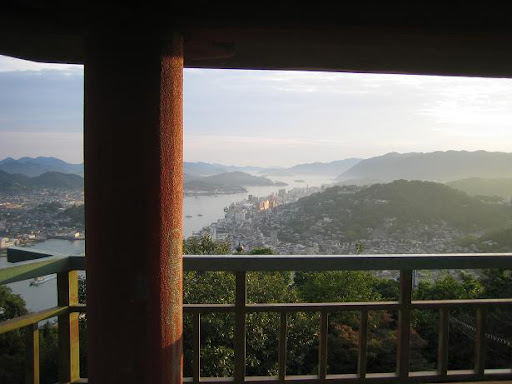
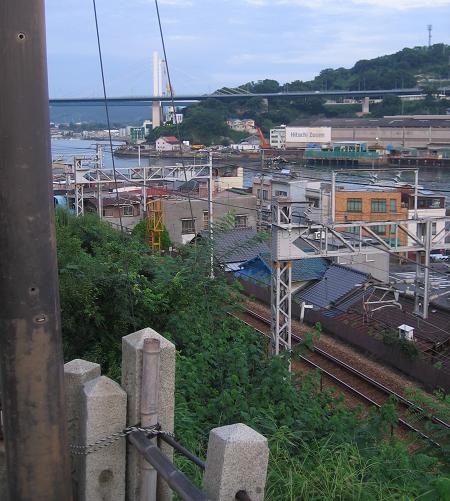
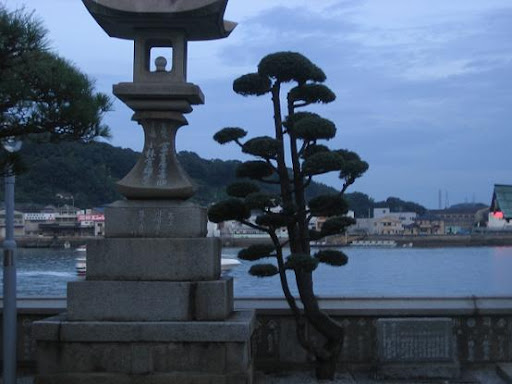
Some pictures from my trip to Japan
Onomichi: station, water, cinema museum, temple, view, railway, stone
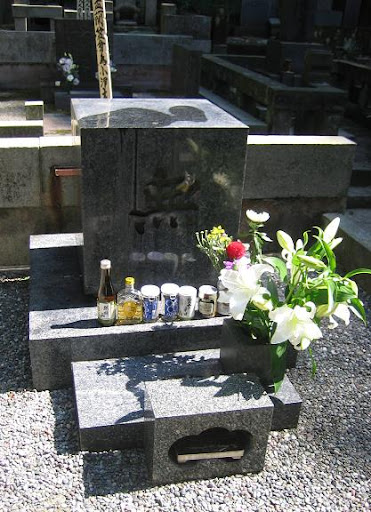
Kamakura: Ozu's grave
Last edited by DignanSWE on Thu Aug 27, 2009 8:42 am, edited 1 time in total.
User avatar
psufootball07
Joined: Wed Apr 02, 2008 6:52 pm

Re: 217 Tokyo Story

#137 Post by psufootball07 »

The links dont work....

You can see Ozu's grave online through Wikipedia (I think) or just google it and it will show up.
Cde.
Joined: Sun Dec 02, 2007 10:56 am
Location: Sydney, Australia

Re: 217 Tokyo Story

#138 Post by Cde. »

Ozu's grave is actually the only picture that loaded for me.
User avatar
Michael Kerpan
Spelling Bee Champeen
Joined: Wed Nov 03, 2004 5:20 pm
Location: New England
Contact:

Re: 217 Tokyo Story

#139 Post by Michael Kerpan »

They are all working for me now.
User avatar
daniel p
Joined: Wed Nov 03, 2004 1:01 am
Location: Melbourne, Australia

Re: 217 Tokyo Story

#140 Post by daniel p »

I visited Ozu's grave also - my Japanese wasn't perfect, but I asked a local if he could point me in the direction, and he dropped whatever he was doing, walked me and my wife around Kamakura for 2 1/2 hours, trying his best to describe the names and meanings of all the temples, and we eventually found Ozu's grave.

He showed us how to pay our respects to Ozu, and it was an unforgettable experience.
I offered to buy him something, or give him some money in exchange for him dropping everything to help us, and he refused. I will never forget that day.

Here is a photo of me paying my respects:

Image
User avatar
Saturnome
Joined: Sun Aug 12, 2007 9:22 pm

Re: 217 Tokyo Story

#141 Post by Saturnome »

For DignanSWE's pictures: copy+paste links into your adress bar then press enter. Works. Otherwise it's a 404.

Ozu's grave is among my little geek dreams. I don't know any other filmmaker grave (except Méliès - here's my pic - that I wasn't expecting to find on my trip to Europe), it's like his grave grown to some sort of mythical status.
User avatar
Michael Kerpan
Spelling Bee Champeen
Joined: Wed Nov 03, 2004 5:20 pm
Location: New England
Contact:

Re: 217 Tokyo Story

#142 Post by Michael Kerpan »

daniel p wrote:I visited Ozu's grave also - my Japanese wasn't perfect, but I asked a local if he could point me in the direction, and he dropped whatever he was doing, walked me and my wife around Kamakura for 2 1/2 hours, trying his best to describe the names and meanings of all the temples, and we eventually found Ozu's grave.

He showed us how to pay our respects to Ozu, and it was an unforgettable experience.
I offered to buy him something, or give him some money in exchange for him dropping everything to help us, and he refused. I will never forget that day.
We were similarly touched by the kindness of strangers in Japan.

We didn't see any cinematic graves -- but did see most of the Kyoto locations in Late Spring.
Caged Horse
Joined: Wed May 13, 2009 6:41 pm
Location: Dead

Re: 217 Tokyo Story

#143 Post by Caged Horse »

Ozu's grave (which I visited in August 2003) is just like his films: modest in scale yet perfect in execution.
User avatar
knives
Joined: Sat Sep 06, 2008 10:49 pm

Re: 217 Tokyo Story

#144 Post by knives »

At least it took eight shots for there to be a bullet in the barrel. While on first reaction this isn't my least favorite Ozu, that honor still goes to Early spring, this is easily for me the most disappointing.
Look at the scene where Shukishi sits with Fumiko looking out of the window: they see Tomi out walking with one of the children, and the old man says ‘Look, there they are.’ We see the child and the old woman, from a distance, as they walk in the grass; then we see them up close and realise that the child is not listening to Tomi’s heartbreaking attempts to bond with her grandson, which turn into ruminations on her own imminent death. What looked sweet from a distance looks very different close up; we then see Shukishi again, only now Fumiko has left him and he is alone. Tomi’s lines in this scene are not delivered straight to camera because the child is not looking back at her; he does not even pretend to listen. So these kind of shots tell us something about the communication (or lack thereof) going on between the characters.
This scene really explains all of my disappointment. Specifically the grandmother's lines really feel like the type of emotional manipulation that I've never seen Ozu stoop to before. All of the ambiguity of Make Way for Tomorrow seems dropped for caricatured nagging. The grandparents are saints, the grandchildren are brats, and the parents are useless and ignorant. It was a really frustrating experience that seems to work exclusively in an auteurist transition sense. It's obviously important connective tissue between the later films and other post war stuff like Late Spring.
All of that criticism though only applies to the first part of the movie. Starting around the bar monolouge it feels like the Ozu I love again and it really gets going to some amazing work, but I find it too little too late for me to put it as anything but average Ozu.
User avatar
Michael Kerpan
Spelling Bee Champeen
Joined: Wed Nov 03, 2004 5:20 pm
Location: New England
Contact:

Re: 217 Tokyo Story

#145 Post by Michael Kerpan »

If all you see in this is that the parents are saints and the children are useless and ignorant, you're not paying much attention. You are not describing the movie Ozu made.

The parents are far from perfect -- and their children are far more complex than you credit them with being.
User avatar
knives
Joined: Sat Sep 06, 2008 10:49 pm

Re: 217 Tokyo Story

#146 Post by knives »

I'll give you that. I was just typing quickly to get to another point. Their characterizations do manage to go beyond that, but I think for the first hour or so the movie does border on that type of caricature. I think that goes back to my idea of this movie as a transition. He's doing the characterization like he would in a later movie, but that clashes with the style of the first half of the movie. I think the second half goes a long way to solidifying this movie as absolutely essential to understanding Ozu and think it is a mostly good movie, but I also think that first section underperforms and manages to accidentally go into the manipulation and type of sentimentality that he typically avoids. I'm not saying that this was a bad movie, but that seeing as people tend to treat this as the Ozu film my getting an interesting transition that takes a long time to get on it's feet was a disappointment. Just for emphasis I have never seen an Ozu I would call bad, but this and Early Spring I do find to be not entirely successful.
User avatar
Michael Kerpan
Spelling Bee Champeen
Joined: Wed Nov 03, 2004 5:20 pm
Location: New England
Contact:

Re: 217 Tokyo Story

#147 Post by Michael Kerpan »

The movie deliberately starts out as a family comedy -- and stays (mostly) comic until rather late in the film. I was lucky enough to see this with a (mostly) Japanese audience -- and they did indeed find this funny (until it stopped being funny). And Ozu himself pointed out that the "practical" daughter was supposed to be (primarily) a comic figure.

For me (at least), it is the gradual (and brilliant) transition from comedy to (mostly sad) drama that makes this one of Ozu's (and cinema's) greatest works.

I have probably seen this 20 times -- and will soon watch it yet agai (on BRD -- and for the first time after the death of my mother).
User avatar
knives
Joined: Sat Sep 06, 2008 10:49 pm

Re: 217 Tokyo Story

#148 Post by knives »

A family comedy? I'm not sure how that fits, but seeing that section as that might make things better whenever it is I do revisit this one. As of now just looking back at it the first section still seems more sappy than humourous (though that explains much of the behavior of the grandchildren).
User avatar
Michael Kerpan
Spelling Bee Champeen
Joined: Wed Nov 03, 2004 5:20 pm
Location: New England
Contact:

Re: 217 Tokyo Story

#149 Post by Michael Kerpan »

I missed much of the comedy when I first saw this -- mainly because I was stunned by the relevance of this film to my own life -- and the uncanny resemblance of so many of the characters to people I knew.

I was delighted to find that the Japanese audience for TS laughed at pretty much all the things I had felt were intended to be funny (by the time of this screening I had already seen the film at least half a dozen times).

Forgive me if I act overly-protective of TS, but this film is the one that means the most to me on a purely personal level (nothing to do with artistic issues) by far. (Not that I don't also consider it to have high artistic merits well).
User avatar
ambrose
Joined: Wed Sep 08, 2010 6:16 pm
Location: Durham United-kingdom

Tokyo Story

#150 Post by ambrose »

Post Reply