I haven't seen the Criterion version since it played on TCM a while ago (and just placed my Hulu account on hold -- so I can't check that!). Would be curious to know how their version compares with these, though.





All of that discussion got moved here. Indeed, it led to this threads creation.Gregory wrote:There's a dedicated thread for each Criterion release, and the ratio has been discussed a bit already in the Lord of the Flies one.

We don't know exactly how much of 'people's heads' might have been cut off in theaters without looking at the full-frame, do we?Gregory wrote:I think I'll go with the cinematographer's consistent preference and the ratio that does not involve cutting off varying amounts of people's heads. Even if the latter is what many people saw in masked projections in theaters that could not show it otherwise, this clearly wasn't optimal.

Why did images from Godard's "Weekend" just flash before my eyes?domino harvey wrote:Oh I like where this is going

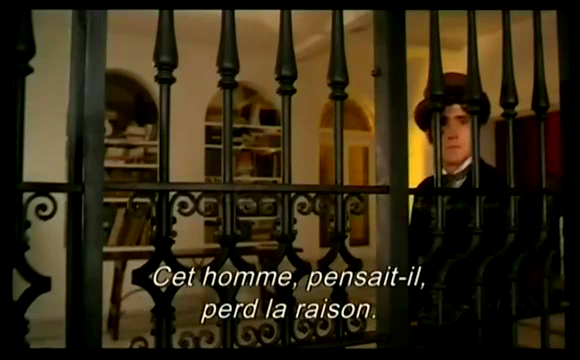
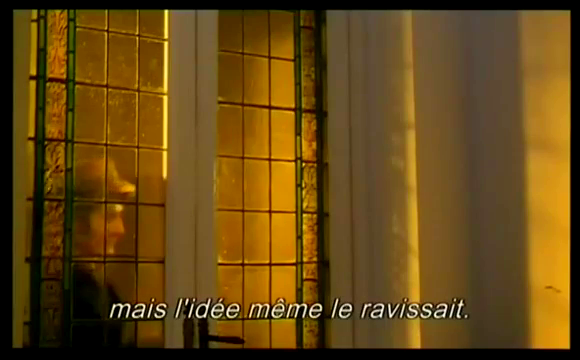
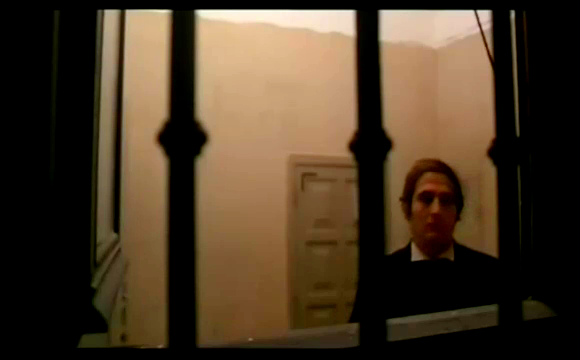
I think the most relevant part of the link I posted, was not the screen caps or the "cries of excessive headroom", but how the camera operator frames his tracking shots so as to keep a consistent widescreen top line. Bruce Kimmel mentions the tracking shot of the boys sat on the beach, which you can check yourself if you like. It occurs around 12 minutes in. Note how, as the camera tracks and encounters boys of various heights, it shifts up and down as it goes, keeping their heads close to the top of where a widescreen frame line might be. This is almost certainly because the cameraman has frame lines through his viewfinder, which was the standard when shooting for soft matte. When viewed open matte, these movements become pointless because the empty space above the boys heads allows them all to be seen without being cropped, despite their difference in height.Gregory wrote:Eddie, all I see in that thread is some obfuscation, jokes, unintelligible rambling, and marked aspect ratio lines on a single screencap from Beaver. I confess to having little patience with people who scream "excess headroom!" or "unbalanced" (?) whenever they see some sky above the actors and want to zoom in so that various portions of heads are chopped off in many shots. God forbid that filmmakers actually intended to show some air and landscape above the actors in some shots, usually just a small amount in the close-ups.
This is really the only evidence that goes against the film being widescreen. But we know little about what his supervision involved. How do we know that the aspect ratio even came up? Why do we assume he would even remember, 50 years later? 1.33:1 has been Criterion's standard for this film for decades, so they are naturally going to default to that when doing the transfer, and having Feil check it. I don't find it hard to believe that Feil wouldn't have necessarily mentioned the aspect ratio as this was going on. The new 4K results look fine at 1.37:1, why bring it up? Why assume he remembers? Whose to say that Feil now prefers the film open matte, prefers the extra island scenery in each shot? Which is fine, but his preference today has nothing to do with how the film was shot 50 years ago.Gregory wrote:And of course every single film made in the early 1960s must have been composed with a preference for widescreen. Just ignore what the cinematographer says. He obviously didn't know what he was doing when he oversaw the telecine.
If there's any bias on HTF it's for classic Hollywood film making over the more arthouse/foreign stuff. I don't think the age or the shape of the framing really factor into it. The response to the announcement of The Uninvited and I Married a Witch is evidence of that. But why even bring this up? I could quite easily make a point that this forum has a heavy Academy ratio bias, no doubt because it's the more "arty" ratio. But of course, I wouldn't do that.Gregory wrote:The incredulity at the HTF forums over the very idea that a film from the early 1960s could have been made with the full frame in mind is very telling, as is the implication that Gerald Feil and Criterion don't know what they're doing. The widescreen bias on those forums is pretty intense, with the membership mainly being interested in mainstream/modern widescreen cinema of the 1950s and after (if even back that far).

The reason I can't just give him the benefit of the doubt is because it does not fit with all the other evidence. When that happens, it's perfectly acceptable to consider reasons as to why he may go against the evidence. You believe it's because the evidence is wrong and that the film was composed originally in Academy, and I believe the evidence is right and that Feil's decision to OK a 1.37:1 transfer is either a personal decision on his part, or a lack of caring either way, or him having less involvement than "supervising" would suggest.Gregory wrote: Of course you're right about Feil, and I never meant to write "cinematographer" and that was my error obviously, but I see to reason not to give him the benefit of the doubt when he supervised a transfer with a company that is more than a little aware of how to suss out the filmmakers' preferred ratio. He didn't just approve the "default" and fail to consider or mention the ratio. Why assume he remembers, you ask twice? Why suppose he doesn't?
I messed up this sentence. What I meant was, a 1.37:1 approved transfer from Feil may only represent his personal opinion on the best way to present the film, not what the original film maker intent actually was. He may prefer the additional scenery, he may prefer the different use of space. But that doesn't mean he or anyone else did so in 1963. This happens all the time, a decade ago many people genuinely believed Kubrick originally composed and preferred films like The Shining at 1.33:1, despite that not being the case at all. George Stevens, Jr. appeared to want widescreen for Shane, despite his Dad not composing it that way.Gregory wrote:"Whose to say that Feil now prefers the film open matte, prefers the extra island scenery in each shot?" Well, Feil himself and Lee Kline. And it's not just more "scenery" but also showing more of the actors in the shots and an overall different use of space.
Again, it's not about it not being in widescreen, it's about it potentially (likely) not being in the original intended aspect ratio.Gregory wrote:What I saw at HTF was members being very quick to discredit his and Criterion's work on this transfer for little apparent reason other than that it was not in widescreen
EddieLarkin wrote:
Well, everyone knows the aspect ratio of Lord of the Flies has been approved by those who worked on the film and is correct. What this post presupposes is... maybe it isn't.