The Great Aspect Ratio Debate...is done forever.

Discuss film culture and criticism
Post Reply
Message
Author
User avatar
Fred Holywell
Joined: Fri Jun 11, 2010 3:45 am

Re: The Great Aspect Ratio Debate...again.

#126 Post by Fred Holywell »

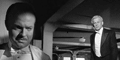
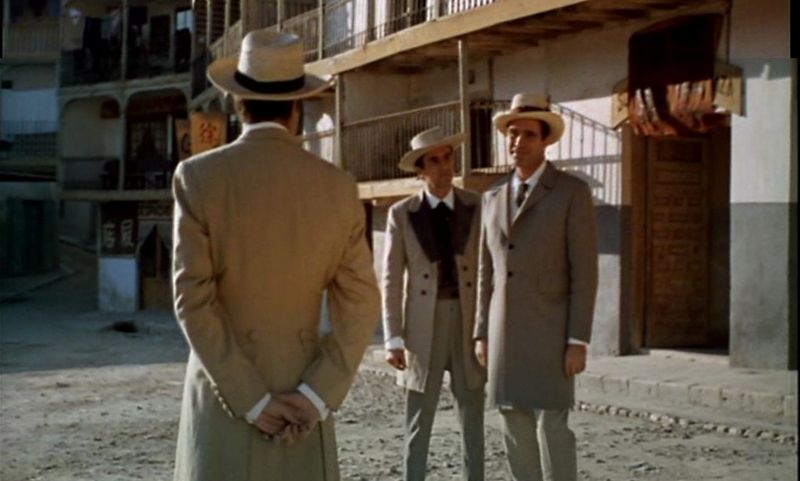
While the 1.66:1 may look like the more attractive of the two crops, neither actually seems to be ideal. The 1.66 reveals too much headroom, while the 1.78 shows too little (as well as some additional manipulation). A more appropriate 1.66 framing, cropping equally from both the top and bottom of the 1.37 image, might look like this:

Image

I haven't seen the Criterion version since it played on TCM a while ago (and just placed my Hulu account on hold -- so I can't check that!). Would be curious to know how their version compares with these, though.
Last edited by Fred Holywell on Tue Jul 09, 2013 11:06 am, edited 1 time in total.
User avatar
EddieLarkin
Joined: Sat Sep 08, 2012 2:25 pm

Re: The Great Aspect Ratio Debate...again.

#127 Post by EddieLarkin »

Who the hell OK'd that 1.78:1 version? The fucking matte is placed at the bottom! The 1.66:1 is almost as bad, with the matte at the very top! I'm sure both 1.66:1 and 1.78:1 would be fine (for that single frame I mean) if the matte was more centered (thanks Fred)
User avatar
Roger Ryan
Joined: Wed Apr 28, 2010 4:04 pm
Location: A Midland town spread and darkened into a city

Re: The Great Aspect Ratio Debate...again.

#128 Post by Roger Ryan »

David - I'll defer to your memory of seeing the CHIMES screening in '66 (as well as the televised screening of THE TRIAL) in regards to the hard matte issue*. I think we're in agreement that Welles' European-produced films of the 60s/70s (sadly, only four were completed/released with the intention of cinema showings - I view FILMING OTHELLO as more of a television project) look very good in the 1.66:1 aspect ratio which would have been the European widescreen standard. I think ARKADIN was made too close to the beginning of widescreen filmmaking (and in Europe) for anything other than 1.37:1 to be considered. This leaves TOUCH OF EVIL to be the sole completed Welles film produced in the U.S. during the widescreen era; no wonder it's such a touchstone for aspect ratio debates!

*My conclusions regarding the hard-matting of THE TRIAL and CHIMES AT MIDNIGHT come from seeing both of them screened in 35mm (probably 1.66:1 for CHIMES, potentially a little tighter for THE TRIAL) and from the various public domain home video releases that seem to have a slight matte when under-scanned but are always cropping the left-and-right of the frame to fill a 4:3 screen (as with your CHIMES screengrabs above).
User avatar
MichaelB
Joined: Fri Aug 11, 2006 10:20 pm
Location: Worthing
Contact:

Re: The Great Aspect Ratio Debate...again.

#129 Post by MichaelB »

I'm fairly sure we played The Immortal Story in Academy, on the grounds of its made-for-TV origins. It certainly wouldn't have been any wider than 1.66:1.
User avatar
martin
Joined: Thu Dec 13, 2007 12:16 pm
Contact:

Re: The Great Aspect Ratio Debate...again.

#130 Post by martin »

A version of Immortal Story shown on Danish TV was definetely 1.66:1. I'm not sure how it was centered as I've nothing to compare to (apart from the screencaps above which doesn't match the 1.66 TV screencaps I've found). There are a bunch of lo-res TV screencaps here (parts of the tv logo is missing because the black letterbox borders have been cropped. No cropping has been done to the actual image).

Academy seems like the most likely ratio for a tv showing, but perhaps they only got a 1.66 master for this (by chance)? Hard to say. And I wouldn't put too much emphasis on these VHS captures (although Welles' compositions are stunning)!
User avatar
Fred Holywell
Joined: Fri Jun 11, 2010 3:45 am

Re: The Great Aspect Ratio Debate...again.

#131 Post by Fred Holywell »

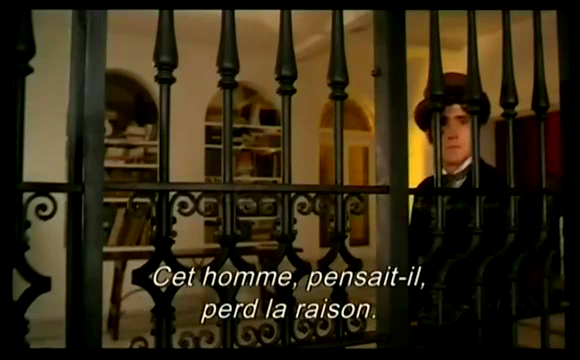
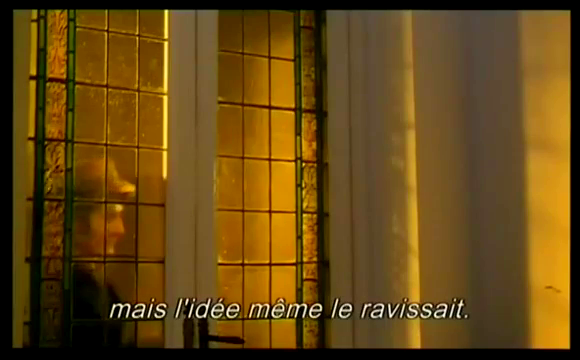
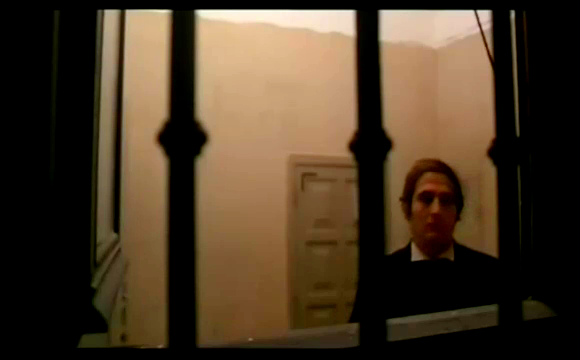
Thanks, martin. Some of those Danish caps compare nicely with images I pulled from a YouTube upload of scenes from the English version, with French subtitles. Not sure of the source, though -- not the Gaumont DVD (it doesn't include the English version) -- nor the Madman or RHV discs (they don't offer French subs) -- French TV, perhaps?

Image
Image
Image
User avatar
Charles
Joined: Fri Mar 04, 2011 9:06 pm

Re: The Great Aspect Ratio Debate...again.

#132 Post by Charles »

If the following has been discussed at some point, please excuse - and I'll be glad to be pointed in the direction of where this should go:

On the subject of Lord of the Flies, I'm finding it looking just about perfectly framed when zoomed to fill the 16x9 frame on my TV. Not perfect, but watchable -- because the Panny plamsa is actually cutting a bit off the sides. Therefore, the ideal solution for a reasonable at-home simulation of proper matting is to use my OPPO's zoom control which steps through a number of levels, one of which always works out beautifully. The TV's zoom functionality is crude in comparison. So what's the problem?

Just this: Criterion BLUs disable the player's zoom control. WHY?

They're not alone; some manufacturers' Blu-ray discs allow the function, some don't. But when such a correction works, it makes the enjoyment of the movie like night and day. One good example would be some of the MGM Midnite Movies DVDs issued in open matte, and they look fantastic -- both in composition and even picture quality -- zoomed.

Ideally, no well-authored transfer should have to be manipulated in such fashion. But we don't live in a perfect world, and even a high level company like Criterion leaves plenty of room for disagreement on these matters. So their disabling of the goddamned feature is particularly infuriating.
User avatar
Gregory
Joined: Tue Nov 02, 2004 8:07 pm

Re: The Great Aspect Ratio Debate...again.

#133 Post by Gregory »

I don't know about the zooming function being disabled, but it seems to me the "ideal solution" is watching it in the original aspect ratio as approved by the film's cinematographer and not trying to zoom it in.
There's a dedicated thread for each Criterion release, and the ratio has been discussed a bit already in the Lord of the Flies one.

User avatar
EddieLarkin
Joined: Sat Sep 08, 2012 2:25 pm

Re: The Great Aspect Ratio Debate...again.

#134 Post by EddieLarkin »

Gregory wrote:There's a dedicated thread for each Criterion release, and the ratio has been discussed a bit already in the Lord of the Flies one.
All of that discussion got moved here. Indeed, it led to this threads creation.

There was some recent discussion about Lord of the Flies on HTF, and I assume that is what has inspired Charles' post, and his desire to try the film zoomed in:

http://www.hometheaterforum.com/topic/3 ... ?p=3979244" onclick="window.open(this.href);return false;
Props55
Joined: Wed Jan 09, 2008 3:55 pm

Re: The Great Aspect Ratio Debate...again.

#135 Post by Props55 »

Is it possible that disabling the zoom could be a contractual stipulation of the encode. I've never heard of such a situation but I believe Polanski required that the encode for KNIFE IN THE WATER prevent freeze framing. Or so I recall.
User avatar
sinemadelisikiz
Joined: Sun Oct 31, 2010 8:36 pm
Location: CA

Re: The Great Aspect Ratio Debate...again.

#136 Post by sinemadelisikiz »

I'm pretty sure that all of Criterion's discs disable any player zoom fuctions (actually, a lot of Blurays do). I used to attach my Oppo to a HDTV with overscan (not mine!) and I could never use the its "underscan" zoom setting to correct this when playing Criterions. That being said, I haven't checked all of them.
User avatar
Gregory
Joined: Tue Nov 02, 2004 8:07 pm

Re: The Great Aspect Ratio Debate...again.

#137 Post by Gregory »

Eddie, all I see in that thread is some obfuscation, jokes, unintelligible rambling, and marked aspect ratio lines on a single screencap from Beaver. I confess to having little patience with people who scream "excess headroom!" or "unbalanced" (?) whenever they see some sky above the actors and want to zoom in so that various portions of heads are chopped off in many shots. God forbid that filmmakers actually intended to show some air and landscape above the actors in some shots, usually just a small amount in the close-ups.
And of course every single film made in the early 1960s must have been composed with a preference for widescreen. Just ignore what the cinematographer says. He obviously didn't know what he was doing when he oversaw the telecine.
These people apparently have no awareness that there were films made according to principles that were outside the norms of the commercial mainstream.
I love the post where one member writes, "I took some of the Beaver caps and reframed them in Photoshop, assuming a centre mask" and there's a link, but it's not to any images the guy is mentioning but an embedded eBay link so that I can buy Photoshop. So helpful!
User avatar
Moe Dickstein
Joined: Sat Aug 25, 2012 3:19 am

Re: The Great Aspect Ratio Debate...again.

#138 Post by Moe Dickstein »

what is in very little doubt is that it would have been shown in theaters masked down.

I've watched the film and it works better compositionally if it's masked down. People can watch the full frame and tell themselves whatever they like.
User avatar
Gregory
Joined: Tue Nov 02, 2004 8:07 pm

Re: The Great Aspect Ratio Debate...again.

#139 Post by Gregory »

It's not a matter of "telling myself" anything, which sounds rather condescending. I think I'll go with the cinematographer's consistent preference and the ratio that does not involve cutting off varying amounts of people's heads. Even if the latter is what many people saw in masked projections in theaters that could not show it otherwise, this clearly wasn't optimal. The incredulity at the HTF forums over the very idea that a film from the early 1960s could have been made with the full frame in mind is very telling, as is the implication that Gerald Feil and Criterion don't know what they're doing. The widescreen bias on those forums is pretty intense, with the membership mainly being interested in mainstream/modern widescreen cinema of the 1950s and after (if even back that far).
Note that in the HTF review of Lord of the Flies, they don't call out the aspect ratio as wrong. On the forums, people seem to be "telling themselves whatever they like" with all kinds of unsupported assertions about what's correct.
User avatar
Fred Holywell
Joined: Fri Jun 11, 2010 3:45 am

Re: The Great Aspect Ratio Debate...again.

#140 Post by Fred Holywell »

Gregory wrote:I think I'll go with the cinematographer's consistent preference and the ratio that does not involve cutting off varying amounts of people's heads. Even if the latter is what many people saw in masked projections in theaters that could not show it otherwise, this clearly wasn't optimal.
We don't know exactly how much of 'people's heads' might have been cut off in theaters without looking at the full-frame, do we?
User avatar
domino harvey
Dot Com Dom
Joined: Wed Jan 11, 2006 6:42 pm

Re: The Great Aspect Ratio Debate...again.

#141 Post by domino harvey »

Oh I like where this is going
User avatar
Fred Holywell
Joined: Fri Jun 11, 2010 3:45 am

Re: The Great Aspect Ratio Debate...again.

#142 Post by Fred Holywell »

domino harvey wrote:Oh I like where this is going
Why did images from Godard's "Weekend" just flash before my eyes?
Image
(not necessarily OAR)
User avatar
Moe Dickstein
Joined: Sat Aug 25, 2012 3:19 am

Re: The Great Aspect Ratio Debate...again.

#143 Post by Moe Dickstein »

eh, I've said my say after having seen the thing. Not going to convince anyone so no point in rambling on more about it.
User avatar
EddieLarkin
Joined: Sat Sep 08, 2012 2:25 pm

Re: The Great Aspect Ratio Debate...again.

#144 Post by EddieLarkin »

A few points that I think are relevant:

Exhibitors were instructed by the films distributors to mask to 1.85:1

http://i.imgur.com/B2RgqYr.jpg" onclick="window.open(this.href);return false;

Even well after the change to widescreen, industry journals like Box Office still specified 1.37:1 when a film was actually composed that way:

http://i.imgur.com/hC5zhxp.jpg" onclick="window.open(this.href);return false;

Credit to Bob Furmanek for providing the scans.

So, why compose a film Academy and then have the exhibitors cut it down?

The film has been presented in 1.66:1 and 1.78:1 in 3 or 4 different DVD editions (that outnumbers the amount of editions in 1.33:1). Why is this? Who had them presented in that way? Where is the outcry over them looking stupid, with vital information lost?
Gregory wrote:Eddie, all I see in that thread is some obfuscation, jokes, unintelligible rambling, and marked aspect ratio lines on a single screencap from Beaver. I confess to having little patience with people who scream "excess headroom!" or "unbalanced" (?) whenever they see some sky above the actors and want to zoom in so that various portions of heads are chopped off in many shots. God forbid that filmmakers actually intended to show some air and landscape above the actors in some shots, usually just a small amount in the close-ups.
I think the most relevant part of the link I posted, was not the screen caps or the "cries of excessive headroom", but how the camera operator frames his tracking shots so as to keep a consistent widescreen top line. Bruce Kimmel mentions the tracking shot of the boys sat on the beach, which you can check yourself if you like. It occurs around 12 minutes in. Note how, as the camera tracks and encounters boys of various heights, it shifts up and down as it goes, keeping their heads close to the top of where a widescreen frame line might be. This is almost certainly because the cameraman has frame lines through his viewfinder, which was the standard when shooting for soft matte. When viewed open matte, these movements become pointless because the empty space above the boys heads allows them all to be seen without being cropped, despite their difference in height.

There are many other similar examples throughout the film. A common one is moving the camera up to keep a head inside the widescreen framing. Just before the tracking shot mentioned above, there is a frontal shot of Simon laying down, who then sits up. If this film was shot 1.37:1, his head and face would stop in the middle of the frame, and the cameraman would have no need to alter the position of his shot. But move he does, because Simon's head is going to get sliced in half by the frame lines otherwise. This sort of thing is repeated many times throughout the runtime.

You can make arguments for how Academy films often have plenty of headroom, and for portions of their runtime can even be cropped quite nicely to wide, but you don't see this kind of consistent camera movement and technique when a film is genuinely 1.37:1.
Gregory wrote:And of course every single film made in the early 1960s must have been composed with a preference for widescreen. Just ignore what the cinematographer says. He obviously didn't know what he was doing when he oversaw the telecine.
This is really the only evidence that goes against the film being widescreen. But we know little about what his supervision involved. How do we know that the aspect ratio even came up? Why do we assume he would even remember, 50 years later? 1.33:1 has been Criterion's standard for this film for decades, so they are naturally going to default to that when doing the transfer, and having Feil check it. I don't find it hard to believe that Feil wouldn't have necessarily mentioned the aspect ratio as this was going on. The new 4K results look fine at 1.37:1, why bring it up? Why assume he remembers? Whose to say that Feil now prefers the film open matte, prefers the extra island scenery in each shot? Which is fine, but his preference today has nothing to do with how the film was shot 50 years ago.

When you consider the evidence above, it makes more sense that Feil even didn't care, didn't know, or was perfectly happy with an open matte version, than the idea that Brook and Hollyman were composing 1.37:1 all along.

For the record, Gerald Feil was one of films many producers, editors and camera operators. Not the DP.
Gregory wrote:The incredulity at the HTF forums over the very idea that a film from the early 1960s could have been made with the full frame in mind is very telling, as is the implication that Gerald Feil and Criterion don't know what they're doing. The widescreen bias on those forums is pretty intense, with the membership mainly being interested in mainstream/modern widescreen cinema of the 1950s and after (if even back that far).
If there's any bias on HTF it's for classic Hollywood film making over the more arthouse/foreign stuff. I don't think the age or the shape of the framing really factor into it. The response to the announcement of The Uninvited and I Married a Witch is evidence of that. But why even bring this up? I could quite easily make a point that this forum has a heavy Academy ratio bias, no doubt because it's the more "arty" ratio. But of course, I wouldn't do that.
User avatar
Fred Holywell
Joined: Fri Jun 11, 2010 3:45 am

Re: The Great Aspect Ratio Debate...again.

#145 Post by Fred Holywell »

Although screencaps aren't necessarily the best tool to use in determining what a film's intended ar might be (we don't know how much of the image has already been 'zoomed-in', for one thing), they can often provide some clues as to what those intended ar's might be. For instance, in looking at this admittedly compromised screencap from "Lord of the Flies", some might say that the relatively low placement of the c-o mark indicates that some top-of-frame matting was clearly intended or allowed.

Image
User avatar
Gregory
Joined: Tue Nov 02, 2004 8:07 pm

Re: The Great Aspect Ratio Debate...again.

#146 Post by Gregory »

Allowed and preferred are two different things.

It's hardly unheard-of for filmmakers to use the whole frame and prefer that, even though it would have been matted in many but not all places it was originally projected. People will predictably ask why would they prefer a ratio that goes against how many saw it in theaters, but it's really not up to me to prove or explain the validity of those preferences. Just because they fall outside the norm, though, people will complain about them and argue that they're "wrong."

Eddie: some of your comments are unintelligible to me. You say Academy is the more "arty" ratio? Ridiculous. According to whom? I see no evidence of a bias against widescreen cinema on this forum whatsoever.
Of course you're right about Feil, and I never meant to write "cinematographer" and that was my error obviously, but I see to reason not to give him the benefit of the doubt when he supervised a transfer with a company that is more than a little aware of how to suss out the filmmakers' preferred ratio. He didn't just approve the "default" and fail to consider or mention the ratio. Why assume he remembers, you ask twice? Why suppose he doesn't? "Whose to say that Feil now prefers the film open matte, prefers the extra island scenery in each shot?" Well, Feil himself and Lee Kline. And it's not just more "scenery" but also showing more of the actors in the shots and an overall different use of space.
What I saw at HTF was members being very quick to discredit his and Criterion's work on this transfer for little apparent reason other than that it was not in widescreen, and that some random people played around with it and it looked "okay" or better to them in a wider ratio. I just don't see any real grounds for complaints about this presentation. But I'm not at all surprised that some want this in widescreen, and I'm disinclined to say any more about their complaints.
User avatar
EddieLarkin
Joined: Sat Sep 08, 2012 2:25 pm

Re: The Great Aspect Ratio Debate...again.

#147 Post by EddieLarkin »

My comment about Academy being a more "arty" ratio was tongue in cheek, and it was only made because I felt your assertion that HTF users only want this film in widescreen because they have some preference for wide over film maker intent, to be completely without merit. You only have to look at the furore over Shane as proof of that; a film that was originally shown in widescreen, but that HTF users (including Bob Furmanek) by and large demand to be released in 1.37:1. What appears to be important to HTF users above all else, as I'm sure it is here, is that the original film maker intent is preserved.

This debate is only over a difference in what that intent was. I personally believe there is a lot more evidence that Brook and Hollyman composed the film for widescreen and would have preferred it be presented that way (or, at the very least, they would have in 1963). I don't see that intent being preserved by the Criterion release, which is why I'm not entirely happy with it.
Gregory wrote: Of course you're right about Feil, and I never meant to write "cinematographer" and that was my error obviously, but I see to reason not to give him the benefit of the doubt when he supervised a transfer with a company that is more than a little aware of how to suss out the filmmakers' preferred ratio. He didn't just approve the "default" and fail to consider or mention the ratio. Why assume he remembers, you ask twice? Why suppose he doesn't?
The reason I can't just give him the benefit of the doubt is because it does not fit with all the other evidence. When that happens, it's perfectly acceptable to consider reasons as to why he may go against the evidence. You believe it's because the evidence is wrong and that the film was composed originally in Academy, and I believe the evidence is right and that Feil's decision to OK a 1.37:1 transfer is either a personal decision on his part, or a lack of caring either way, or him having less involvement than "supervising" would suggest.
Gregory wrote:"Whose to say that Feil now prefers the film open matte, prefers the extra island scenery in each shot?" Well, Feil himself and Lee Kline. And it's not just more "scenery" but also showing more of the actors in the shots and an overall different use of space.
I messed up this sentence. What I meant was, a 1.37:1 approved transfer from Feil may only represent his personal opinion on the best way to present the film, not what the original film maker intent actually was. He may prefer the additional scenery, he may prefer the different use of space. But that doesn't mean he or anyone else did so in 1963. This happens all the time, a decade ago many people genuinely believed Kubrick originally composed and preferred films like The Shining at 1.33:1, despite that not being the case at all. George Stevens, Jr. appeared to want widescreen for Shane, despite his Dad not composing it that way.
Gregory wrote:What I saw at HTF was members being very quick to discredit his and Criterion's work on this transfer for little apparent reason other than that it was not in widescreen
Again, it's not about it not being in widescreen, it's about it potentially (likely) not being in the original intended aspect ratio.
User avatar
domino harvey
Dot Com Dom
Joined: Wed Jan 11, 2006 6:42 pm

Re: The Great Aspect Ratio Debate...again.

#148 Post by domino harvey »

EddieLarkin wrote:Image

Well, everyone knows the aspect ratio of Lord of the Flies has been approved by those who worked on the film and is correct. What this post presupposes is... maybe it isn't.
User avatar
Gregory
Joined: Tue Nov 02, 2004 8:07 pm

Re: The Great Aspect Ratio Debate...again.

#149 Post by Gregory »

Feil? More like FAIL amitite?
Sucks to your ass-pect ratio!

Anyone else got anything? I'll see myself out.
User avatar
swo17
Bloodthirsty Butcher
Joined: Tue Apr 15, 2008 2:25 pm
Location: SLC, UT

Re: The Great Aspect Ratio Debate...again.

#150 Post by swo17 »

Well I just watched the new Blu-ray for LOTF, and sacrificed my enjoyment of the movie to pay close attention to the framing throughout, and I'm afraid I fail to see the case for a wider ratio. Sure, many scenes would have worked at 1.85:1, but isn't this true of a lot films in Academy? And none of these scenes looked like they had been clearly blocked for widescreen, as is the case with some parts of Touch of Evil for instance. More importantly, there were several scenes that just simply would not have worked at a wider ratio, e.g. an early shot that tracks Piggy for a ways with his head at the very top of the frame and the camera moving right along with him to keep it right there; a wide shot of a boy scaling a hill, which would have no need to go on as long as it does if the top of the frame weren't there; a shot of an open sky with a boy approaching the camera from very low in the frame--much of that scene would look like dead space at a wider ratio.
Post Reply